Commercial real estate New Hampshire: 2026 investor guide
By Michael Law · Industrial Real Estate Broker, Lennard Commercial Realty
Commercial real estate New Hampshire: 2026 investor guide
TL;DR:
- New Hampshire’s absence of sales and income tax attracts investors seeking operational cost advantages and growth opportunities. The healthcare sector shows strong, demographic-driven demand, while industrial supply remains limited, supporting investor confidence. Local market knowledge and off-market access are critical in navigating the state’s hyper-local commercial real estate landscape.
Commercial real estate in New Hampshire is defined as income-producing or operationally used property spanning office, industrial, retail, and healthcare asset classes across a state with no sales or income tax. That tax structure, combined with proximity to Boston and a fast-growing healthcare sector, makes New Hampshire commercial properties consistently attractive to investors and business owners looking outside major urban centres. Firms like Brady Sullivan Properties have built dominant positions here, with Brady Sullivan voted best commercial property management in 2026 by NH Business Review readers across nearly 500 recognised businesses. The market rewards those who understand its hyper-local nature, its regulatory quirks, and the sectors currently driving demand.
What are the key commercial real estate market trends in New Hampshire in 2026?
The commercial real estate market in NH is recovering unevenly across sectors, with office leading the rebound and industrial holding tight vacancy rates. Understanding where demand is concentrating right now is the first step before committing capital.
Office market recovery
Southern New Hampshire’s office market is showing clear recovery signals. Return-to-office mandates requiring three days per week have translated directly into increased leasing activity across the region. Tenants who deferred decisions during the remote-work era are now signing leases, and landlords in well-located suburban nodes are seeing renewed interest. This is not a full-cycle recovery, but the directional shift is real and measurable.

Industrial sector demand
Industrial vacancy across New Hampshire remains tight. Logistics operators, light manufacturers, and last-mile distribution users continue to compete for limited supply in the southern corridor. This mirrors broader northeastern U.S. industrial trends, where new supply has not kept pace with occupier demand. Investors holding well-located industrial assets in New Hampshire are benefiting from that imbalance.
Healthcare real estate growth
Healthcare real estate is the most structurally reliable growth sector in the state right now. New Hampshire’s aging population is driving sustained demand for medical offices, assisted living facilities, and memory care centres across southern NH regions. This is a demographic trend, not a cyclical one. Investors who position in healthcare real estate today are buying into a demand curve that does not reverse.
Notable transactions and investor sentiment
A former restaurant property in Dover sold for $1.8 million in april 2026 to enable hotel redevelopment. That transaction signals active demand in commercial corridors beyond the traditional office and industrial categories. At the same time, economic uncertainty and tariff disruptions have pushed some investors into a cautious wait-and-see posture. The structural advantages of the NH market remain intact, but macro headwinds are creating a real tension between long-term opportunity and short-term risk management.
Key demand drivers in 2026:
- Office leasing recovering on the back of return-to-office mandates
- Industrial vacancy tight across the southern NH corridor
- Healthcare demand growing due to demographic shifts
- Redevelopment transactions active in secondary commercial corridors
- Investor caution elevated due to tariff and economic uncertainty
Pro Tip: Monitor real estate trend data regularly. Investors who track leasing velocity and vacancy shifts by submarket make faster, better-informed decisions than those who rely on annual reports alone.
How does New Hampshire’s tax and regulatory environment affect commercial real estate investments?
New Hampshire’s tax structure is the most frequently cited reason businesses and investors choose the state over neighbouring Massachusetts or Connecticut. The absence of a state sales tax and state income tax directly reduces operating costs for businesses occupying commercial space. That cost advantage is real and compounding over a multi-year lease term.
Property taxes: the variable that matters most
The absence of state-level taxes does not mean low taxes overall. Local property taxes vary dramatically between municipalities and are the primary driver of operating expenses for commercial property owners. A building in Manchester may carry a materially different tax burden than a comparable building in Nashua or Portsmouth. Investors must model property taxes at the municipal level, not the state level, before underwriting any acquisition.
The practical implications for investors and business owners:
- No state sales tax reduces cost of goods sold for retail and distribution occupiers
- No state income tax is a direct incentive for business relocation from higher-tax states
- Municipal property tax rates differ widely and require individual analysis per acquisition
- Tax assessments can shift after a sale, affecting projected operating costs
Zoning and regulatory considerations
Zoning in New Hampshire is administered at the municipal level, and the differences between towns are significant. Local officials are accessible for early engagement on zoning questions and permit timelines, which is a genuine advantage compared to larger urban markets where pre-application meetings can take months to schedule. Engaging the planning department before signing a purchase and sale agreement is standard practice for experienced NH investors.
Historic district zoning adds another layer of complexity. Portsmouth’s Character District 5 is a clear example. Zoning restrictions in historic districts like this one limit exterior alterations and restrict certain uses, even when a building appears physically versatile. A property that looks like a straightforward conversion candidate may be subject to strict compliance requirements that add cost and time to any redevelopment plan.
Pro Tip: Before making an offer on any NH commercial property, request a pre-application meeting with the local planning department. That single conversation can surface zoning constraints, permit timelines, and potential use restrictions that are not visible in the listing.
What types of commercial properties are most promising in New Hampshire?
New Hampshire’s commercial property market spans several distinct asset classes, and each carries a different risk and return profile in 2026. Investors and business owners need to match property type to their operational needs or investment thesis before entering the market.
Property type comparison
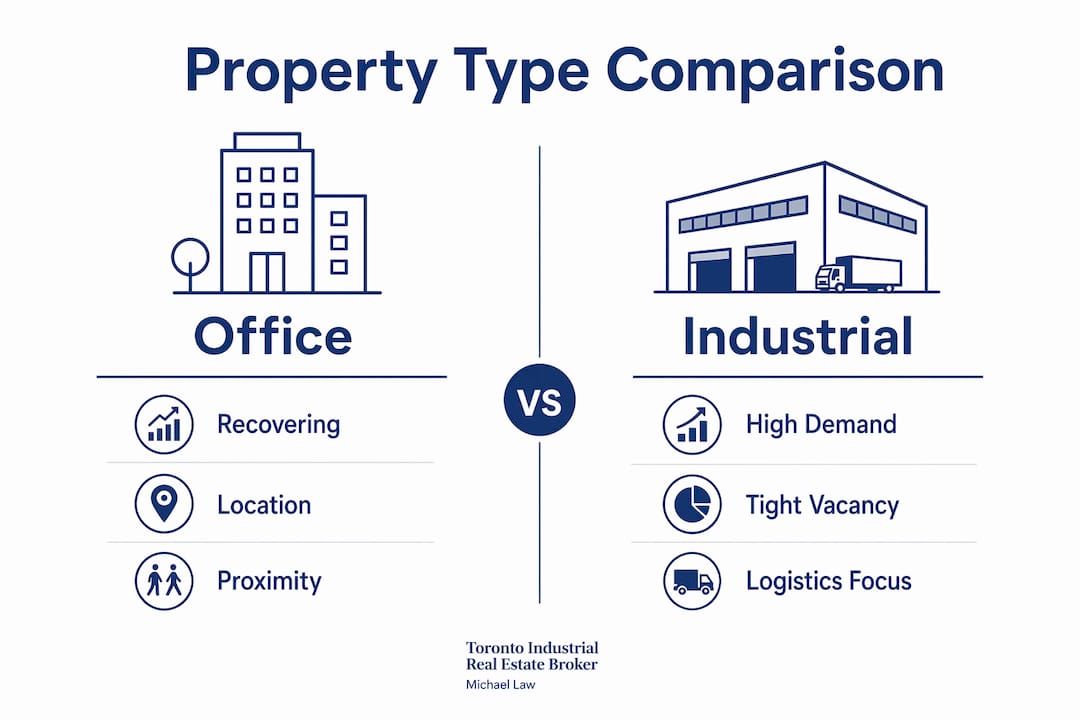
| Property type | Current demand | Key consideration |
|---|---|---|
| Office | Recovering | Location and proximity to amenities drive leasing |
| Industrial | High | Tight supply; limited new development pipeline |
| Retail | Selective | Neighbourhood centres outperform regional malls |
| Healthcare / medical office | Strong growth | Demographic tailwinds; long lease terms |
| Redevelopment land | Active | Corridor repositioning driving transaction volume |
Office and industrial assets
Office properties in well-located southern NH submarkets are the clearest beneficiaries of the return-to-office trend. Buildings with parking, modern HVAC, and proximity to amenities are leasing faster than older suburban stock. Industrial assets remain the tightest category by vacancy. Logistics and light manufacturing users are competing for limited space, and owners of well-maintained industrial buildings are in a strong negotiating position.
Healthcare and emerging property types
Healthcare real estate is the sector with the most durable demand profile. Medical offices, assisted living facilities, and memory care centres are all seeing sustained demand across southern NH driven by the state’s aging population. Multi-family housing with a commercial component is also attracting developer interest in urban cores like Manchester and Nashua.
Redevelopment opportunities are active across secondary commercial corridors. The Dover restaurant-to-hotel transaction is one example of a broader pattern. Investors willing to take on entitlement risk are finding motivated sellers in corridors that have not yet attracted institutional attention.
Portsmouth: a case study in complexity
Portsmouth illustrates both the opportunity and the risk in NH commercial real estate. The city’s historic waterfront and Congress Street corridor attract strong tenant interest and premium rents. Properties in Character District 5, however, face strict historic district compliance requirements that limit exterior modifications and restrict certain uses. Investors targeting Portsmouth need to review zoning at the parcel level, not just the neighbourhood level.
Pro Tip: Off-market opportunities in NH are disproportionately valuable. Many of the best commercial properties in the state trade before they appear on public listing platforms. A broker with deep local relationships is the most reliable path to those deals.
How can investors navigate New Hampshire’s hyper-local commercial market?
Commercial real estate investment in New Hampshire is hyper-local. Performance can vary significantly from block to block within the same city. That reality makes local expertise the single most important variable in any NH acquisition or leasing decision.
The role of a specialised broker
A broker who knows the NH market at the block level provides access that no listing platform can replicate. Experienced local brokers facilitate off-market deals, provide real-time vacancy and rental data, and can identify which landlords are motivated before a property is formally listed. The value of a specialised broker in a hyper-local market like New Hampshire is not just convenience. It is a direct competitive advantage in deal sourcing and negotiation.
Practical steps for successful NH commercial real estate investment
- Define your asset class and hold period. Office, industrial, healthcare, and retail each carry different risk profiles and liquidity timelines. Clarify your thesis before engaging the market.
- Model property taxes at the municipal level. Do not assume uniform tax treatment across the state. Request the current assessed value and mill rate for each property you evaluate.
- Engage local planning officials early. A pre-application conversation with the municipal planning department costs nothing and can prevent expensive surprises post-acquisition.
- Require an NDA before accessing sensitive financial data. Sellers and brokers in NH routinely use non-disclosure agreements before sharing rent rolls, operating statements, or tenant information. This is standard practice and protects all parties.
- Prioritise off-market deal flow. The best NH commercial properties often trade quietly. Build relationships with local brokers who have access to deals before they reach public platforms.
- Stress-test your underwriting against macro headwinds. Economic uncertainty and tariff disruptions are real factors in 2026. Model conservative rent growth and vacancy assumptions to protect your downside.
Pro Tip: When evaluating a commercial property in a New Hampshire historic district, hire a preservation architect for a preliminary review before finalising your offer. Their assessment of compliance costs can materially change your acquisition price.
Key takeaways
New Hampshire’s commercial real estate market rewards investors who combine tax-structure awareness, hyper-local market knowledge, and sector-specific positioning across office, industrial, and healthcare assets.
| Point | Details |
|---|---|
| Tax structure advantage | No state sales or income tax reduces operating costs, but municipal property taxes vary widely and require individual modelling. |
| Healthcare is the growth sector | Aging demographics drive durable demand for medical offices, assisted living, and memory care across southern NH. |
| Hyper-local market dynamics | Performance varies block by block; local broker expertise and off-market access are the most reliable competitive advantages. |
| Zoning complexity is real | Historic district restrictions in cities like Portsmouth can limit uses and add cost to redevelopment or conversion projects. |
| Industrial supply remains tight | Low vacancy and limited new development make well-located industrial assets among the most defensible holdings in the state. |
What I have learned from watching the NH commercial market closely
New Hampshire does not behave like a typical secondary market. Most secondary markets compete on price alone. New Hampshire competes on structure: no income tax, no sales tax, accessible government, and a business culture that moves faster than Boston or Hartford. That combination is genuinely rare, and it attracts a different quality of occupier than you find in comparable-sized markets elsewhere in the Northeast.
The part that surprises most outside investors is how much the market rewards local knowledge over capital. I have watched well-capitalised buyers from larger markets overpay for properties in Portsmouth or Manchester because they did not understand the block-by-block dynamics. A building two streets from the prime corridor can sit vacant while its neighbour runs at full occupancy. That gap is not visible in a market report. It is only visible to someone who has walked the streets and talked to the tenants.
The healthcare opportunity is the one I would not ignore right now. Demographic trends in New Hampshire are not speculative. The population is aging, the supply of purpose-built medical and assisted living facilities is insufficient, and the lease structures in healthcare real estate are among the most durable in the asset class. Investors who position in this sector today are buying into a demand curve that compounds over the next decade.
My caution is around the macro environment. The wait-and-see posture among some investors in 2026 is rational, not timid. Tariff uncertainty and broader economic headwinds are real. The right response is not to sit out the market entirely. It is to underwrite conservatively, prioritise assets with strong existing cash flow, and use the current caution among competing buyers to negotiate better terms.
— Michael
Mlawrealestate: commercial real estate advisory and listings
Mlawrealestate brings institutional-grade market intelligence and transaction experience to investors and business owners evaluating commercial real estate opportunities across North America’s most active markets.

Whether you are assessing industrial assets, evaluating office acquisitions, or looking for data-backed guidance on where to position capital in 2026, Mlawrealestate provides the market depth and broker expertise to support your decisions. Explore current commercial real estate listings and advisory services directly on the platform. For investors interested in industrial assets with comparable market dynamics to New Hampshire’s tight-supply environment, the Burlington industrial market overview offers relevant context on vacancy, pricing, and demand trends. Connect with Michael Law directly through Lennard Commercial Realty for transaction-specific advisory.
FAQ
What makes New Hampshire attractive for commercial real estate investment?
New Hampshire has no state sales or income tax, which directly reduces operating costs for commercial occupiers and investors. Combined with proximity to Boston and an aging population driving healthcare demand, the state offers structural advantages that most secondary markets cannot match.
What are the main commercial property types in New Hampshire?
The primary asset classes are office, industrial, retail, and healthcare real estate, with redevelopment land emerging as an active category in 2026. Industrial and healthcare assets currently show the strongest demand fundamentals across the state.
How do property taxes work for commercial real estate in New Hampshire?
New Hampshire has no state income or sales tax, but local property taxes are set at the municipal level and vary significantly between cities and towns. Investors must model the specific mill rate and assessed value for each property rather than applying a statewide assumption.
Why does local broker expertise matter so much in New Hampshire?
Commercial real estate performance in New Hampshire varies block by block within the same city, making hyper-local knowledge a direct competitive advantage. Local brokers with established networks provide access to off-market listings and real-time submarket data that listing platforms do not capture.
Is healthcare real estate a good investment in New Hampshire?
Healthcare real estate, including medical offices, assisted living, and memory care facilities, is the most structurally reliable growth sector in New Hampshire due to the state’s aging population. Demand is sustained across southern NH regions and is driven by demographics rather than economic cycles.
Recommended

About Michael Law
Managing Partner and Industrial Real Estate Broker at Lennard Commercial Realty. Representing tenants and landlords across Toronto and the GTA for 15+ years. Michael specializes in GTA industrial real estate — connect with Toronto's leading industrial broker at mlawrealestate.com/industrial-broker-toronto.