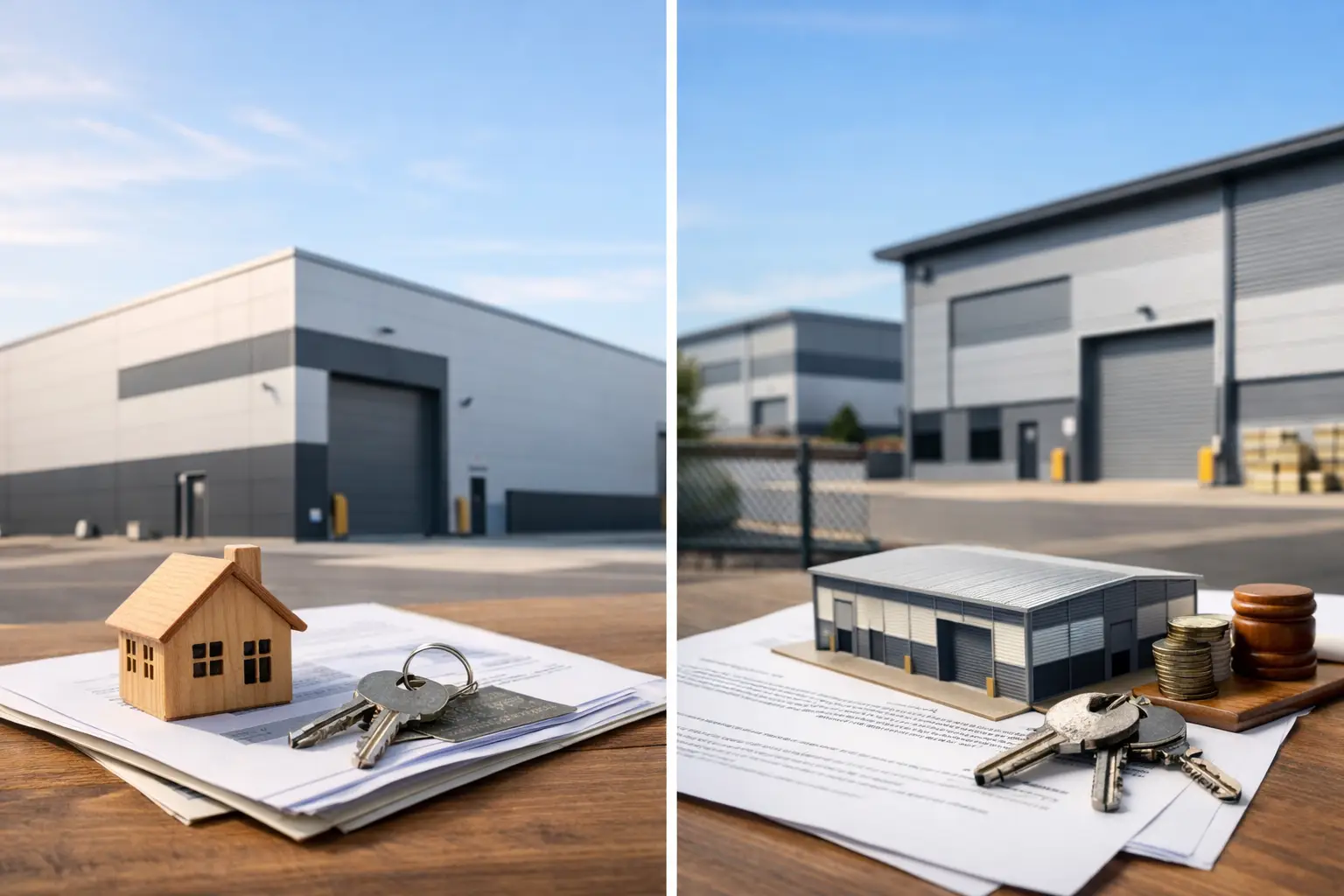
Freehold Versus Leasehold Industrial Properties
By Michael Law · Industrial Real Estate Broker, Lennard Commercial Realty
A loading dock, clear height, power capacity, and proximity to major highways may get the attention first. But the ownership structure behind an industrial building can have a longer-lasting effect on cost, flexibility, financing, and resale value. When evaluating freehold versus leasehold industrial properties, buyers and occupiers need to look beyond the asking price and understand exactly what rights are being acquired.
For industrial users in Toronto and the GTA, the distinction can shape an operating decision for decades. A business buying its facility may prioritize control and long-term stability. An investor may be focused on income durability, tenant demand, and exit liquidity. A leasehold interest can work well in the right situation, but it should never be treated as interchangeable with freehold ownership.
Freehold Versus Leasehold Industrial Properties: The Core Difference
A freehold industrial property generally means the buyer owns the land and building in fee simple, subject to applicable zoning, easements, municipal requirements, and any registered agreements on title. The owner has the broadest form of real estate control and can occupy, lease, improve, finance, or sell the property within those constraints.
A leasehold industrial property gives the buyer or occupant rights to use the property for a defined period under a lease. The party granting those rights, often called the landlord or lessor, retains the underlying ownership. In industrial real estate, this can refer to a conventional business lease, a long-term ground lease, or a purchased leasehold interest with years remaining on the term.
That difference sounds straightforward, but the documents matter. Some industrial condominium units are commonly described as “owned” units, yet the purchaser should still confirm the precise tenure, condominium obligations, shared-cost structure, and title restrictions. Similarly, a long ground lease may offer substantial operating control, but it remains a declining-term interest rather than perpetual land ownership.
Why Freehold Ownership Appeals to Industrial Buyers
Freehold ownership gives an owner-user a high degree of control over a critical business asset. Subject to permits, zoning, and building requirements, the owner can plan expansions, install specialized equipment, modify office space, add racking, or upgrade shipping infrastructure without seeking a landlord’s approval. For manufacturers, distributors, contractors, and businesses with costly operational improvements, that control can be material.
It also provides certainty around occupancy. A tenant may face renewal negotiations, rent resets, relocation costs, or a landlord’s redevelopment plans. A freehold owner does not face lease expiry on its own premises. That stability can be especially valuable in tight industrial markets where suitable replacement space is limited and moving a business can disrupt staff, customers, and supply chains.
From an investment perspective, freehold industrial assets may offer stronger long-term appeal because the land and building are owned outright. The owner can lease the asset to a tenant, reposition it at vacancy, or sell to an investor or owner-user. In land-constrained GTA submarkets, the underlying site value can be a major part of the investment rationale.
Freehold does not mean unlimited freedom or predictable expenses, however. The owner carries responsibility for capital repairs, environmental matters, property taxes, insurance, roof and mechanical systems, site maintenance, and compliance. A low purchase price can be quickly overshadowed by deferred maintenance, inadequate electrical service, poor truck circulation, or costly remediation requirements.
When Leasehold Can Be the Better Business Decision
Leasehold occupancy often makes sense when a company needs flexibility, wants to preserve capital, or cannot justify tying up equity in real estate. Leasing allows a business to secure functional space while retaining funds for inventory, equipment, hiring, technology, or growth initiatives. For a young or rapidly changing company, this may be more valuable than the control that comes with ownership.
A conventional industrial lease can also provide access to locations or building sizes that would be difficult to acquire. A business requiring 50,000 square feet for a five-year contract may not want the concentration risk of purchasing a large facility. A lease can align occupancy costs with a known operating period, particularly if renewal, expansion, and termination rights are negotiated carefully.
Long-term leasehold interests can be attractive where the initial acquisition cost is meaningfully lower than comparable freehold property. This may create an opportunity for a sophisticated user or investor, especially when the remaining lease term is long, the rent obligations are manageable, and the lease permits financing or assignment.
The central issue is that a leasehold interest has an expiry date. As the remaining term shortens, its value and financing options can change. The lease may also impose restrictions on transfers, alterations, subleasing, signage, permitted use, and redevelopment. A buyer should not assume that a leasehold asset can be sold, financed, or improved as freely as a freehold property.
Cost Comparison: Look Beyond Price and Rent
Comparing freehold and leasehold industrial options requires a full occupancy-cost analysis. The purchase price versus the annual rent is only the starting point.
For a freehold purchase, account for the down payment, mortgage payments, closing costs, property taxes, insurance, ongoing repairs, planned capital expenditures, and the opportunity cost of capital invested in the property. If the building is older, obtain clear information on the roof, HVAC, sprinkler system, electrical capacity, loading doors, pavement, and environmental history. These are not secondary details in industrial property. They directly affect operational reliability and future value.
For a lease, review base rent, additional rent, tax and operating cost recoveries, utilities, annual escalations, repair obligations, restoration requirements, security deposits, and any inducements that may expire. A net lease can place substantial repair and maintenance responsibility on the tenant. A lower base rent does not necessarily mean lower total occupancy cost.
For a leasehold purchase, the analysis needs another layer: remaining term, ground rent or head-lease rent, rent review mechanisms, extension options, consent requirements, and what happens to improvements at expiry. A building with a short remaining leasehold term may trade at a discount for good reason.
Financing and Resale Considerations
Lenders generally view freehold industrial properties more favorably because the borrower is pledging an enduring ownership interest in land and improvements. Loan terms will still depend on the property, borrower strength, environmental review, tenant income where applicable, and the lender’s view of the market. But freehold typically offers a broader financing pool and can support stronger resale demand.
Leasehold financing is possible, but it is more sensitive to the lease terms. A lender will examine the remaining term relative to the loan amortization, the lessor’s rights, whether the lease can be assigned or mortgaged, and whether the lender has notice and cure rights if there is a default. Restrictions in these areas can reduce leverage or make financing unavailable.
Resale follows the same logic. A freehold asset can appeal to investors, developers, and owner-users, depending on its size, configuration, and location. A leasehold interest is usually marketed to a narrower buyer pool that must be comfortable with the remaining term and contractual restrictions. That does not make leasehold undesirable, but it should be reflected in the acquisition price and exit plan.
Due Diligence That Changes the Decision
Before committing to either structure, buyers should verify the legal interest being acquired and review the documents that govern it. This is a legal and business exercise, not a box-checking exercise. The practical rights in the agreement may matter more than the label used in marketing materials.
Key questions include whether the intended industrial use is permitted, whether expansion or equipment installation requires consent, who is responsible for structural and environmental issues, and whether truck access and parking meet current operational needs. For leasehold interests, confirm the remaining term, renewal rights, transfer provisions, default remedies, and any obligation to return the property in a specified condition.
An owner-user should also test the property against a realistic five- to ten-year operating plan. If growth could require more loading positions, higher power, outside storage, or more employee parking, solve for those needs before buying. Investors should assess the tenant covenant, lease structure, market rent potential, and capital needs at lease rollover.
Choosing the Right Industrial Ownership Structure
Freehold is often the stronger choice for established businesses that need long-term control, have capital available, and view real estate as part of their balance sheet strategy. It can also suit investors seeking durable ownership of well-located industrial land and buildings.
Leasehold can be the better choice for businesses that value flexibility, have limited capital for a down payment, or need to match occupancy with a shorter operational horizon. It may also present a viable acquisition opportunity when the lease term, transfer rights, and pricing properly account for the reduced ownership interest.
The right decision is not about choosing the structure that sounds more permanent. It is about matching the property interest to the business plan, capital position, and likely exit. Before an offer is written, define what the facility must support on day one and what it may need to support years from now. That discipline usually makes the better choice clear.

About Michael Law
Managing Partner and Industrial Real Estate Broker at Lennard Commercial Realty. Representing tenants and landlords across Toronto and the GTA for 15+ years. Michael specializes in GTA industrial real estate — connect with Toronto's leading industrial broker at mlawrealestate.com/industrial-broker-toronto.