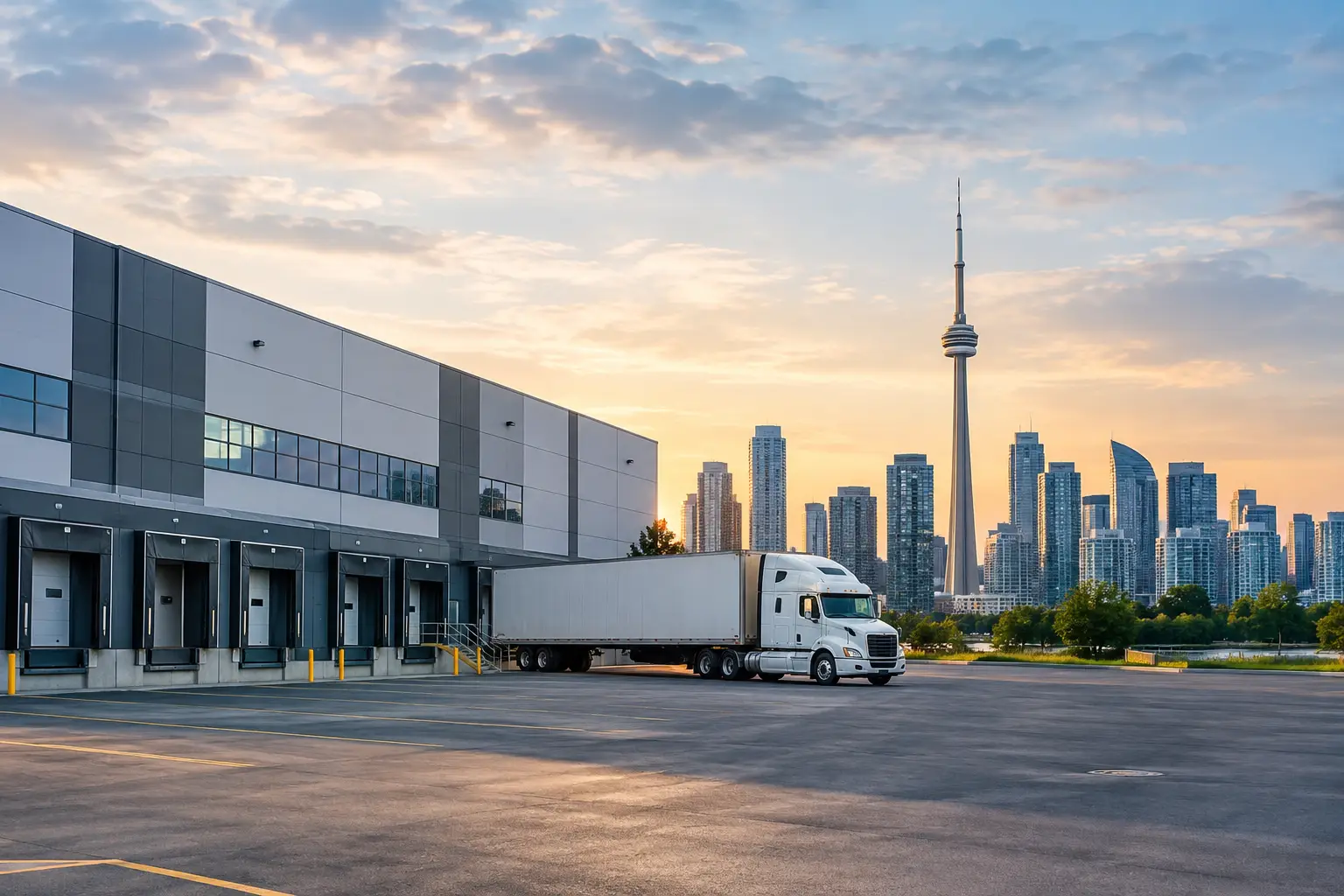
How to Buy Warehouse Property Without Overpaying
By Michael Law · Industrial Real Estate Broker, Lennard Commercial Realty
A warehouse can look like a simple acquisition: four walls, loading doors, clear height, and a yard. But knowing how to buy warehouse property means understanding what those features allow a business to do, what they will cost to maintain, and whether the site will still work as operating needs change. A building that is inexpensive on a per-square-foot basis can become an expensive mistake if trucks cannot maneuver, power is inadequate, or zoning limits the intended use.
For owner-users and investors, the right purchase starts with a clear operating and financial brief. The process below focuses on the issues that typically shape value, risk, and negotiating leverage in warehouse transactions.
Start With the Business Case, Not the Listing
Before reviewing available properties, define why you are buying. An owner-user may be seeking control over occupancy costs, room for expansion, or a better distribution location. An investor may be looking for dependable income, a value-add leasing opportunity, or land with redevelopment potential. These objectives lead to different buying criteria.
For an owner-user, determine the operational requirements that cannot be compromised. This includes the amount of warehouse and office space, required clear height, loading configuration, trailer parking, employee parking, power supply, and proximity to labor, customers, ports, highways, or rail. Also account for future growth. Leasing excess space can be useful, but only if the layout, entrances, metering, and zoning support a practical multi-tenant arrangement.
For an investor, begin with the income rather than the building alone. Review the tenant's business, lease term, renewal options, rent escalations, operating expense recovery, maintenance obligations, and security package. A high headline rent is not automatically attractive if the lease is short, below-market renewal options are extensive, or the tenant has weak financials.
In the Greater Toronto Area, scarcity can cause buyers to make compromises quickly. Some compromises are reasonable. A slightly older building in a strong industrial node may be preferable to a newer building with poor truck access or limited future utility. The key is to identify which compromises affect operations and resale value, versus those that can be addressed through capital improvements.
How to Buy Warehouse Property With the Right Site Criteria
Location drives more than convenience. It affects shipping costs, employee access, tenant demand, insurance considerations, municipal approvals, and the pool of future buyers. A warehouse near major transportation corridors may justify a premium, especially when it provides efficient service to the GTA and surrounding markets. That premium should still be tested against measurable savings or stronger rental demand.
Examine the building from the truck's perspective
Many buyers assess a warehouse from the parking lot or office entrance. Start at the road instead. Confirm that vehicles can enter, turn, queue, dock, and leave without creating operational bottlenecks. Review curb cuts, driveway width, turning radii, dock approach, yard depth, and any shared access arrangements.
Loading is often more important than office finishes. Determine whether the property has truck-level doors, drive-in doors, dock levelers, adequate dock height, and enough doors for peak volumes. A cross-dock layout can be highly valuable for distribution users, while a manufacturing operation may prioritize drive-in access, heavy power, and a secured outside storage area.
Clear height also deserves close attention. Higher clear height can improve pallet storage capacity and tenant appeal, but it is only valuable if the racking plan, fire protection, lighting, and floor load capacity support the intended operation. Measure the usable clearance below beams, sprinklers, lights, and mechanical systems, not simply the advertised building height.
Confirm zoning and permitted use early
Never assume that an industrial building permits the use you have in mind. Zoning bylaws may distinguish among warehousing, manufacturing, outdoor storage, retail sales, vehicle-related uses, food processing, and contractor yards. A permitted use can also be subject to conditions related to parking, loading, hours of operation, signage, noise, or environmental controls.
Request written confirmation where appropriate, particularly if the operation is specialized or if outdoor storage is central to the business plan. A legal non-conforming use may have value, but it can introduce risk if the building is vacant for a specified period, substantially altered, or rebuilt after damage. If a future expansion is planned, investigate site coverage, setbacks, height limits, stormwater requirements, and municipal development charges before treating that expansion as guaranteed.
Build a Realistic Acquisition Budget
The purchase price is only one part of the capital required to own warehouse property. Buyers should model the full cost of acquisition and occupancy before making an offer. This is particularly important for owner-users who are comparing a purchase with a lease renewal.
Your budget should account for financing costs, legal fees, appraisal fees, environmental reports, inspections, property tax, insurance, closing adjustments, and immediate repairs or upgrades. Depending on the asset and jurisdiction, sales tax treatment may also require careful planning. In Canada, the treatment of HST can differ based on the buyer's registration status, the nature of the transaction, and whether the property is tenanted. Obtain tax and legal advice before waiving conditions.
Capital expenditures can materially change the economics. A new roof, sprinkler upgrade, electrical service increase, paving work, dock equipment, heating replacement, or environmental remediation can cost far more than early estimates suggest. Ask for maintenance records, warranty information, service contracts, utility bills, and a schedule of recent capital work. If the property has a tenant, clarify which obligations belong to the landlord and which are recoverable under the lease.
Financing should match the intended hold period and use. Lenders will evaluate the building, borrower strength, loan-to-value ratio, debt-service coverage, environmental risk, and lease income where applicable. For a specialized facility, financing may be more conservative because the future buyer or tenant pool is narrower. Obtain lending guidance early enough that financing conditions are meaningful rather than a last-minute formality.
Conduct Due Diligence That Matches the Risk
Warehouse due diligence should be thorough but targeted. The purpose is not to create paperwork. It is to uncover issues that affect value, financing, permitted use, or the ability to operate on day one.
A standard review normally begins with title, survey, zoning, leases, financial statements, property tax information, and building condition. Title and survey work can expose easements, encroachments, access rights, restrictive covenants, utility rights-of-way, and shared parking arrangements. These issues are not always deal breakers, but they can limit expansion, truck movement, or financing.
Environmental diligence deserves particular attention in industrial property. A Phase I Environmental Site Assessment reviews historical and current uses to identify potential contamination risk. Depending on its findings, a Phase II assessment involving soil or groundwater testing may be necessary. Do not treat this as a box-checking exercise. The cost of remediation, regulatory requirements, and lender concerns can exceed any discount achieved in negotiation.
Building inspections should focus on the systems that matter to an industrial operation: roof condition, structure, slab condition, electrical capacity, heating, ventilation, fire protection, drains, loading equipment, and exterior paving. If the facility will support manufacturing, food handling, refrigeration, or hazardous materials, bring in specialists who understand those requirements.
Where a property is occupied, review every lease document and amendment. Confirm the rentable area, term, rent, deposits, arrears, inducements, repair obligations, options, exclusivity provisions, assignment rights, and any outstanding landlord commitments. Tenant estoppel certificates can help verify that the lease information provided by the seller is complete and accurate.
Make an Offer That Preserves Leverage
A strong offer is not always the highest price. It is an offer with clear economics, credible timing, and well-defined conditions. The seller needs confidence that the buyer can close. The buyer needs enough protection to investigate the asset properly.
Set conditions that address financing, inspection, environmental review, title, leases, and other material risks. Avoid vague language, but do not remove protections simply to appear competitive. In a tightly contested deal, a shorter due diligence period may be reasonable if preliminary work has been completed. Waiving a critical environmental or financing condition without sufficient information is a different decision altogether.
Negotiation should also cover items that are easily overlooked: the treatment of deposits, access during due diligence, delivery of documents, responsibility for repairs before closing, tenant communications, equipment included in the sale, and adjustments for taxes, utilities, and prepaid rent. These details can prevent friction when the transaction is otherwise ready to close.
A broker with industrial market knowledge can help test the asking price against comparable sales, replacement cost, lease rates, vacancy, and buyer demand. Michael Law Commercial Real Estate approaches these transactions with the practical question that matters most: does the property support the client's business plan and remain defensible when it is time to sell or lease it again?
Plan the First 90 Days of Ownership
Closing is the start of ownership, not the finish line. Before possession, organize insurance, utilities, security, service contracts, key access, tenant notices, and an immediate repair plan. If the building will be occupied by your business, schedule any racking, equipment installation, permitting, and operational move with enough buffer to avoid disruption.
The best warehouse purchase is not necessarily the newest building or the lowest-priced one. It is the asset whose location, physical capability, legal use, and total cost align with the way the business needs to operate - and with the value a future owner or tenant will still recognize.

About Michael Law
Managing Partner and Industrial Real Estate Broker at Lennard Commercial Realty. Representing tenants and landlords across Toronto and the GTA for 15+ years. Michael specializes in GTA industrial real estate — connect with Toronto's leading industrial broker at mlawrealestate.com/industrial-broker-toronto.