Environmental Site Assessment for Commercial Buyers
By Michael Law · Industrial Real Estate Broker, Lennard Commercial Realty
A low purchase price can lose its appeal quickly when an environmental site assessment identifies a contamination concern, an undocumented fuel tank, or a history of industrial use that was never properly addressed. For commercial buyers, lenders, landlords, and occupiers, the assessment is not a formality. It is a decision tool that can affect financing, deal structure, timing, future use, and the value of the property.
This is particularly relevant for industrial properties. A building may appear well maintained and still carry environmental risk from a former dry cleaner, auto repair operation, metal fabrication shop, fuel supplier, or adjacent site. The issue is rarely limited to what is visible on the property today. It is about what happened there over decades, what may have migrated from nearby land, and who could be responsible if a problem is found.
What an Environmental Site Assessment Does
An environmental site assessment, often called an ESA, evaluates whether a property has actual or potential environmental contamination. It is typically completed by a qualified environmental consultant as part of acquisition, refinancing, leasing, redevelopment, or sale due diligence.
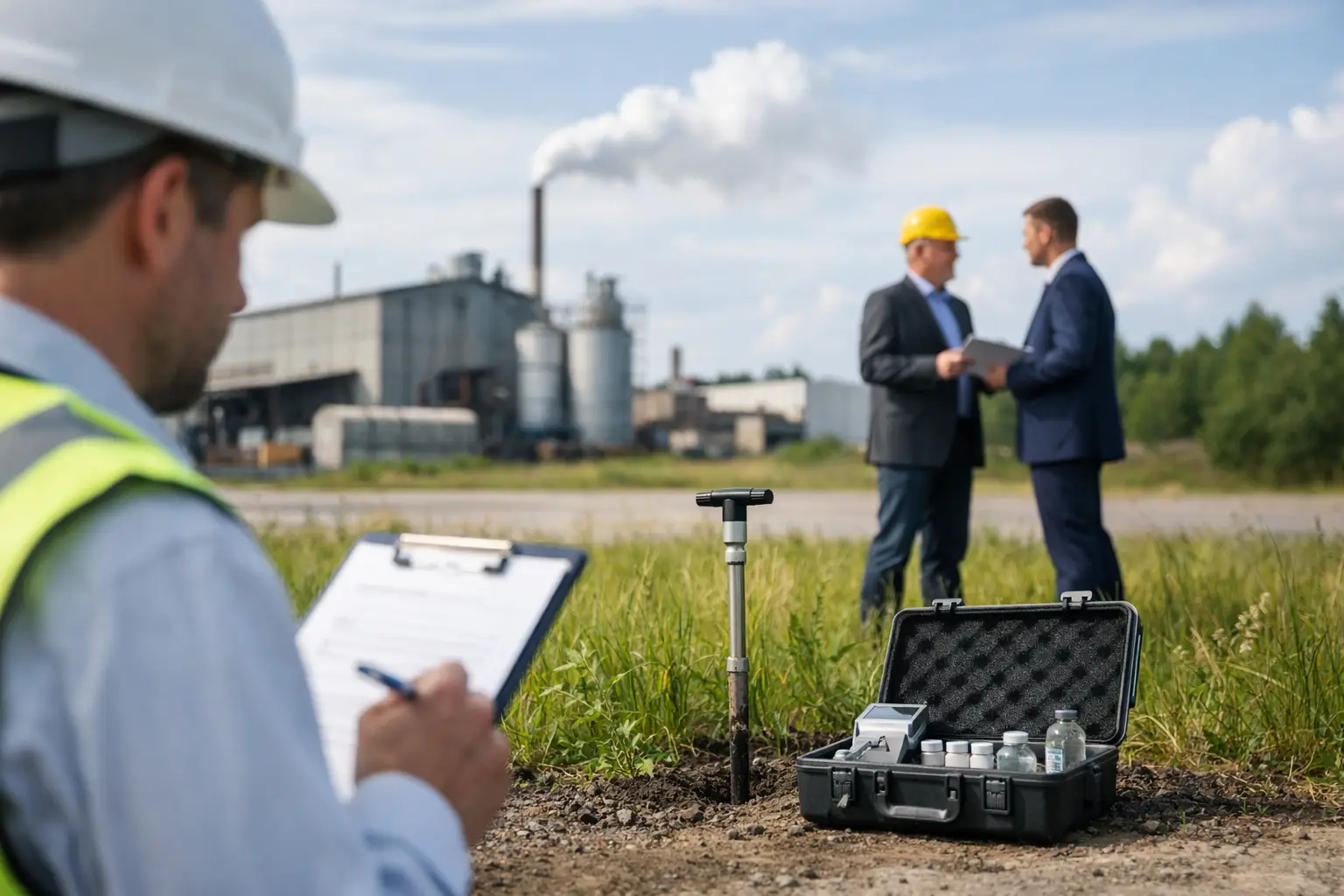
The first stage is generally a Phase I Environmental Site Assessment. This is a records-based investigation combined with a site inspection. The consultant reviews historical aerial photographs, fire insurance plans, land titles, regulatory databases, municipal records, and available environmental reports. They also inspect the site for conditions such as floor drains, chemical storage, fill material, oil staining, underground or aboveground storage tanks, and signs of waste handling.
A Phase I assessment does not normally involve drilling or laboratory testing. Its purpose is to identify recognized environmental conditions or areas of concern that may require further investigation. A clean Phase I can give a buyer, lender, or landlord greater comfort. It does not provide a guarantee that no contamination exists.
If the Phase I identifies a credible concern, the next step may be a Phase II Environmental Site Assessment. This work involves sampling soil, groundwater, soil vapor, surface water, or building materials, depending on the concern. Laboratory results are compared against applicable regulatory standards and the intended property use.
A Phase II is more targeted and more expensive than Phase I work, but it provides evidence rather than assumptions. That distinction matters when a transaction may involve remediation costs, indemnities, a price adjustment, or a decision to walk away.
Why Industrial Properties Need Closer Review
Industrial real estate often has a more complicated environmental history than office or retail property. Even a warehouse that has been used for distribution for many years may have operated as manufacturing, vehicle service, or bulk storage in an earlier period. A tenant's use can also create risk without changing the building's outward appearance.
Common concerns include petroleum hydrocarbons from fuel storage or vehicle operations, solvents from degreasing, metals from manufacturing, and contamination associated with imported fill. Properties near rail corridors, active industrial areas, former gas stations, or waste disposal sites can require closer review because contamination does not always remain within property boundaries.
For buyers in Toronto and the GTA, redevelopment pressure adds another layer. A site that functions adequately for industrial use may face a different environmental standard if its future use changes. Residential, institutional, or other more sensitive uses can trigger more demanding cleanup requirements than continued industrial use. The environmental question is therefore tied to the business plan, not just the current condition of the building.
Timing Can Protect Your Negotiating Position
The best time to commission environmental due diligence is before a buyer becomes fully committed. In a purchase transaction, the agreement should provide sufficient access, time, and conditions to complete a Phase I and, if necessary, Phase II work. A short diligence period may be manageable for a straightforward property with a recent, reliable report. It is risky when the site has a long industrial history or when the existing documentation is incomplete.
Environmental investigations can take longer than expected. Historical records may be difficult to obtain. Access to neighboring properties may be needed. Groundwater sampling and laboratory turnaround add time, while winter conditions can limit some field activities. A Phase II that begins late in the diligence period may leave the buyer with little practical room to negotiate.
Sellers also benefit from addressing known issues early. A current assessment can reduce surprises during buyer due diligence and allow the seller to control the timing and presentation of information. That said, an older report should not automatically be treated as current. New operations, new adjacent uses, changes in standards, and the passage of time can reduce its usefulness.
A Phase I Report Is Only as Useful as Its Scope
Not all reports answer the same question. Buyers should confirm who commissioned the report, who is entitled to rely on it, the property boundaries reviewed, the date of the site visit, and whether the consultant had access to key records. Lenders frequently have their own reliance and scope requirements.
The intended transaction also matters. A buyer acquiring an owner-occupied facility may focus on operational risk and future financing. An investor purchasing a multi-tenant industrial asset may need greater clarity on tenant activities, lease obligations, and potential off-site migration. A tenant entering a long-term lease should understand whether its planned operations could create new environmental exposure and whether the lease clearly allocates responsibility.
Environmental due diligence should also be separated from other technical reviews. A building condition assessment addresses physical systems such as roof, structure, mechanical equipment, and deferred maintenance. A designated substances survey may examine asbestos, lead, mold, or other hazardous building materials. These reviews can overlap in practice, but one does not replace the other.
What Happens When Contamination Is Found
A contamination finding does not automatically end a transaction. The right response depends on the severity, location, regulatory status, planned use, financing requirements, and realistic cost to address the issue.
In some cases, a limited concern can be managed through additional testing, monitoring, or a targeted cleanup program. In others, the likely cost and uncertainty may justify a purchase price reduction, an environmental holdback, a seller-funded remediation obligation, or a carefully drafted indemnity. Legal counsel should advise on liability allocation and disclosure obligations, while the environmental consultant should define the technical issue and the reasonable paths forward.
Indemnities deserve particular caution. They can be valuable, but they are only as useful as the party standing behind them. If a former owner lacks financial capacity when a cleanup is required, the buyer may still face the practical burden of dealing with the property. Environmental insurance may be considered in some transactions, though coverage, exclusions, cost, and underwriting requirements vary considerably.
The key is to avoid treating an environmental issue as only a closing adjustment. A property with unresolved contamination can affect future financing, tenant demand, redevelopment options, and resale value long after the original deal is complete.
How to Use the Findings in a Commercial Decision
An ESA should be read alongside the appraisal, lease review, title work, survey, zoning analysis, and building inspection. A buyer is not simply asking whether contamination exists. The real question is whether the asset still supports the intended investment or operating plan at an acceptable level of risk.
For example, a purchaser of a fully leased warehouse may accept a manageable issue if the income is stable, the remediation path is defined, and the purchase terms reflect the risk. A business owner planning to invest heavily in a specialized facility may be less able to accept uncertainty that could interrupt operations. Neither approach is universally right.
The strongest decisions are made when environmental findings arrive early enough to influence price, conditions, financing, and strategy. Treat the assessment as a practical part of property evaluation, not paperwork to be completed at the end. It can give you the information needed to proceed with confidence, renegotiate from a position of fact, or preserve capital for a better opportunity.

About Michael Law
Managing Partner and Industrial Real Estate Broker at Lennard Commercial Realty. Representing tenants and landlords across Toronto and the GTA for 15+ years. Michael specializes in GTA industrial real estate — connect with Toronto's leading industrial broker at mlawrealestate.com/industrial-broker-toronto.