How to conduct industrial property audits in 2026
By Michael Law · Industrial Real Estate Broker, Lennard Commercial Realty
TL;DR:
- Industrial property audits verify compliance and operational integrity within real estate portfolios. Most failures occur due to incomplete preparations and overlooked document collections, emphasizing the importance of a structured, five-stage process. Properly conducted audits support ongoing compliance, protect asset value, and improve negotiation positions in the GTA market.
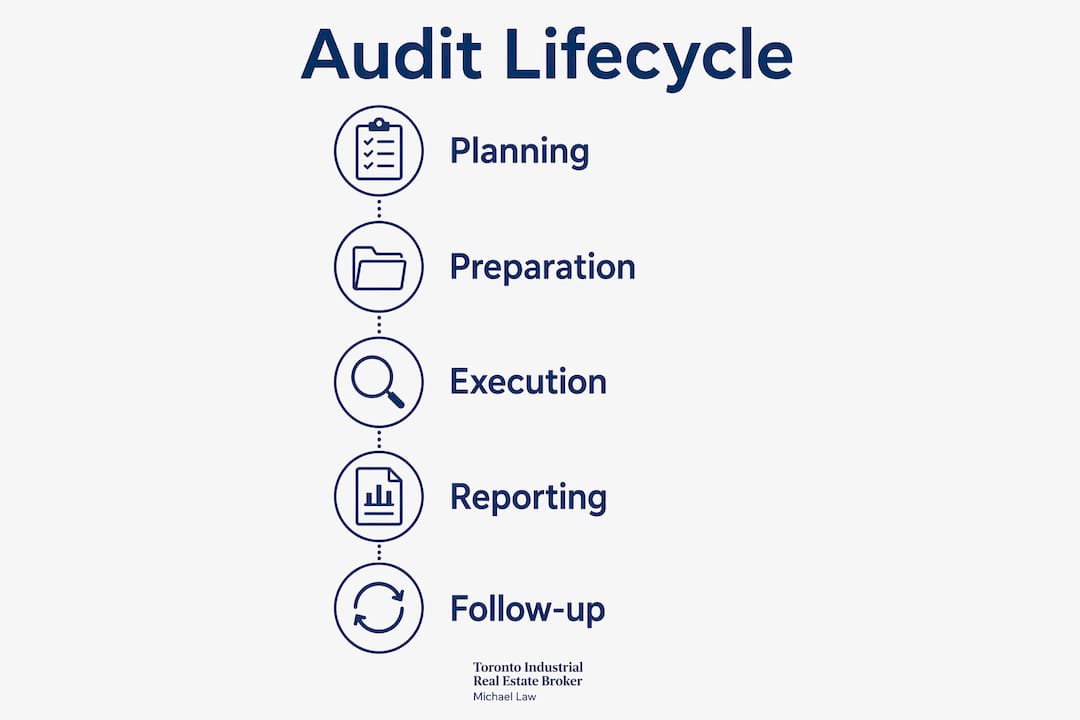
An industrial property audit is a structured, multi-step evaluation designed to verify compliance, operational integrity, and asset performance within industrial real estate portfolios. For property managers, owners, and executives operating in the Greater Toronto Area, knowing how to conduct industrial property audits is not optional. Regulatory requirements tighten each year, and an undetected compliance gap can trigger enforcement action, depress asset value, or derail a transaction. The industrial audit process follows a defined five-stage lifecycle: planning, preparation, execution, reporting, and follow-up. Each stage builds on the last, and skipping any one of them creates blind spots that surface at the worst possible moment.
The standard industry term for this process is a facility compliance audit, though “industrial property audit” is the widely used operational shorthand across GTA real estate practice. Both terms describe the same structured methodology. Mlawrealestate works with property owners and investors across Toronto, Mississauga, Brampton, Vaughan, and the broader GTA to apply this methodology at every stage of the asset lifecycle, from acquisition through to lease renewal and disposition.
How to conduct industrial property audits: the five-stage framework
Comprehensive industrial property audits follow a five-stage lifecycle: planning, preparation, execution, reporting, and follow-up. Audit duration varies from a single day to several weeks, depending on facility complexity. A 50,000-square-foot logistics hub in Brampton requires a different scope than a multi-tenant flex building in Markham. Knowing the five stages before you begin prevents scope creep and keeps the process on schedule.

The planning stage sets the audit’s purpose. You define what compliance frameworks apply, which building systems fall within scope, and who is responsible for each area. In the GTA, applicable frameworks include the Ontario Building Code, the Technical Standards and Safety Authority (TSSA) regulations, and the Ontario Fire Code. Federal requirements under the Canadian Environmental Protection Act (CEPA) apply to sites with hazardous materials or environmental exposure.
The preparation stage converts that plan into a working document set. You gather leases, maintenance records, permits, environmental assessments, and prior audit reports. You assign roles to property managers, qualified inspectors, and legal advisors. You schedule site visits and notify tenants where required under lease terms. Preparation is where most audits lose time. Assembling documents after the site visit, rather than before, forces re-inspection and delays the final report.
What do you need before starting a property compliance assessment?
Effective audit preparation depends on three categories of input: documents, people, and tools.
Documents to gather before the site visit:
- Current lease agreements and any side letters or amendments
- Occupancy permits and building code compliance certificates
- TSSA inspection records for pressure vessels, elevators, and fuel systems
- Phase I and Phase II Environmental Site Assessments (ESAs)
- Fire safety plans and sprinkler system maintenance logs
- Roof, HVAC, and structural inspection reports from the past three years
- Municipal property tax records and zoning confirmation letters
- Prior audit reports and outstanding corrective action logs
People to assign before the audit begins:
- A lead auditor or qualified property inspector
- A legal advisor familiar with Ontario commercial tenancy law
- The property manager responsible for day-to-day operations
- Tenant representatives where access to occupied areas is required
- An environmental consultant if the site has a known or suspected contamination history
Tools that support execution:
Mobile audit platforms allow inspectors to capture photographic evidence, complete digital checklists, and upload findings in real time. Digital data management is not a convenience. Digital evidence packs are mandatory under modern regulations to demonstrate audit readiness. Physical binders alone no longer satisfy regulatory expectations in Ontario or under federal frameworks.
Pro Tip: Build your industrial property inspection checklist before you review any documents. Starting with a blank checklist forces you to think about what you need rather than what you already have.
The table below summarises the core documents, responsible parties, and their audit function.
| Document / Resource | Responsible Party | Audit Function |
|---|---|---|
| Lease agreements and amendments | Legal advisor | Confirms tenant obligations and landlord access rights |
| TSSA inspection certificates | Property manager | Verifies mechanical system compliance |
| Phase I / II ESA reports | Environmental consultant | Identifies contamination risk and regulatory exposure |
| Fire safety plan and logs | Lead auditor | Confirms life safety system currency |
| Prior audit reports | Lead auditor | Tracks outstanding corrective actions |
| Digital audit platform | All team members | Centralises evidence and supports real-time documentation |
What are the steps for executing an on-site industrial property inspection?
Execution is the stage where planning meets reality. A well-run site inspection follows a numbered sequence to prevent missed items and ensure consistent documentation across multiple inspectors.
On-site inspection priorities:
- Confirm site access and introduce the audit team to the facility manager or tenant representative
- Walk the building perimeter and note any visible structural, drainage, or environmental concerns
- Inspect the roof, loading docks, and truck courts for condition and code compliance
- Review fire suppression systems, emergency exits, and signage against the Ontario Fire Code
- Inspect electrical panels, HVAC units, and mechanical rooms; cross-reference against TSSA records
- Verify that hazardous materials storage meets CEPA and Workplace Hazardous Materials Information System (WHMIS) requirements
- Interview the facility manager and, where accessible, floor-level personnel about known deficiencies
- Photograph every finding, including compliant items, to establish a full baseline record
- Complete the digital checklist in real time; do not defer documentation to the end of the day
- Conduct a closing meeting with the facility manager to confirm findings before leaving the site
Step 7 deserves particular attention. Engaging personnel at multiple organisational levels improves error detection and standardised work enforcement. A facility manager may not know about a recurring electrical fault that the maintenance technician has been patching informally for months. Asking the right people the right questions surfaces issues that no checklist will catch on its own.
The table below maps each audit phase to its key actions and expected outputs.
| Audit phase | Key actions | Expected output |
|---|---|---|
| Planning | Define scope, frameworks, and team roles | Audit mandate document |
| Preparation | Gather documents, schedule visits, brief stakeholders | Completed checklist and document pack |
| Execution | On-site inspection, interviews, real-time documentation | Photographic evidence and completed digital checklist |
| Reporting | Classify findings, perform root cause analysis, draft report | Prioritised findings report with recommendations |
| Follow-up | Assign corrective actions, track completion, schedule next audit | Corrective action register and next audit date |
Pro Tip: Schedule the closing meeting with the facility manager before you leave the site. Verbal confirmation of findings prevents disputes when the written report arrives.
Understanding types of industrial properties across the GTA matters here. A cold storage facility in Mississauga has different mechanical compliance requirements than a flex-industrial unit in Vaughan. Tailor the checklist to the asset class, not just the address.
How do you analyse audit findings and write an effective report?
The audit report is the product that drives decisions. A report that lists deficiencies without ranking them by urgency is not useful. High-quality audit reports prioritise findings by urgency to guide capital investment and corrective budgets. That means classifying every finding before you write a single recommendation.
Classifying findings
Classify each finding into one of three categories: critical (immediate safety or legal risk), major (compliance gap requiring correction within 30–90 days), and minor (maintenance or housekeeping items with no immediate regulatory consequence). Critical findings go to ownership and legal counsel the same day the report is drafted. Major findings anchor the corrective action plan. Minor findings feed into the next scheduled maintenance cycle.
Performing root cause analysis
Surface fixes do not hold. Root cause analysis methods like the 5 Whys and fishbone diagrams address underlying failures rather than symptoms. If a fire suppression system failed its last inspection, the root cause is rarely the system itself. It is more often a breakdown in the maintenance scheduling process or a gap in the vendor management programme. Corrective actions that target the root cause prevent recurrence. Corrective actions that target the symptom generate repeat findings in the next audit.
Structuring the report
An effective audit report follows this structure:
- Executive summary: One page. States the audit scope, date, key findings by category, and the top three recommended actions.
- Findings register: A numbered list of all findings, each with a classification, photographic evidence reference, applicable regulatory standard, and recommended corrective action.
- Root cause analysis: For all critical and major findings, a brief 5 Whys or fishbone summary explaining the underlying cause.
- Recommendations: Ranked by urgency and estimated cost impact. Link each recommendation to the specific compliance requirement or asset performance opportunity it addresses.
- Appendices: Full photographic evidence, completed checklists, and copies of relevant permits or certificates.
Pro Tip: Write the executive summary last. Once you have classified all findings and completed the root cause analysis, the summary writes itself in under an hour.
Linking findings to property valuation outcomes strengthens the business case for corrective investment. A critical fire code deficiency does not just create a regulatory risk. It creates a material disclosure obligation in any future sale or financing transaction.
What are the best practices for follow-up and ongoing audit readiness?
A single audit produces a snapshot. Sustained compliance requires a continuous process. Compliance audits are cyclical; treating them as one-time events undermines readiness for scheduled or surprise inspections. The following practices convert a one-time audit into an ongoing property management discipline.
- Assign corrective actions with named owners and firm deadlines. A finding without an owner does not get fixed. Every item in the corrective action register needs a responsible person, a completion date, and a verification step.
- Schedule follow-up audits at defined intervals. Critical findings warrant a re-inspection within 30 days of the corrective action deadline. Major findings warrant a re-inspection within 90 days. Minor findings are reviewed at the next scheduled full audit.
- Maintain a digital audit evidence pack. The “golden thread” concept, now embedded in building safety regulations across Canada and the UK, requires that all compliance evidence be digitally indexed and searchable. Physical files in a cabinet do not meet this standard.
- Embed audit tasks into the property management calendar. Monthly fire system checks, quarterly HVAC inspections, and annual full-facility audits should appear as recurring calendar items, not reactive tasks.
- Prepare for unannounced regulatory inspections. Ontario’s Technical Standards and Safety Authority and municipal fire departments conduct unannounced inspections. A property that is audit-ready on a scheduled basis is also inspection-ready on any given day.
“Effective audits require involvement from multiple organisational levels to detect errors early and ensure continuous standardisation.” — Audit layering research
The importance of property audits extends beyond compliance. Owners who maintain continuous audit readiness carry stronger negotiating positions in lease renewals, refinancing discussions, and sale transactions. A clean, current audit record is a tangible asset.
Key takeaways
A structured, five-stage industrial property audit is the most reliable method to maintain compliance, protect asset value, and prepare for regulatory inspection in the GTA market.
| Point | Details |
|---|---|
| Follow the five-stage lifecycle | Plan, prepare, execute, report, and follow up. Skipping any stage creates compliance blind spots. |
| Assemble documents before the site visit | Leases, TSSA records, ESAs, and fire logs must be ready before inspection begins. |
| Classify findings by urgency | Critical, major, and minor categories drive corrective action timelines and capital priorities. |
| Use root cause analysis | The 5 Whys and fishbone diagrams prevent repeat findings by addressing underlying causes. |
| Maintain a digital evidence pack | Digitally indexed records are mandatory for regulatory readiness and transaction due diligence. |
Why I think most GTA owners are auditing backwards
Most property owners I work with treat the audit as a response to a problem. A tenant complaint, a failed TSSA inspection, or an upcoming sale triggers the process. That sequence is backwards. By the time an external event forces the audit, the corrective window has already narrowed and the cost has already risen.
The GTA industrial market is one of the most competitive in Canada. Vacancy rates in key nodes like Mississauga and Brampton have tightened significantly over the past several years, and institutional buyers now conduct thorough facility compliance reviews as a standard part of acquisition due diligence. A seller who cannot produce a current, clean audit record faces price adjustments or deal conditions that a prepared owner would never accept.
The other mistake I see consistently is treating the audit as a single-person task. The facility manager fills out a checklist, signs it, and files it. That approach misses the systemic issues that only surface when you talk to the people actually operating the building day to day. Layered audits, where operators, supervisors, and management each contribute observations, catch far more than any single inspector working alone.
My practical advice: schedule your next full audit now, before you have a reason to. Build the corrective action register into your property management software. And if you are buying or selling an industrial asset in the GTA, treat the audit record as part of the asset, not as paperwork. Buyers at Lennard Commercial Realty and across the institutional market are reading those records carefully.
— Michael
GTA industrial property audit support from Mlawrealestate
Property owners and managers across the GTA need more than a checklist. They need market context, transaction experience, and advisory support that connects audit findings to real asset decisions.

Mlawrealestate provides industrial real estate advisory services across Toronto, Mississauga, Brampton, Vaughan, Markham, Milton, and the broader GTA. Whether you are preparing a facility for sale, navigating a lease renewal, or assessing a new acquisition, audit readiness is part of every engagement. Browse available commercial properties or explore industrial real estate in Caledon to see current opportunities. Contact Mlawrealestate directly for advisory support tailored to your portfolio and compliance requirements.
FAQ
What is an industrial property audit?
An industrial property audit is a structured evaluation of a facility’s compliance status, physical condition, and operational integrity. It follows a five-stage process: planning, preparation, execution, reporting, and follow-up.
How long does an industrial property audit take?
Audit duration varies from a single day to several weeks depending on facility size and complexity. A straightforward single-tenant warehouse may take one day, while a large multi-system manufacturing facility can require several weeks.
What regulations apply to industrial property audits in Ontario?
Key frameworks include the Ontario Building Code, the Ontario Fire Code, TSSA regulations, WHMIS requirements, and the Canadian Environmental Protection Act. Municipal zoning compliance and ESA requirements also apply depending on site history.
How often should a property compliance assessment be conducted?
Full facility audits should occur annually at minimum. Critical findings warrant re-inspection within 30 days of the corrective action deadline, and major findings within 90 days.
What is the most common reason industrial property audits fail?
Most audit failures stem from unverified ownership records and incomplete document chains. Assembling all permits, inspection certificates, and prior audit records before the site visit prevents the majority of these gaps.
Recommended

About Michael Law
Managing Partner and Industrial Real Estate Broker at Lennard Commercial Realty. Representing tenants and landlords across Toronto and the GTA for 15+ years. Michael specializes in GTA industrial real estate — connect with Toronto's leading industrial broker at mlawrealestate.com/industrial-broker-toronto.