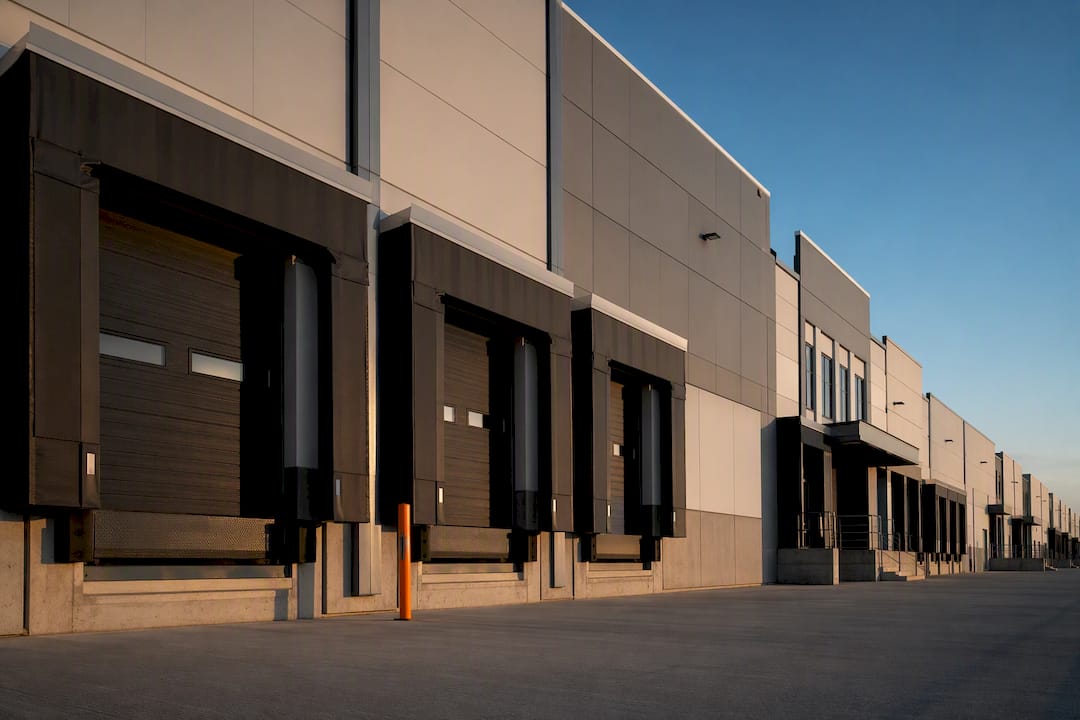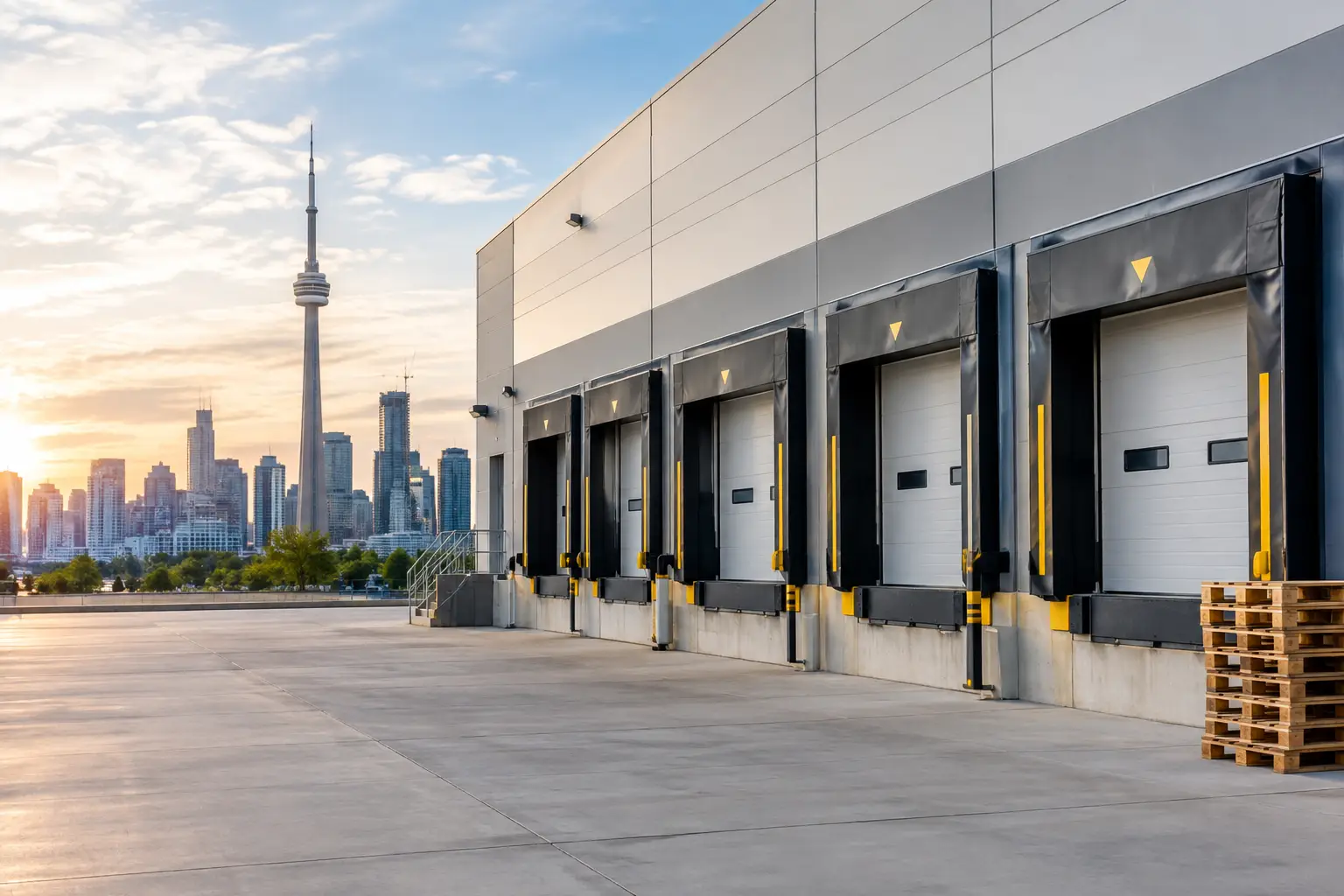
Advantages of leasing vs buying industrial property in the GTA
By Michael Law · Industrial Real Estate Broker, Lennard Commercial Realty
TL;DR:
- Leasing preserves cash flow and operational flexibility but does not build equity. Buying reduces long-term costs and allows asset control but requires significant capital. The decision depends on a company’s growth prospects, market conditions, and long-term strategic plans.
The advantages of leasing vs buying industrial property come down to one core trade-off: leasing preserves working capital and operational flexibility, while buying builds equity and reduces long-term occupancy costs. For business owners and corporate decision-makers in the Greater Toronto Area, this choice directly shapes capital allocation, balance sheet strength, and the ability to scale. The right answer depends on your growth trajectory, risk tolerance, and how long you plan to occupy a given facility. Neither path is universally superior. The decision requires a clear-eyed analysis of cash flow, total cost of ownership, and the specific dynamics of the GTA industrial market.
1. How leasing preserves cash flow and operational flexibility
Leasing is the stronger choice when capital preservation is the priority. Lease payments run 20–40% lower than equivalent loan payments for the same asset. That gap directly improves monthly cash flow, freeing capital for payroll, inventory, or expansion.

The upfront cost difference is equally significant. Purchasing a $200,000 asset in cash removes that entire amount from operating reserves immediately. Leasing spreads that cost over time, keeping liquidity intact for core business activities.
Fixed monthly lease payments also simplify financial forecasting. Budgeting becomes more predictable when occupancy costs do not fluctuate with interest rate changes or unexpected capital expenditures. This matters especially for logistics and manufacturing operators managing tight margins.
Leasing also transfers obsolescence risk to the lessor. When a facility no longer fits your operational footprint, a lease expiry or break clause gives you an exit. Ownership locks you into a physical asset that may require costly disposal or repositioning.
Key cash flow and flexibility benefits of leasing:
- Lower monthly payments free capital for growth activities
- No large upfront capital outlay required
- Predictable fixed costs support accurate financial forecasting
- Obsolescence and disposal risk stays with the property owner
- Lease terms can be structured to match operational planning horizons
- Exit options through expiry, renewal, or subletting provide agility
- Preserves credit capacity for other business financing needs
Pro Tip: When reviewing a lease, negotiate for a right of first refusal to purchase the property. This gives you the flexibility of leasing today with the option to buy if the asset proves strategically valuable over time.
2. What financial advantages does buying industrial property offer?
Ownership builds equity. Every mortgage payment reduces debt and increases your stake in a hard asset. In the GTA, where industrial land values have appreciated significantly over the past decade, that equity can become a substantial component of business net worth.
Buying is typically less expensive over the long term when a business occupies an asset extensively and the property retains or grows in value. Once the mortgage is retired, occupancy costs drop to taxes, insurance, and maintenance. A tenant continues paying rent indefinitely.
Ownership also gives you full control over the asset. You can modify the building to suit your operations, sublease excess space, refinance against the equity, or sell when market conditions favour it. Leasing restricts all of these options unless the landlord agrees.
Financial perks and obligations of buying industrial property:
- Equity accumulation with each mortgage payment
- Freedom to modify, expand, or repurpose the facility
- Ability to collateralise the asset for additional financing
- Potential capital gain on sale in a rising market
- Elimination of rent payments after the mortgage is paid off
- Full control over maintenance standards and capital improvements
- Exposure to maintenance, repair, and capital expenditure costs
- Responsibility for property taxes, insurance, and environmental compliance
- Reduced operational flexibility if business needs change
Pro Tip: Before committing to a purchase, calculate the Total Cost of Ownership across a 10-year horizon. Include mortgage interest, property taxes, insurance, maintenance reserves, and the opportunity cost of the capital deployed. That full number is what you are actually paying.
3. Key factors to evaluate when deciding between leasing and buying
The lease-versus-buy decision is a capital allocation problem, not a real estate preference. Total Cost of Ownership must include maintenance, insurance, interest, and the opportunity cost of capital tied up in the asset. The purchase price is only the entry point.
Asset usage duration
Businesses planning to occupy a facility for fewer than five years typically benefit from leasing. The transaction costs of buying and selling within a short window, including land transfer tax, legal fees, and broker commissions, erode any financial advantage of ownership. Long-term occupiers with stable space requirements are better positioned to absorb those costs and benefit from equity growth.
Balance sheet and accounting standards
IFRS 16 requires most leases to be recognised on the balance sheet as right-of-use assets and corresponding liabilities. This standard, adopted in Canada, eliminated the traditional off-balance-sheet advantage of operating leases. Both leasing and buying now affect reported leverage ratios. Decision-makers must model the balance sheet impact of each structure before committing.
Obsolescence and market risk
Leasing transfers obsolescence risk to the lessor. For businesses in fast-moving sectors like e-commerce fulfilment or cold chain logistics, where facility specifications change rapidly, this is a material advantage. Owners bear the full cost of retrofitting or disposing of an asset that no longer meets operational requirements.
Decision framework comparison
| Factor | Leasing | Buying |
|---|---|---|
| Upfront capital required | Low | High |
| Monthly occupancy cost | Higher over time | Lower after mortgage payoff |
| Operational flexibility | High | Low |
| Balance sheet impact | Right-of-use asset (IFRS 16) | Fixed asset and mortgage liability |
| Obsolescence risk | Transferred to lessor | Borne by owner |
| Long-term cost efficiency | Lower if asset changes | Lower if asset is held long-term |
| Equity building | None | Yes, through mortgage repayment |
A thorough TCO and tax analysis is necessary before any decision. There is no universal rule. The right structure depends on your specific capital strategy, growth plans, and risk tolerance.
4. How leasing and buying apply to the GTA industrial market
The GTA industrial market is one of the most competitive in Canada. Vacancy rates across the region have remained historically tight, and asking net rents have risen sharply across Mississauga, Brampton, Vaughan, and the Durham Region. These conditions change the financial calculus for both leasing and buying.
For tenants, leasing in the GTA requires careful negotiation on term length, rent escalation clauses, and tenant improvement allowances. A poorly structured lease in a high-rent environment locks a business into above-market costs for years. Working with a broker who understands submarket-level pricing is not optional. It is the difference between a lease that supports your business and one that strains it.
For buyers, rising GTA land values have made industrial ownership a wealth-building strategy in its own right. Businesses that purchased facilities in Brampton or Whitby a decade ago have seen significant appreciation. That said, the capital required to acquire GTA industrial property has grown substantially, raising the bar for owner-user purchases.
Key GTA-specific considerations for the lease-versus-buy decision:
- Tight vacancy rates limit available purchase opportunities, making leasing the more accessible entry point
- Rising land values reward long-term ownership but require significant upfront capital
- Lease renewals in the GTA often come with substantial rent increases, making early renegotiation critical
- Businesses undergoing rapid growth benefit from leasing’s ability to scale space up or down across GTA submarkets
- Owner-user buyers in markets like Caledon or Hamilton may find better value-to-cost ratios than in core Mississauga or Brampton nodes
- Industrial relocations within the GTA are easier to execute under a lease structure than when selling and repurchasing property
- Leaseback arrangements allow owners to unlock equity while retaining operational occupancy, a useful hybrid strategy
Leasing supports liquidity for GTA businesses navigating growth or market transitions. Buying rewards patience and capital strength. Both strategies have delivered strong outcomes for GTA industrial occupiers when matched correctly to business circumstances.
5. Tax implications and accounting treatment
Tax treatment is a material factor in the lease-versus-buy decision, and it is frequently underweighted. Lease payments are generally fully deductible as a business operating expense in Canada. Ownership costs are deducted differently: mortgage interest is deductible, but the principal repayment is not. Capital Cost Allowance (CCA) applies to the building structure but not the land component.
For businesses with strong taxable income, the full deductibility of lease payments can produce a meaningful annual tax benefit. For businesses with lower taxable income or significant loss carry-forwards, the tax advantage of leasing shrinks. A chartered professional accountant familiar with commercial real estate should model both scenarios before you sign anything.
The introduction of IFRS 16 also changed how leases appear on financial statements. Right-of-use assets and lease liabilities now sit on the balance sheet for most lease terms exceeding 12 months. Lenders and investors reviewing your financials will see these obligations. Businesses with debt covenants tied to leverage ratios need to assess how a new lease affects those thresholds before committing.
6. When buying makes more sense than leasing
Buying industrial property makes the most financial sense under three conditions: the business has a long-term, stable space requirement; the available capital can be deployed without compromising operating liquidity; and the local market offers a realistic path to appreciation or cost recovery.
A manufacturing business with a 20-year operating horizon in a single GTA facility is a strong candidate for ownership. The long hold period absorbs transaction costs, the mortgage eventually retires, and the property may appreciate. That same business with a five-year horizon and uncertain growth plans is a better candidate for leasing.
Owning assets exposes the firm to maintenance and disposal risks that leasing avoids. Businesses without dedicated facilities management capacity often underestimate these costs. A leaking roof, an aging HVAC system, or an environmental remediation requirement falls entirely on the owner. Tenants call the landlord.
Key takeaways
Leasing preserves capital and flexibility, while buying builds equity and reduces long-term occupancy costs. The right choice depends on your time horizon, capital position, and growth strategy.
| Point | Details |
|---|---|
| Leasing improves cash flow | Lease payments run 20–40% lower than equivalent loan payments, preserving working capital. |
| Buying reduces long-term costs | Ownership eliminates rent payments after mortgage payoff and builds equity in a hard asset. |
| TCO analysis is non-negotiable | Total Cost of Ownership must include maintenance, taxes, insurance, and opportunity cost before deciding. |
| IFRS 16 changed the equation | Most leases now appear on the balance sheet, removing the traditional off-balance-sheet advantage. |
| GTA market conditions matter | Tight vacancy and rising land values make both leasing and buying viable, depending on capital strength and time horizon. |
What I have learned advising GTA industrial clients
After years of working with industrial occupiers across the GTA, the pattern I see most often is this: businesses default to leasing because it feels safer, and they default to buying because it feels like the responsible long-term move. Neither instinct is wrong. Both are incomplete without the numbers.
The clients who make the best decisions are the ones who treat this as a capital allocation question, not a real estate preference. They model the cash flows, they stress-test the assumptions, and they ask what the capital deployed in a purchase could return if it stayed in the business instead. That last question is the one most decision-makers skip.
The other mistake I see regularly is ignoring the hidden costs of ownership. A business buys a 50,000-square-foot facility in Brampton, and the purchase price looks manageable. Then the roof needs replacing in year three, the electrical system needs upgrading for new equipment in year five, and the property taxes increase faster than anticipated. None of those costs appeared in the original analysis. They should have.
My honest recommendation: if your business is growing rapidly and your space needs will change within five years, lease. If you have a stable, long-term footprint and the capital to buy without straining operations, buying in the GTA is a wealth-building decision that has rewarded patient owners. If you are unsure, that uncertainty itself is a signal to lease until your growth trajectory becomes clearer.
Working with a broker who specialises in GTA industrial real estate, and who can connect you with the right financial and legal advisors, is the most reliable way to avoid a costly mistake in either direction. I work alongside the team at Lennard Commercial Realty to bring institutional-grade analysis to every transaction, regardless of size.
— Michael
Mlawrealestate: GTA industrial property advisory for leasing and buying decisions
Choosing between leasing and buying a GTA industrial facility is one of the highest-stakes financial decisions a business owner makes. Mlawrealestate provides the market intelligence and transaction expertise to make that decision with confidence.
Michael Law has advised logistics operators, manufacturers, and private investors across Toronto, Mississauga, Brampton, Vaughan, Whitby, and the broader GTA on both leasing and acquisition strategies. The Brampton logistics portfolio and Mississauga distribution centre case studies show how these decisions play out in practice. Visit mlawrealestate.com to review current market data, explore available industrial properties, and book a consultation.
FAQ
What are the main advantages of leasing vs buying industrial property?
Leasing preserves working capital, offers operational flexibility, and transfers obsolescence risk to the landlord. Buying builds equity, eliminates rent payments over time, and gives full control over the asset.
Is leasing or buying industrial property cheaper in the long run?
Buying is typically less expensive over the long term when the asset is held and used extensively. Leasing costs more in total over time but preserves capital for other business activities.
How does IFRS 16 affect the lease-versus-buy decision?
IFRS 16 requires most leases to be recognised on the balance sheet as right-of-use assets and liabilities, removing the traditional off-balance-sheet advantage of leasing and affecting reported leverage ratios.
When does leasing make more sense than buying for GTA businesses?
Leasing makes more sense when a business expects its space needs to change within five years, when capital is better deployed in operations, or when the GTA market offers limited purchase opportunities at viable prices.
What is Total Cost of Ownership and why does it matter?
Total Cost of Ownership includes the purchase price, mortgage interest, property taxes, insurance, maintenance, and the opportunity cost of capital deployed. Calculating TCO before buying prevents businesses from underestimating the true cost of ownership.
Recommended

About Michael Law
Managing Partner and Industrial Real Estate Broker at Lennard Commercial Realty. Representing tenants and landlords across Toronto and the GTA for 15+ years. Michael specializes in GTA industrial real estate — connect with Toronto's leading industrial broker at mlawrealestate.com/industrial-broker-toronto.