Logistics property investment checklist: Canada 2026 guide
By Michael Law · Industrial Real Estate Broker, Lennard Commercial Realty
TL;DR:
- A comprehensive logistics property investment checklist emphasizes location, zoning, building specifications, environmental risks, and tenant quality.
- GTA industrial vacancy sharply declined to 3.0% in early 2026, supported by constrained supply and strong demand.
A solid logistics property investment checklist covers location and highway access, zoning and permitted uses, clear height, slab condition, truck court depth, loading configuration, electrical capacity, roof condition, HVAC, fire protection, parking and yard rights, environmental due diligence, tenant and lease quality, net operating income, cap rate, capital repair exposure, and resale potential. Get all of these right before you waive conditions, and you have a defensible investment thesis. Miss even one, and the deal can unravel after closing.
Quick checklist at a glance:
- Location: highway access, truck routes, proximity to Pearson Airport or intermodal hubs
- Zoning: permitted uses, outdoor storage, truck parking, change-of-use requirements
- Building specs: clear height, slab integrity, column spacing, truck court depth, dock and drive-in doors
- Power and systems: electrical capacity, HVAC, sprinklers, ventilation, drainage
- Environmental: Phase 1 Environmental Site Assessment, contamination orders, remediation risk
- Tenant and lease: rent roll, lease term, renewal options, expense recovery, vacancy risk
- Financial: net operating income, cap rate, market rent comparison, capital repair budget
- Legal: title, survey, Investment Canada Act filing if applicable, Quebec notarized deed if relevant
- Resale: re-leasing flexibility, redevelopment potential, functional utility for future tenants
This guide expands each item with the depth Ontario and GTA investors need to make confident acquisition decisions.
Why logistics properties are worth your attention in Canada
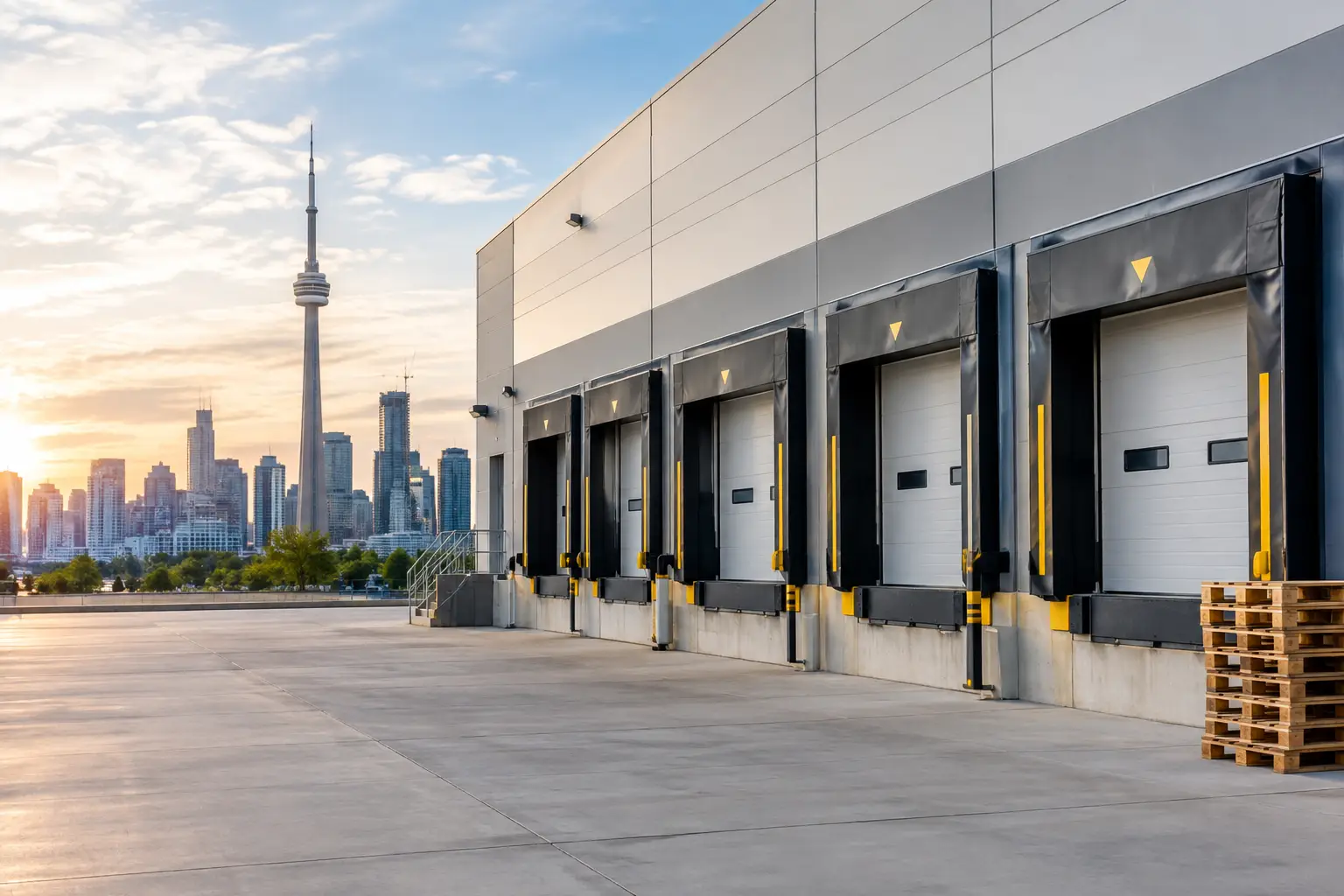
The GTA industrial market is supply constrained, and that scarcity is the single most important tailwind for investors right now. GTA vacancy edged down to 3.0% in Q1 2026, the first quarterly improvement of the cycle, as roughly 1.9 million square feet of net absorption outpaced new deliveries. York Region posted the tightest submarket vacancy, while Toronto’s core sat with low vacancy. Durham, the GTA’s most competitively priced submarket, recorded the strongest quarterly absorption.
New construction is pulling back sharply. Space under construction in the GTA stood below recent multi-year averages and significantly below the peak of 2022–23. Less supply through 2026–27 means recently delivered space absorbs faster, and well-located assets hold their income.
The demand side is equally constructive. Annual leasing reached approximately 29.3 million square feet in 2025, the strongest annual total in a decade, driven by logistics, distribution, and e-commerce occupiers. Estimated asking rents held steady across the GTA in Q1 2026, with some submarkets leading in pricing.
Beyond the GTA, the federal Productivity Super-Deduction allows faster write-off of capital invested in manufacturing and processing real estate, a meaningful incentive for owner-users and investors alike. Ottawa’s 2026 budgetary response to trade tensions layers additional pro-industrial supports into the policy backdrop.
Key reasons to invest in Canadian logistics real estate:
- Structurally low vacancy in core GTA submarkets supports rent stability
- Declining new construction starts put a floor under fundamentals
- E-commerce and third-party logistics (3PL) demand continues to broaden tenant pools
- Highway 400/404 corridor and Pearson Airport proximity command measurable rent premiums
- Federal tax incentives favour capital-intensive industrial acquisitions
- Long-term industrial land scarcity in the GTA creates appreciation potential beyond income returns
Technical due diligence: what to audit before you buy
Physical due diligence on a logistics facility goes well beyond a general building inspection. Ontario industrial due diligence requires audits of clear height, slab condition, truck court depth, power capacity, and environmental risk as baseline requirements. Miss column spacing or yard circulation, and you may end up with an asset that functional tenants will not lease at market rates.
Building specifications that drive tenant demand
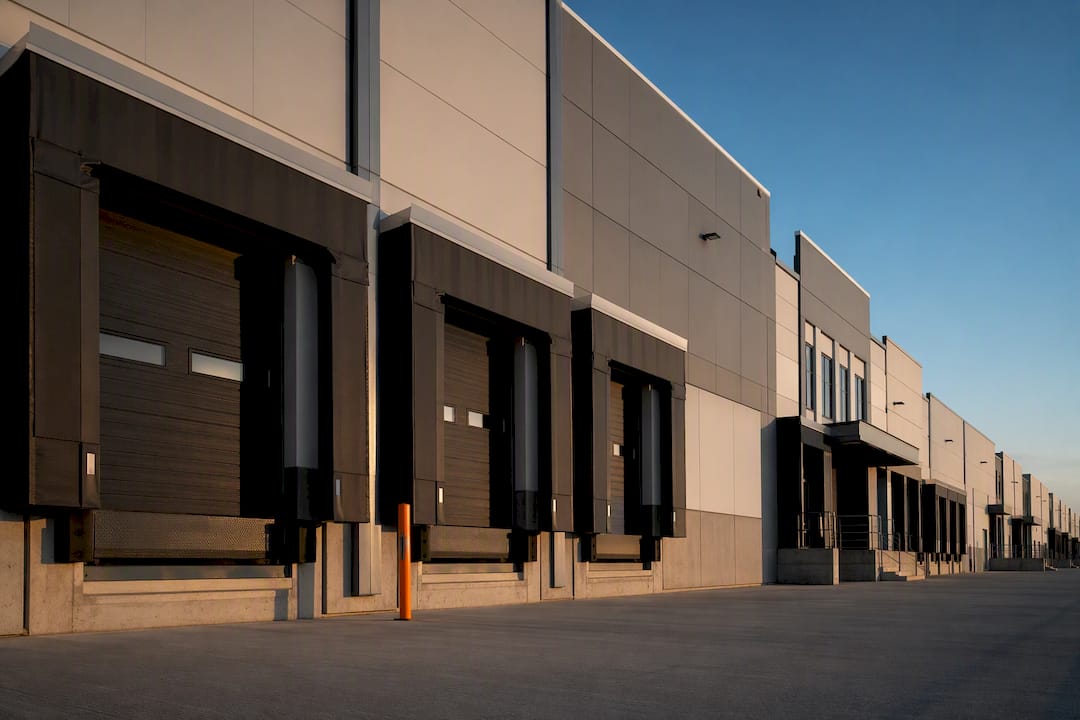
Clear height is the most cited spec, but it is not the only one that matters. A 32-foot clear building in Vaughan leases faster than a 24-foot building in the same corridor, and the rent gap reflects that. Truck court depth determines whether 53-foot trailers can manoeuvre without blocking the fire route. Column spacing affects racking layouts and forklift circulation. These are not cosmetic differences; they directly affect which tenants will pay market rent and which will pass.

Industrial property value now depends heavily on functional utility aligned with modern logistics trends, including last-mile delivery and multi-tenant flexibility. A building with functional obsolescence in column spacing or HVAC efficiency may trade below market despite high current occupancy.
Essential building specs and inspection thresholds
| Feature | What to check | Why it matters |
|---|---|---|
| Clear height | Measure at lowest obstruction | Sub-24 ft limits racking; 32+ ft commands premium |
| Slab condition | Cracking, heaving, joint condition, floor loading | Forklift and racking suitability; repair costs |
| Truck court depth | Measure usable apron | minimum for 53-ft trailers with staging |
| Dock doors | Count, levellers, door height and width | Throughput capacity and tenant fit |
| Electrical capacity | Amps, voltage, transformer size | EV charging, automation, food production needs |
| Roof | Age, type, warranty, drainage, ponding | Replacement cost and lease responsibility |
| HVAC | Coverage, condition, lease responsibility | Operating cost and tenant comfort |
| Fire protection | Sprinkler coverage and rating | Insurance, permitted uses, tenant requirements |
| Yard surface | Paving condition, drainage | Trailer parking, outdoor storage, winter ops |
Environmental due diligence
Commission a Phase 1 Environmental Site Assessment before waiving conditions on any industrial acquisition. Former industrial uses, underground storage tanks, and adjacent contamination can create liabilities that exceed the property’s value. Check provincial environmental agency records for open remediation orders. If the Phase 1 flags concerns, a Phase 2 with soil and groundwater sampling is not optional.
Pro Tip: Request the seller’s existing environmental reports as part of your initial offer conditions. A vendor who refuses to disclose prior assessments is telling you something worth hearing.
How to evaluate tenants and lease agreements
Tenant quality, lease terms, rent roll strength, and market demand are the four variables that determine income stability in any industrial investment. A building with a 10-year lease to a creditworthy 3PL operator is a fundamentally different asset from the same building leased to a startup on a two-year term, even if the rent is identical.

Start with the rent roll. Compare in-place rent to current market rates. If a tenant is paying C$12.00 per square foot in a submarket where market is C$17.00, you have upside on renewal but also rollover risk if the tenant walks rather than accept a reset. Renewal options, rent escalation clauses, and the expense recovery structure (net versus gross) all affect your actual yield.
Lease review checklist:
- Permitted use: does it match the tenant’s actual operations, and does it restrict future re-leasing?
- Lease term remaining and renewal options with rent escalation terms
- Additional rent or TMI structure and what expenses the tenant covers
- HVAC, roof, and structural repair obligations: who pays?
- Alteration rights and landlord approval process for tenant improvements
- Assignment and sublease rights, including change-of-control provisions
- Restoration obligations at lease end
- Personal guarantee exposure and tenant financial strength
- Outdoor storage, yard, and parking rights explicitly granted in the lease
Vacancy risk in logistics is real but manageable in the GTA’s current market. Tenant velocity has fully re-engaged across logistics, distribution, and value-oriented occupiers. That said, a building with poor loading, low clear height, or restricted outdoor storage will face a longer re-leasing period regardless of market conditions.
Zoning, permitted uses, and legal compliance
Zoning determines what a tenant can legally do on the property, and the gap between what zoning allows and what a tenant actually needs is where deals go sideways. Zoning and permitted uses vary with restrictions on outdoor storage, truck parking, and trailer parking that require thorough review, including municipal approvals, before any commitment.
What to confirm before signing
- Current zoning designation and all permitted uses
- Whether outdoor storage, trailer parking, and truck parking are explicitly permitted
- Noise, dust, odour, vibration, and emissions rules that could restrict tenant operations
- Site plan control requirements and whether any approvals are outstanding
- Change-of-use requirements if you plan to reposition the asset
- Building permit status and whether any unpermitted work exists
- Environmental restrictions registered on title
Zoning changes and municipal intensification policies in the GTA can affect industrial land value by 20–40%, making zoning due diligence as important as the physical inspection. An asset that looks like a logistics facility today may sit on land that the municipality has earmarked for mixed-use intensification, which is either an opportunity or a risk depending on your investment horizon.
Legal considerations specific to Canada
Foreign investors must assess Investment Canada Act obligations carefully. The 2024 amendments extended national security review to minority stakes, asset purchases, and joint ventures in sensitive sectors, regardless of deal size. Pre-closing filing is mandatory in those sectors, and closing without clearance exposes the acquirer to fines of C$500,000 per day.
Quebec is a separate compliance environment. Any asset transfer of real property in Quebec must be completed by notarized deed before a Quebec notary. Without it, the transfer is void. This differs from every other Canadian province and must be built into your closing timeline if the acquisition involves Quebec assets.
For GTA and Ontario acquisitions, confirm title, survey, all building permits, zoning approvals, and environmental certificates are in place and assignable before waiving conditions. A thorough commercial due diligence process integrates all of these legal checks alongside the physical inspection.
Financial yield, risk, and total cost assessment
GTA industrial sales reached approximately C$1.5 billion in Q1 2026, the strongest opening quarter since 2023, with composition shifting toward single-asset and infill trades as investors prioritise high-quality, well-located product. Cap rates vary significantly by asset quality. A modern, well-specified distribution facility in Vaughan trades at a materially tighter cap rate than a functionally outdated building in a secondary location, even at similar square footage.
Net operating income is your starting point. Calculate it from actual in-place rents, not asking rents, and stress-test it against a vacancy scenario. Then layer in total ownership costs: property taxes, insurance, structural repairs, capital expenditures, and any landlord obligations under the lease. Estimated total gross occupancy costs across the GTA ran in the low C$20s per square foot range in Q1 2026, with base rents at approximately C$17.00 per square foot and additional rent firming to approximately C$4.90 per square foot.
Financial due diligence checklist:
- Net operating income based on actual rent roll, not pro forma
- Cap rate benchmarked against recent comparable sales in the same submarket
- Market rent comparison to assess upside or rollover risk at renewal
- Capital repair budget: roof, paving, HVAC, electrical upgrades
- Environmental liability exposure and remediation cost estimates
- Property tax assessment and any pending reassessment
- Financing costs and lender requirements for industrial assets
- Tenant improvement obligations and any outstanding landlord work
- Exit strategy: re-leasing demand, redevelopment potential, owner-user appeal
Common financial mistakes to avoid:
- Evaluating price per square foot without accounting for loading, clear height, or power limitations
- Ignoring capital repair exposure on older roofs and paving
- Overestimating market rent growth in submarkets with elevated vacancy
- Failing to model tenant rollover timing and re-leasing costs
- Confusing land value with income value in redevelopment-adjacent locations
For a deeper look at how to model these variables, the industrial investment analyzer at Michael Law | Lennard Commercial walks through operational and financial factors specific to GTA logistics assets.
Expert perspective: navigating Ontario’s industrial market
Michael Law | Lennard Commercial has worked across the GTA’s industrial corridors for over a decade, advising investors, logistics operators, and corporate occupiers in markets from Mississauga and Brampton to Markham, Ajax, and Barrie. The pattern in underperforming acquisitions is consistent: investors focus on price and location, then discover after closing that the building does not support the tenant demand they assumed.
Functional utility is the variable most often underweighted. Column spacing, yard circulation, and the ability to add dock doors are not secondary specs. They determine which tenants will pay market rent and how quickly you can re-lease if the current tenant leaves. A building that fits one narrow use profile is a concentration risk, not a stable income asset.
Highest-and-best-use analysis matters more in the GTA than almost anywhere else in Canada. Industrial-zoned land in core submarkets is under pressure from data centre demand, residential conversion, and municipal intensification targets. Understanding whether your asset’s value is tied to its current income or to its land position under a future rezoning changes the entire investment thesis.
The GTA’s supply constraint is real and durable. With new construction well below historical averages and leasing demand broadening across logistics and distribution users, well-located modern assets are positioned to outperform through 2026 and beyond. But location alone does not protect a poorly specified building. The investors who consistently generate strong returns combine location quality with functional utility, clean environmental status, and lease structures that align with market conditions.
Pro Tip: Never evaluate a logistics acquisition on a single criterion. The strongest due diligence integrates technical, financial, legal, and operational assessments simultaneously. A property that passes on price and location but fails on zoning, loading, or environmental status is not a good deal at any price.
For investors ready to move on GTA industrial opportunities, Michael Law | Lennard Commercial provides expert industrial brokerage across Toronto, Mississauga, Brampton, Vaughan, Markham, and the broader Ontario market. Whether you are acquiring a logistics facility, repositioning an existing asset, or evaluating your first industrial investment, the team at Lennard Commercial brings the market knowledge and due diligence depth the GTA demands.
Key takeaways
A successful logistics property investment in Canada requires integrating technical, financial, legal, and tenant due diligence before waiving conditions, with GTA market fundamentals in 2026 strongly favouring well-located, modern assets.
| Point | Details |
|---|---|
| GTA vacancy at 3.0% | Q1 2026 marked the first quarterly vacancy improvement of the cycle, with absorption outpacing new supply. |
| Technical specs drive re-leasing | Clear height, truck court depth, column spacing, and power capacity determine tenant demand and market rent achievability. |
| Zoning due diligence is financial due diligence | Municipal intensification policies can shift industrial land value by 20–40%, making zoning review as critical as the physical inspection. |
| ICA compliance is mandatory for foreign buyers | Post-2024 amendments extend national security review to minority and asset deals; closing without clearance risks fines of C$500,000 per day. |
| C$1.5B in Q1 2026 sales | GTA industrial investment volume hit its strongest opening quarter since 2023, with investors prioritising single-asset infill trades. |
FAQ
What should a logistics property investment checklist include?
A complete checklist covers location and highway access, zoning and permitted uses, clear height, slab condition, truck court depth, loading configuration, electrical capacity, roof condition, HVAC, fire protection, environmental due diligence, tenant and lease quality, net operating income, cap rate, capital repair exposure, and resale potential.
What is the current vacancy rate for GTA industrial properties?
GTA industrial vacancy edged down to 3.0% in Q1 2026, with York Region posting the tightest submarket vacancy.
Do foreign investors need to file under the Investment Canada Act?
Yes. The 2024 amendments require pre-closing filings in sensitive sectors regardless of deal size, including for minority stakes and asset purchases. Closing without clearance exposes the acquirer to fines of C$500,000 per day.
Why does zoning matter so much for logistics property investment?
Zoning determines permitted uses, outdoor storage rights, truck parking, and change-of-use requirements. In the GTA, municipal intensification policies can affect industrial land value by 20–40%, making zoning review one of the highest-impact steps in any acquisition.
Estimated asking rents held steady at approximately C$17.00 per square foot across the GTA in Q1 2026, with some submarkets leading in pricing.
Recommended

About Michael Law
Managing Partner and Industrial Real Estate Broker at Lennard Commercial Realty. Representing tenants and landlords across Toronto and the GTA for 15+ years. Michael specializes in GTA industrial real estate — connect with Toronto's leading industrial broker at mlawrealestate.com/industrial-broker-toronto.