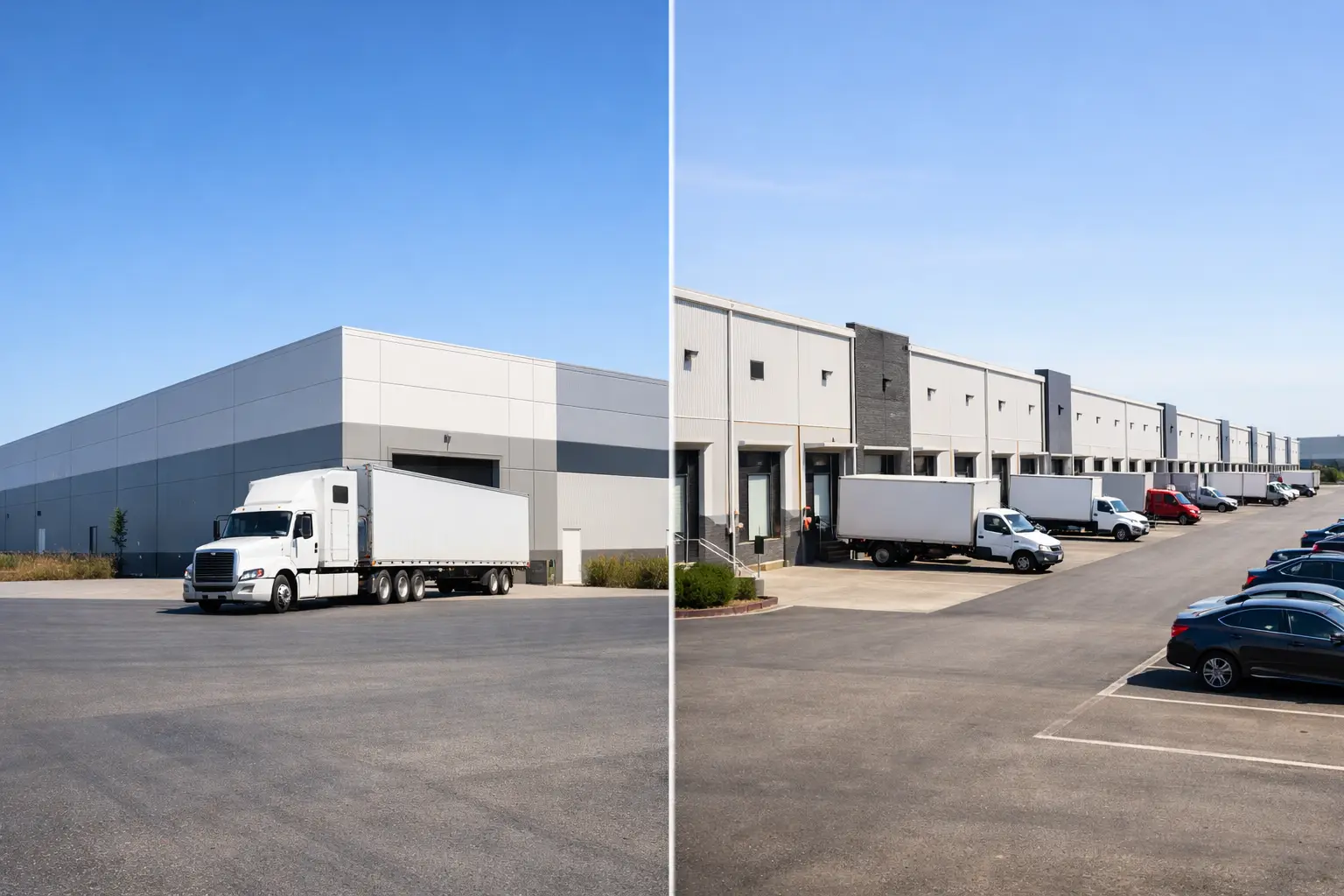
Single Tenant Versus Multi Tenant Industrial
By Michael Law · Industrial Real Estate Broker, Lennard Commercial Realty
A vacant 100,000-square-foot building and a 100,000-square-foot building with six tenants can carry the same address, zoning, and replacement cost. They do not carry the same investment risk. The decision between single tenant versus multi tenant industrial property affects cash flow durability, leasing costs, financing, buyer demand, and the work required from ownership.
For industrial owners and investors in the Greater Toronto Area, the right answer is rarely a matter of preference alone. It comes down to the quality of the tenant covenant, lease structure, building functionality, location, capital plan, and intended holding period.
Single Tenant Versus Multi Tenant Industrial: The Core Difference
A single-tenant industrial property is occupied by one business, typically under one lease. The building may be a manufacturing plant, warehouse, distribution facility, outside-storage site, or a specialized operation with significant tenant improvements. The owner receives income from one source.
A multi-tenant industrial property is divided among two or more occupiers. It may be a small-bay industrial plaza, a flex-industrial building, or a larger facility with separately demised warehouse and office units. Income is diversified across a tenant roster, while the landlord takes on more leasing and operating administration.
That distinction seems simple, but it changes how the asset should be underwritten. A single-tenant property concentrates occupancy risk in one company. A multi-tenant property spreads that risk, but introduces rolling lease expiries, recurring turnover, and more active management.
Income Certainty Depends on the Lease, Not Just the Tenant Count
Single-tenant assets can produce highly predictable cash flow when the lease is long term, the tenant is financially sound, and the operating obligations are clearly assigned. A net lease can shift property taxes, insurance, maintenance, and certain capital responsibilities to the tenant. For an investor seeking a more passive income profile, that structure can be attractive.
The risk is equally clear. If the sole tenant leaves, income can fall to zero immediately while property taxes, debt service, insurance, and carrying costs remain. Releasing may take time, particularly when the building is highly specialized or priced above the local market. A tenant-specific layout, excess office buildout, unusual power requirements, or limited loading can narrow the replacement tenant pool.
Multi-tenant properties usually create less dramatic income disruption. One vacancy hurts, but the remaining tenants continue to pay rent. This can make a well-leased multi-tenant building more resilient during a tenant default or an unexpected move-out.
However, diversified rent does not automatically mean stable rent. A building with several short leases expiring in the same year can face substantial rollover exposure. Investors should review the rent roll beyond the headline occupancy figure: expiry dates, renewal options, tenant credit, security deposits, arrears, inducements, and the market rent for each unit all matter.
Leasing Risk and Upside Move in Opposite Directions
Single-tenant industrial often offers clean execution when the tenant is committed to the location. A manufacturer that has invested heavily in equipment, a distributor serving a dense customer base, or a business with costly improvements may have a strong incentive to renew. That does not eliminate risk, but it can improve renewal probability.
The same commitment can limit the landlord's flexibility. If below-market rent is locked in for many years, ownership may have limited ability to capture rising market rents. Conversely, when a lease expires in a strong market, the owner may gain a meaningful reset opportunity, but only if the building remains competitive for the existing tenant or a new occupant.
Multi-tenant industrial creates more frequent chances to adjust rents. In a market where small-bay supply is tight, turnover can provide an owner with recurring opportunities to bring rents toward market levels, revise lease terms, and improve the tenant mix. This is one reason value-add investors often favor multi-tenant assets.
Those opportunities require execution. Each vacancy can involve brokerage, legal work, tenant improvements, free-rent periods, repairs, and lost income. In Toronto and the GTA, demand for functional industrial space can be deep, but tenant preferences still vary by unit size, clear height, shipping configuration, power, parking, and access to major highways. A vacancy in a well-configured bay is not the same as a vacancy in an obsolete space.
Building Functionality Can Matter More Than the Label
A generic warehouse with appropriate clear height, multiple loading doors, usable shipping courts, sufficient power, and practical circulation can appeal to a broad group of users. Such a building may transition between single-tenant and multi-tenant use more easily, which supports exit flexibility.
A purpose-built facility can be more complicated. Food processing, cold storage, heavy manufacturing, and properties with specialized environmental systems may command strong value when matched with the right user. They can also require more time and capital to reposition after a vacancy. In those cases, an investor should not assume that a long single-tenant lease removes all future leasing risk. It may simply defer it.
Before acquiring either asset type, assess whether the property can be re-demised, whether utilities can be separately metered, whether loading areas can serve multiple users, and whether zoning supports likely future tenants. These questions are particularly relevant in established GTA industrial nodes where land constraints make functional flexibility valuable.
Financing and Valuation Follow the Risk Profile
Lenders and buyers generally look closely at tenant quality, lease term remaining, and the durability of the income stream. A single-tenant property leased long term to a creditworthy tenant may receive favorable attention because its revenue is easy to understand. But financing can become more difficult when the lease has limited term remaining, the tenant is private with limited financial disclosure, or the building has specialized characteristics.
Multi-tenant industrial is valued on the stability of its rent roll and its ability to sustain occupancy through normal turnover. A diversified roster can reduce dependency on one business, yet lenders will scrutinize vacancy, near-term expiries, tenant concentration, and operating expenses. The quality of management also matters more because income is created through many individual lease decisions.
Cap rate comparisons should be treated carefully. A lower cap rate for a single-tenant asset may reflect a strong covenant and long lease, not a superior building. A higher cap rate for a multi-tenant property may compensate for management intensity or rollover risk, while also offering more upside through rent growth. The better investment is the one where the assumed return properly compensates for the risks that are actually present.
Owner-Users Face a Different Decision
For an owner-user, single occupancy often provides control. A business can tailor the building to operations, protect privacy, manage shipping without shared constraints, and avoid disruption from neighboring tenants. Excess space can become a future issue, though. A company that outgrows or contracts within a building may benefit from a property that can be leased to other users.
A multi-tenant configuration can help an owner-user offset carrying costs by leasing surplus space. It also creates landlord obligations and potential friction around parking, shipping, access, and shared services. The structure works best when the property was designed for multiple occupiers rather than divided as an afterthought.
A Practical Way to Choose the Right Industrial Asset
The most useful question is not whether single tenant or multi tenant is better. It is where the asset's risk sits and whether the ownership plan can manage it.
A buyer seeking steady income with limited day-to-day involvement may prefer a single-tenant property with a strong tenant, meaningful lease term, clear repair obligations, and broad re-leasing potential. A more active investor may accept the work of a multi-tenant asset in exchange for diversified income and multiple opportunities to grow rent.
Due diligence should test the story behind the offering memorandum. Review the full lease documents rather than relying only on a rent summary. Confirm who pays for roof, structure, HVAC, environmental matters, and capital repairs. Study tenant financial information where available, inspect the building's physical condition, and compare in-place rents with current market evidence. A low vacancy rate does not protect an owner from a poorly structured lease, and a long lease does not protect an owner from an unmarketable building.
For sellers, the same analysis helps position the property properly. A single-tenant asset should be presented through the strength of its lease, tenant, and building utility. A multi-tenant asset should demonstrate lease rollover, expense recovery, tenant retention, and rentable-area potential. Clear information allows serious buyers to price risk with confidence.
The best industrial investments are rarely the ones with the simplest label. They are the ones where tenant needs, lease structure, property function, and ownership strategy remain aligned long after the closing date.

About Michael Law
Managing Partner and Industrial Real Estate Broker at Lennard Commercial Realty. Representing tenants and landlords across Toronto and the GTA for 15+ years. Michael specializes in GTA industrial real estate — connect with Toronto's leading industrial broker at mlawrealestate.com/industrial-broker-toronto.