
Commercial real estate San Diego: 2026 investor guide
By Michael Law · Industrial Real Estate Broker, Lennard Commercial Realty
Commercial real estate San Diego: 2026 investor guide
TL;DR:
- San Diego’s commercial real estate market offers diverse asset classes with distinct submarkets driven by biotech, defense, and logistics sectors. Tenant-only brokers provide better lease terms, flexibility, and off-market deal access by avoiding conflicts of interest. Coastal properties require higher maintenance budgets due to salt air, impacting net operating income if not properly accounted for.
Commercial real estate in San Diego encompasses office, industrial, life science, retail, and multifamily properties that present distinct investment and leasing opportunities across one of California’s most active property markets. The city’s diverse asset classes attract institutional buyers, private investors, and growing businesses seeking strategic footholds in a market shaped by biotech, defence, and logistics demand. Firms like Hughes Marino and Shelton & Associates have built strong reputations here by specialising in tenant-only advisory and site selection. Whether you are leasing office space in San Diego or evaluating an acquisition, understanding the local submarkets and deal structures is the difference between a sound investment and a costly mistake.
What are the key commercial real estate submarkets in San Diego?
San Diego’s commercial property market divides into distinct submarkets, each with its own demand drivers, rental rates, and tenant profiles. Knowing which submarket fits your operational or investment goals is the first decision you need to make.
Downtown and Mission Valley
Downtown San Diego anchors the office market, attracting professional services firms, financial institutions, and government tenants. Mission Valley sits just inland and offers mid-range office and retail space with strong freeway access along Interstate 8. Both areas benefit from dense amenity bases and public transit connections, which matter significantly when competing for talent.
Kearny Mesa, Miramar, and University City
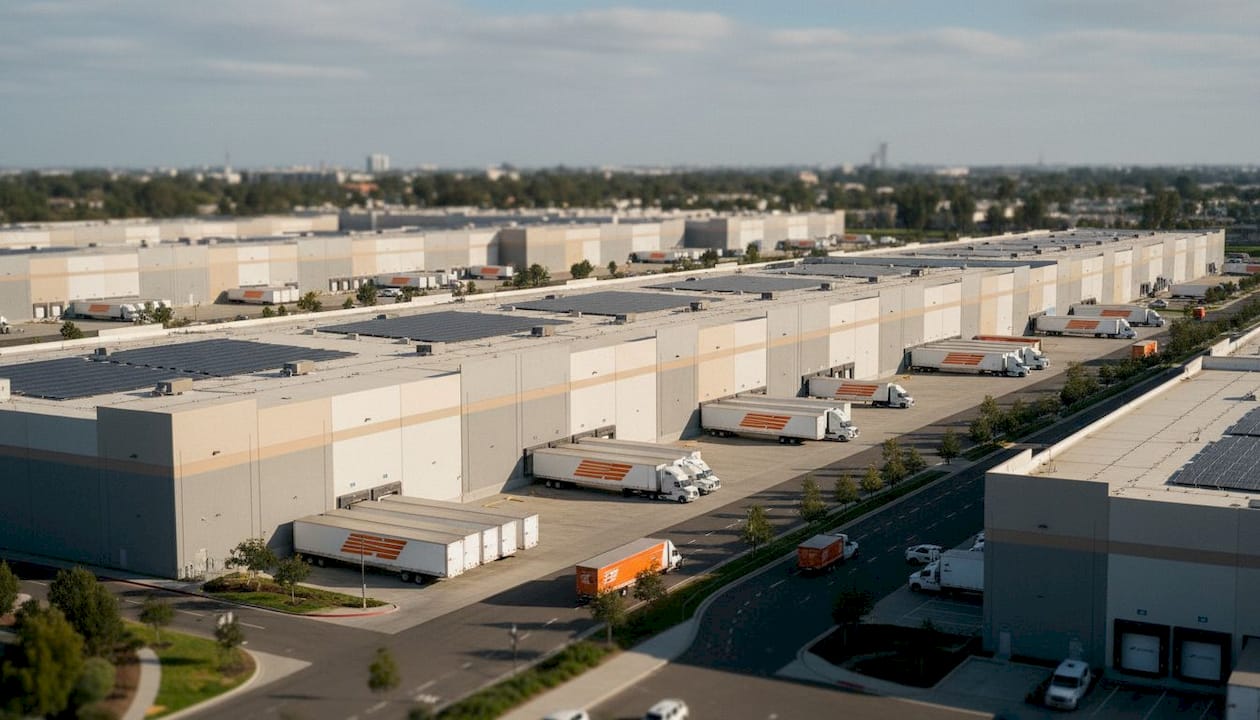
Kearny Mesa and Miramar are the industrial and flex-space cores of San Diego. These submarkets house logistics operators, light manufacturers, and defence contractors who need proximity to Marine Corps Air Station Miramar and major arterials. University City, by contrast, leans heavily toward life science and R&D, sitting adjacent to UC San Diego and the Torrey Pines research corridor. The University City submarket recently saw a 32,764-square-foot building leased to USPS sell for $9.6 million in 2026. That transaction signals continued institutional confidence in the area’s long-term value.
Carlsbad and North County
Carlsbad attracts life science campuses and R&D facilities that use amenity-rich environments to compete for talent. Properties here often feature outdoor workspaces and fitness centres including shaded walkways, barbeque areas, and walking paths with coastal views. That is not a luxury add-on. In a tight labour market, those features directly influence a tenant’s ability to recruit and retain skilled workers.
Pro Tip: When evaluating North County locations like Carlsbad, factor in the amenity package as part of your total occupancy cost calculation. A slightly higher rent in an amenity-rich campus can reduce recruitment and retention costs more than the premium costs.
Coastal vs. inland: a critical distinction
Coastal properties in San Diego carry higher maintenance budgets due to salt air exposure. Salt air accelerates deterioration of HVAC systems, roofing materials, and exterior finishes, which directly compresses net operating income over time. Inland assets in Miramar or Kearny Mesa avoid this cost pressure. Investors comparing coastal and inland properties must model maintenance costs separately rather than applying a single expense ratio across the portfolio.
How does tenant-only broker representation benefit businesses leasing commercial space in San Diego?
Tenant-only representation is a brokerage model where the broker works exclusively for the tenant, with no financial relationship with the landlord. This structure eliminates the conflict of interest that arises when a single broker represents both sides of a transaction.
The conflict of interest problem in dual representation
Most commercial brokers in San Diego represent both landlords and tenants across different deals. When the same firm lists a building and also advises a prospective tenant on that building, the broker’s financial incentive favours closing the deal, not securing the best terms. Tenant-only brokers like Hughes Marino and Shelton & Associates operate under a different model entirely. Their fee comes from the tenant’s outcome, not the landlord’s commission.
What tenant-only representation delivers in practice
The practical benefits extend well beyond avoiding conflicts. Here is what a dedicated tenant broker brings to a San Diego leasing transaction:
- Rent negotiation leverage. Tenant brokers track comparable transactions across submarkets and use that data to push back on asking rates. A landlord quoting $3.50 per square foot in Kearny Mesa may accept $3.10 when a broker presents recent comparable deals.
- Tenant improvement allowances. Securing a meaningful TI allowance requires knowing what landlords in a specific submarket are currently offering. Tenant brokers maintain this data and negotiate accordingly.
- Lease flexibility provisions. Expansion options, contraction rights, and early termination clauses protect a growing or restructuring business. These provisions rarely appear in a landlord’s standard lease form. A tenant broker inserts them.
- Off-market access. High-value industrial and life science deals in San Diego commonly happen off-market through proprietary brokerage pipelines. Tenants without a dedicated broker simply do not see these opportunities.
“The best lease is not the one with the lowest rent. It is the one with the most flexibility built in for where your business will be in three years.” This principle guides every tenant representation engagement in a market as dynamic as San Diego’s.
Pro Tip: Before signing any listing agreement or engaging a broker, ask directly: “Do you represent landlords in this submarket?” If the answer is yes, your interests are already compromised.
Understanding broker advantages in commercial leasing is not just relevant to San Diego. The same principles apply in any competitive market where off-market deals and lease flexibility determine long-term outcomes.
What are best practices for managing commercial properties to maximise NOI in San Diego?
Net operating income is the single most important metric in commercial property ownership. Effective property management in San Diego requires a process-driven approach that addresses regulatory requirements, climate-specific maintenance, and tenant coordination simultaneously.
Lease enforcement and expense control
Strict lease enforcement protects NOI. Common area maintenance charges, insurance reimbursements, and property tax pass-throughs must be billed accurately and collected on schedule. Landlords who allow CAM reconciliation errors or late billing create disputes that delay cash flow and erode tenant relationships. NNN lease structures in San Diego’s industrial and retail sectors shift most operating costs to tenants, but only if the lease language is precise and the landlord enforces it consistently.
Coastal vs. inland maintenance budgeting
The table below illustrates how maintenance cost assumptions differ between coastal and inland San Diego assets:
| Expense category | Coastal assets (e.g., La Jolla, Carlsbad) | Inland assets (e.g., Miramar, Kearny Mesa) |
|---|---|---|
| HVAC replacement cycle | 8–12 years due to salt air corrosion | 15–20 years under standard conditions |
| Exterior paint and sealant | Every 3–5 years | Every 7–10 years |
| Roofing inspection frequency | Annual | Bi-annual |
| Annual maintenance budget premium | 15–25% above inland baseline | Baseline |
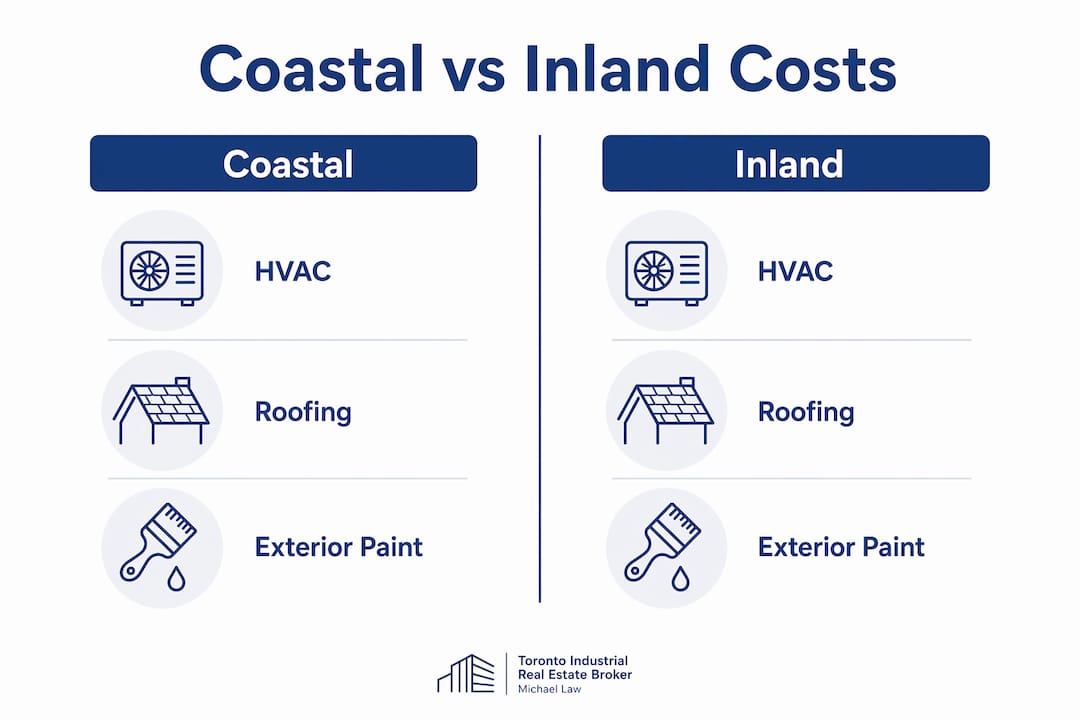
These differences are not cosmetic. A coastal asset that is underbudgeted for maintenance will show compressed cap rates at disposition, reducing the return on the original investment.
Key property management priorities for San Diego owners
- Conduct submarket-specific expense benchmarking before setting annual budgets
- Implement preventative maintenance schedules calibrated to coastal or inland conditions
- Audit CAM and NNN reconciliations annually to catch billing errors before they compound
- Maintain strong tenant communication protocols to reduce vacancy risk during lease renewals
- Use local property managers with direct knowledge of Downtown, Mission Valley, and La Jolla submarket conditions
Maximising returns on commercial property requires the same discipline in San Diego as it does in any high-demand urban market. The fundamentals of expense control and lease enforcement are universal.
What leasing and investment strategies optimise returns in San Diego commercial real estate?
The best returns in San Diego commercial real estate come from combining flexible lease structures with well-timed acquisitions, often through off-market channels. Market cycles in San Diego are influenced by defence spending, biotech funding cycles, and broader California economic conditions.
Structuring leases for flexibility and value
A lease is not just a revenue document. It is a risk management tool. Leases with built-in renewal options at pre-negotiated rates protect tenants from rent spikes in a tightening market. Expansion rights allow a growing business to absorb adjacent space without relocating. Lease negotiation best practices in 2026 emphasise securing these provisions upfront, before a landlord’s market leverage increases.
Tenant improvement allowances deserve particular attention in life science and R&D properties. Modern life science campuses in San Diego incorporate flexible floor plates and heavy power infrastructure that allow tenants to consolidate lab, office, and light manufacturing operations in a single facility. Negotiating a TI allowance that covers fit-out costs for this type of space can represent hundreds of thousands of dollars in avoided capital expenditure.
Comparing leasing vs. buying commercial space in San Diego
| Factor | Leasing | Buying |
|---|---|---|
| Upfront capital requirement | Low (first/last month, deposit) | High (down payment, closing costs) |
| Balance sheet impact | Off-balance-sheet flexibility | Asset appreciation potential |
| Operational flexibility | High with renewal and exit options | Low without a sale or refinance |
| Market exposure | Protected from short-term price swings | Full exposure to market cycles |
| Best suited for | Growing businesses, uncertain timelines | Established operators, long-term users |
Off-market acquisitions and investment timing
The $9.6 million USPS facility acquisition in University City illustrates how off-market deals deliver institutional-grade assets before they reach the open market. Investors who rely solely on listed properties compete against the broadest pool of buyers and pay the highest prices. Building relationships with tenant-only brokers who maintain proprietary deal pipelines is the most reliable way to access these transactions.
San Diego’s life science sector adds another dimension to investment timing. Biotech funding cycles directly influence demand for R&D and lab space in Torrey Pines and University City. Investors who track National Institutes of Health grant cycles and UCSD commercialisation activity can anticipate demand shifts before they appear in vacancy data.
Pro Tip: If you are evaluating a buy commercial real estate San Diego opportunity, request a five-year maintenance history from the seller before making an offer. Coastal properties with deferred maintenance will show the cost pressure immediately in the first year of ownership.
For investors tracking industrial investment trends in 2026, the principles governing off-market deal access and lease structuring apply equally in San Diego and in high-demand Canadian markets like the GTA.
Key takeaways
San Diego commercial real estate rewards investors and tenants who combine submarket knowledge, tenant-only representation, and disciplined property management to protect and grow asset value.
| Point | Details |
|---|---|
| Submarket selection drives returns | Choose between coastal life science, inland industrial, or urban office based on your operational and financial goals. |
| Tenant-only brokers deliver measurable advantages | Firms like Hughes Marino and Shelton & Associates secure better rent, TI allowances, and flexibility by eliminating landlord conflicts. |
| Coastal assets require higher maintenance budgets | Salt air exposure accelerates HVAC, roofing, and exterior deterioration, compressing NOI if not budgeted correctly. |
| Off-market deals outperform listed transactions | High-value industrial and life science assets in San Diego frequently trade before public listing through brokerage pipelines. |
| Lease flexibility protects long-term business value | Renewal options, expansion rights, and TI allowances must be negotiated upfront, not after a landlord’s leverage increases. |
What I have learned from watching San Diego’s commercial market from the outside
I spend most of my time in GTA industrial real estate, advising clients on warehouses in Mississauga, logistics facilities in Brampton, and investment acquisitions across the Durham Region. But I follow San Diego closely because it is one of the few North American markets that genuinely tests every principle I apply in my own practice.
What strikes me most about San Diego is how the life science sector has reshaped what “industrial” means. A building in Torrey Pines with heavy power, flexible floor plates, and outdoor amenity space is not a traditional warehouse. It is a hybrid asset that competes for tenants the way a Class A office building does. That convergence is happening in the GTA too, particularly in Markham and North York where tech and light manufacturing users want the same kind of space.
The coastal versus inland maintenance distinction is something I find underappreciated in investment analysis. Investors model cap rates and rent growth but rarely stress-test their maintenance assumptions against local environmental conditions. In San Diego, that oversight is expensive. In Burlington or Oakville, proximity to Lake Ontario creates similar, if less severe, considerations that most buyers ignore.
The tenant-only representation model is the piece I feel most strongly about. Dual representation is a structural conflict. It does not matter how ethical the individual broker is. The incentive is misaligned. Every business leasing commercial space, whether in San Diego, Toronto, or anywhere else, deserves an advisor whose only job is to get them the best possible outcome. That is the standard I hold myself to at Mlawrealestate and through my work at Lennard Commercial.
San Diego is a market worth watching. The deal structures, the submarket dynamics, and the tenant representation practices here offer lessons that translate directly to how I advise clients in the GTA.
— Michael
How Mlawrealestate supports your commercial real estate goals
Mlawrealestate delivers institutional-grade advisory for investors and occupiers navigating complex commercial real estate decisions. Whether you are evaluating a leasing strategy, structuring an acquisition, or managing an existing portfolio, the same principles that drive results in San Diego apply to every high-demand market.

Explore current commercial property listings and connect with the Mlawrealestate team to discuss your investment or leasing objectives. For clients focused on industrial assets across the GTA, Mlawrealestate’s affiliation with Lennard Commercial provides access to one of Canada’s deepest industrial brokerage networks. The advisory approach is the same whether the asset is a life science campus in Carlsbad or a logistics facility in Brampton: data-backed, conflict-free, and focused entirely on your outcome.
FAQ
What asset classes make up commercial real estate in San Diego?
San Diego commercial real estate spans office, industrial, life science, retail, and multifamily properties. Life science and R&D assets in University City and Torrey Pines represent some of the most active investment segments in the current market.
What is tenant-only broker representation in San Diego?
Tenant-only representation means the broker works exclusively for the tenant with no financial relationship with the landlord. Firms like Hughes Marino and Shelton & Associates use this model to secure better rent, tenant improvement allowances, and lease flexibility for their clients.
How do coastal properties in San Diego differ from inland assets for investors?
Coastal properties carry higher annual maintenance costs due to salt air exposure, which accelerates HVAC, roofing, and exterior deterioration. Investors must budget 15–25% above inland baseline maintenance costs to accurately model NOI for coastal assets.
How can I access off-market commercial deals in San Diego?
Off-market deals in San Diego’s industrial and life science sectors are typically accessed through tenant-only brokerage relationships with proprietary deal pipelines. Building a relationship with a specialised broker before you need a property is the most reliable approach.
Is it better to lease or buy commercial space in San Diego?
Leasing suits growing businesses that need operational flexibility and want to preserve capital. Buying makes sense for established operators with long-term space requirements who want to build equity and eliminate rent exposure over time.
Recommended
About Michael Law
Managing Partner and Industrial Real Estate Broker at Lennard Commercial Realty. Representing tenants and landlords across Toronto and the GTA for 15+ years. Michael specializes in GTA industrial real estate — connect with Toronto's leading industrial broker at mlawrealestate.com/industrial-broker-toronto.