Best practices for warehouse leasing: a 2026 GTA guide
By Michael Law · Industrial Real Estate Broker, Lennard Commercial Realty
Best practices for warehouse leasing: a 2026 GTA guide
TL;DR:
- Effective warehouse leasing in the Greater Toronto Area requires operational diligence and strategic negotiations. Tenants must evaluate physical features like clear height, loading capacity, and electrical infrastructure before signing leases. Proper negotiation of lease clauses such as escalation caps, tenant improvements, and sublease rights can significantly reduce total occupancy costs and improve flexibility.
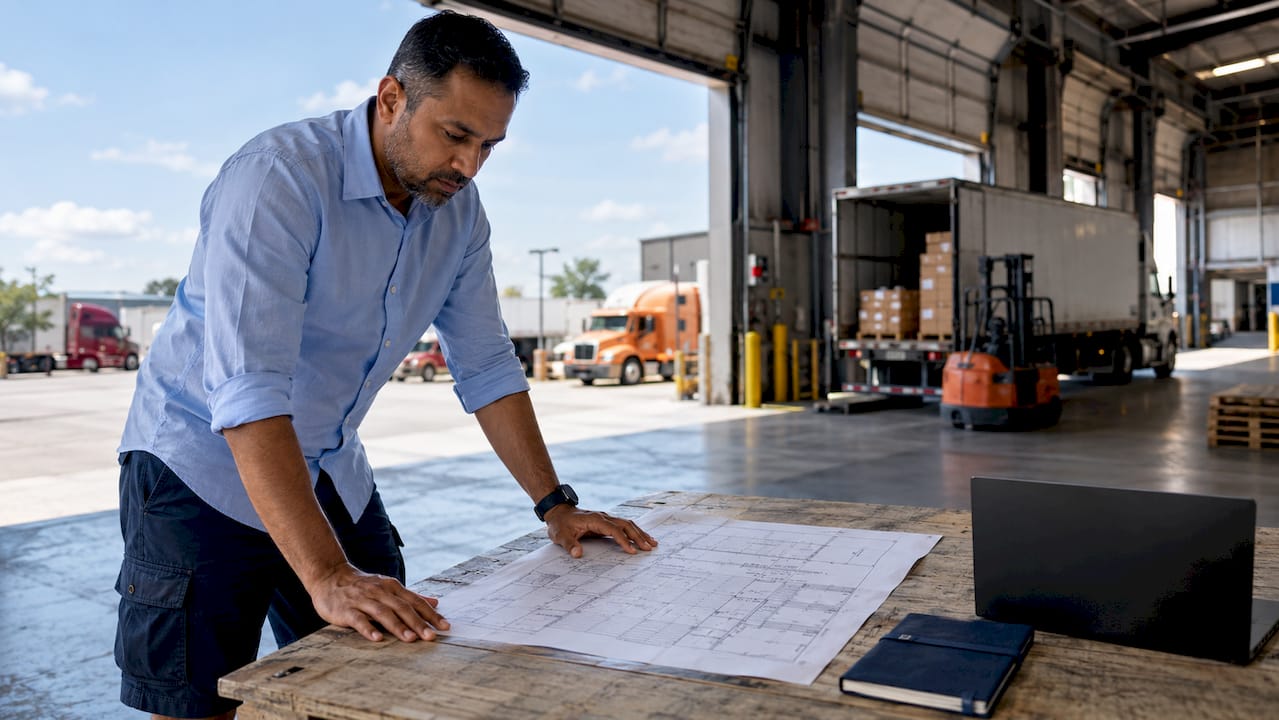
Best practices for warehouse leasing are defined as the set of operational, financial, and contractual disciplines that align a warehouse lease with your business requirements while minimising total occupancy cost. For logistics managers and business owners in the Greater Toronto Area, getting this right is not optional. The GTA industrial market is one of the most competitive in Canada, and a poorly structured lease can lock you into the wrong space, at the wrong price, for the wrong term. The guidance below covers every stage of the process: from evaluating physical features before you sign, to negotiating terms that protect you when business conditions change.
1. What are the essential operational criteria to evaluate before leasing a warehouse?
Treating a warehouse lease solely as a real estate transaction is a costly mistake. Every physical feature of the building either supports or constrains your workflow. Evaluate these criteria before you submit a letter of intent.
Clear height and usable height
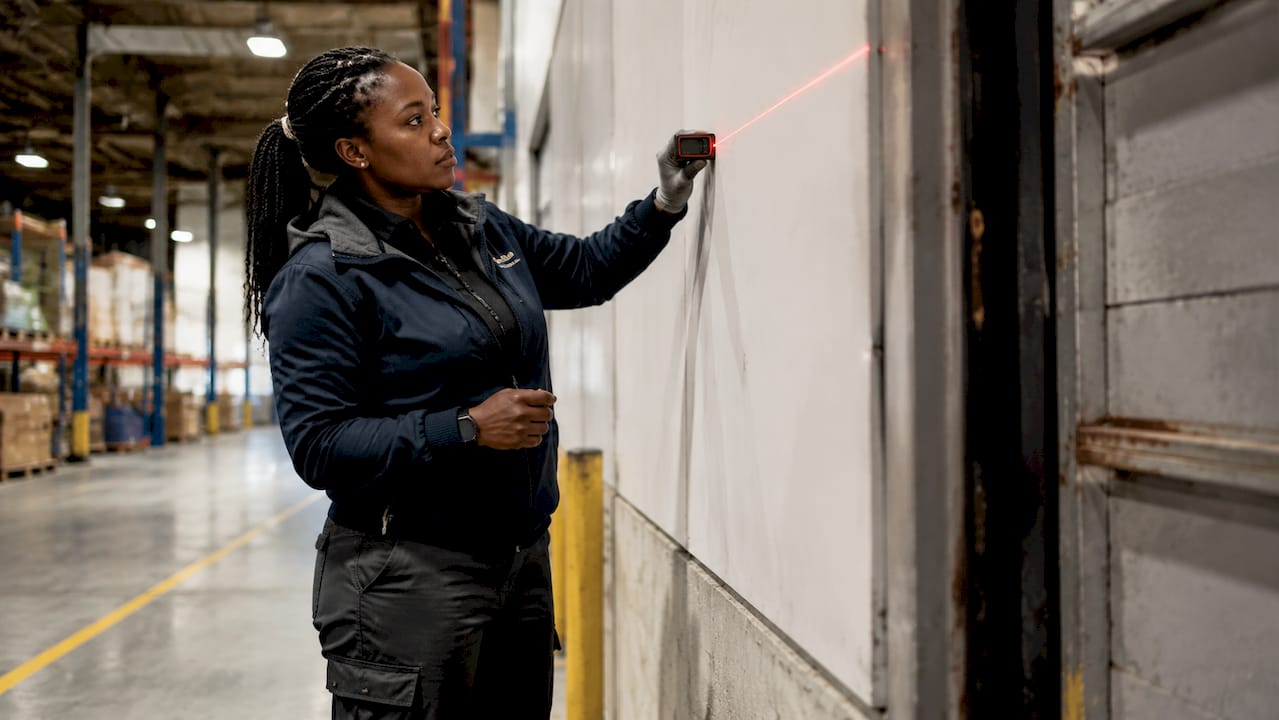
Marketed clear height and effective clear height are not the same number. Usable clear height is often lower than advertised once you account for sprinkler pipes, structural beams, and HVAC drops. Verify the lowest obstruction point during your site visit. A space marketed at 32 feet may deliver only 28 feet of racking clearance. That difference can eliminate an entire tier of pallet storage.
Loading docks and yard access
Count the number of dock doors relative to your inbound and outbound volume. Confirm whether the docks are leveller-equipped and whether the truck court depth accommodates 53-foot trailers. Grade-level doors matter for smaller vehicles and last-mile operations. Insufficient dock capacity creates bottlenecks that no lease clause can fix after the fact.
Electrical capacity and utility infrastructure
Electrical capacity verification before signing is non-negotiable. Post-occupancy upgrades are expensive and slow. Many GTA industrial buildings were built before robotics, automated conveyor systems, and EV fleet charging became standard requirements. Confirm the available amperage and transformer capacity with the landlord in writing. Negotiate landlord obligations for any required upgrades as part of the lease, not as a verbal side agreement.
Column spacing and floor load capacity
Wide column spacing gives you flexibility to configure racking and material handling equipment without working around obstructions. Confirm the floor load rating in pounds per square foot. Older buildings in markets like Brampton and Mississauga sometimes carry lower ratings that cannot support high-density storage or heavy manufacturing equipment.
Fire suppression and HVAC
Confirm the fire suppression system classification matches your product storage requirements. Certain goods require ESFR (Early Suppression Fast Response) sprinklers. HVAC coverage matters for temperature-sensitive inventory and for employee comfort under Ontario’s occupational health regulations.
Pro Tip: Bring your facilities manager or operations lead to every site visit. They will catch physical limitations that a broker or lawyer will miss.
2. Which lease terms and clauses should tenants prioritise?
Industrial leases assume tenants are sophisticated parties. Nearly every clause is negotiable, and harsh terms are fully enforceable if you sign without pushing back. Prioritise these five areas.
-
Rent escalation caps. Negotiate annual escalation caps in the 2.5–3% range. Capping escalation at 3% on a 10,000 square foot space can save $14,000 by year five compared to an uncapped structure. On a 50,000 square foot GTA lease, the savings are proportionally larger. Review the industrial rent escalation guide for GTA-specific benchmarks.
-
Triple net (NNN) lease obligations. Most GTA industrial leases are triple net. The tenant pays base rent plus property taxes, building insurance, and common area maintenance (CAM) charges. Triple net leases transfer significant cost exposure to the tenant. Negotiate CAM caps, administrative fee limits (typically 10–15% of CAM), and annual audit rights.
-
Tenant improvement allowances (TIAs). TIAs typically range from $5 to $15 per square foot but can be negotiated higher based on lease term length and current market conditions. A longer lease term gives you more leverage to push the allowance up. Clarify who owns the improvements at lease expiry and what restoration obligations apply.
-
Assignment and sublease rights. Restrictive assignment clauses create financial penalties if your business is acquired, restructured, or needs to exit the space. Negotiate the right to assign or sublease with landlord consent, and define that consent cannot be unreasonably withheld. Review GTA industrial subleasing concepts before finalising this clause.
-
Renewal options with defined escalation. Renewal options without capped escalation expose you to market rent spikes at expiry. Renewal options should include clearly defined escalation caps and adequate notice periods. A 12-month notice window gives you time to negotiate or relocate without operational disruption.
Pro Tip: Never treat the landlord’s standard lease form as the starting point for negotiation. It is written entirely in the landlord’s favour. Your lawyer and broker should redline it before you respond.
3. How to negotiate warehouse leases effectively
Effective warehouse leasing negotiation requires market knowledge, patience, and credible alternatives. The following tactics consistently produce better outcomes for GTA tenants.
-
Tour multiple properties simultaneously. Touring 3–5 competing properties builds real leverage. Landlords yield more concessions when they know you have credible alternatives. This is not a tactic. It is standard practice among experienced tenants.
-
Use lease term length as a bargaining chip. Landlords prefer longer commitments. A 7-year term versus a 5-year term can unlock free rent periods, higher TI allowances, and lower base rent. Understand what the landlord values before you anchor on price alone.
-
Negotiate free rent periods upfront. Free rent of 1–3 months is common in markets with elevated vacancy. Apply it at the start of the lease to offset buildout costs and ramp-up time. This is a cash-flow tool, not just a concession.
-
Secure expense caps and audit rights. CAM charges can increase significantly year over year without a cap. Negotiate a fixed annual cap on controllable expenses and retain the right to audit the landlord’s records. Audit rights are rarely exercised but consistently prevent overcharging.
-
Engage tenant representation and legal counsel. Tenant representation by brokers and legal counsel significantly improves lease outcomes and risk management. A tenant rep broker costs you nothing directly. Their fee is paid by the landlord. A real estate lawyer reviewing the lease is money well spent.
“The best negotiation outcome is not the lowest rent. It is the lease structure that gives your business the most room to grow, adapt, and exit if needed.”
For a detailed 2026 framework, the GTA lease negotiation guide covers current market conditions and clause-by-clause tactics.
4. What are the most common warehouse leasing mistakes?
The most expensive warehouse leasing mistakes are not dramatic. They are quiet oversights that compound over a 5–10 year lease term. The table below maps the most common pitfalls to their consequences and fixes.
| Mistake | Consequence | How to avoid it |
|---|---|---|
| Focusing only on base rent | Underestimates total occupancy cost by 20–40% | Model rent, CAM, taxes, insurance, utilities, and downtime risk together |
| Skipping electrical verification | Costly post-occupancy upgrades and operational delays | Confirm amperage and transformer capacity in writing before signing |
| Ignoring zoning and permitted use | Operations restricted or prohibited after occupancy | Verify permitted use clause covers all current and planned activities |
| Accepting marketed clear height | Racking plans fail due to actual obstructions | Measure effective clear height at the lowest obstruction point on site |
| No sublease or assignment rights | Trapped in space during restructuring or acquisition | Negotiate assignment rights with reasonable consent standard upfront |
Total occupancy cost is the metric that matters. Occupancy cost models should include rent, CAM, taxes, insurance, utilities, maintenance, handling equipment, and operational downtime risk. Base rent is typically 60–70% of that total. The remaining 30–40% is where tenants consistently underestimate exposure.
Zoning is a particularly underestimated risk in the GTA. Municipalities like Vaughan, Brampton, and Mississauga each have distinct zoning by-laws. A space zoned for light industrial may not permit certain manufacturing processes, outdoor storage, or hazardous materials. Confirm permitted use in writing before you invest in a buildout.
Due diligence on industrial leasing is the single most effective way to avoid these pitfalls before they become contractual obligations.
5. How to select the ideal warehouse location in the GTA
Location selection is a logistics decision first and a real estate decision second. Proximity to customers and suppliers directly reduces freight spend and improves total cost of occupancy. The right location also affects your ability to attract and retain warehouse labour.
The GTA industrial market divides into three primary corridors, each with distinct characteristics.
| Corridor | Key Markets | Strengths | Considerations |
|---|---|---|---|
| Toronto West / Airport | Mississauga, Brampton | Highway 401/410 access, largest inventory base | Tightest vacancy, highest rents in the GTA |
| North GTA | Vaughan, Markham, Richmond Hill | 400-series highway access, newer building stock | Strong demand from e-commerce and 3PL operators |
| East GTA / Durham | Pickering, Ajax, Whitby, Oshawa | Lower rents, growing labour pool, 401 access | Longer transit times to Toronto core |
Transportation cost and route resilience matter as much as rent. A lower-rent location in Oshawa may cost more in total when you factor in daily freight runs to Toronto. Model the full logistics cost, not just the occupancy cost, before committing to a submarket.
Monitoring industrial property trends in 2026 is particularly relevant. Vacancy rates across the GTA have shifted meaningfully from the historic lows of 2021–2022. That shift creates negotiating room that did not exist two years ago. Tenants who understand current vacancy by submarket can use that data to push for concessions that landlords would have refused in a tighter market.
Labour access is a factor that rarely appears on a warehouse leasing checklist but consistently affects operational performance. Brampton and Mississauga have deep warehouse labour pools. Emerging markets like Milton and Burlington offer newer buildings with lower rents but require more effort to staff.
Key takeaways
The most effective approach to warehouse leasing combines thorough operational due diligence, disciplined lease clause negotiation, and a clear understanding of total occupancy cost across the full lease term.
| Point | Details |
|---|---|
| Verify physical features in person | Confirm effective clear height, electrical capacity, and dock count before submitting a letter of intent. |
| Negotiate every major clause | Escalation caps, CAM limits, TI allowances, and sublease rights are all negotiable in GTA industrial leases. |
| Model total occupancy cost | Base rent is 60–70% of true cost. Include CAM, taxes, utilities, and downtime risk in your analysis. |
| Use competing properties as leverage | Touring 3–5 properties simultaneously produces better landlord concessions than negotiating from a single option. |
| Match location to logistics requirements | Submarket selection should be driven by freight cost, labour access, and highway proximity, not rent alone. |
What I have learned from GTA warehouse leasing in 2026
The market has shifted. Tenants who were locked out of negotiations during the 2021–2022 tightening cycle now have genuine leverage in many GTA submarkets. Vacancy has risen across Brampton, Mississauga, and parts of the 400-corridor. Landlords who would not discuss free rent or TI allowances two years ago are now open to both.
What I see consistently is that tenants still leave value on the table. Not because they are unsophisticated, but because they treat the lease as a formality rather than a negotiation. They tour one or two properties, fall in love with a space, and signal that preference to the landlord before the deal is done. That single mistake costs more than any other.
The operational alignment issue is just as persistent. I have seen logistics operators sign leases on spaces with inadequate dock capacity, insufficient electrical supply, or column spacing that made their racking plan unworkable. These are not obscure problems. They show up on a basic site visit checklist. The fix is simple: bring your operations team to every viewing, not just your finance team.
Tenant representation matters more in a complex market than in a simple one. The GTA industrial market in 2026 has more variables than it did three years ago. Sublease supply, new construction deliveries, and landlord financial positions all affect what you can negotiate. A broker who works exclusively on the tenant side, like the team at Lennard Commercial Realty, brings market intelligence that changes the outcome of the negotiation.
My honest advice: start your search earlier than you think you need to. Standard lease timelines run 60–120 days from first viewing to occupancy. Add buildout time and you are looking at 4–6 months minimum. Tenants who start late negotiate from desperation. Tenants who start early negotiate from strength.
— Michael
Work with Mlawrealestate on your next GTA warehouse lease
Mlawrealestate, operating through Lennard Commercial Realty, provides tenant representation and industrial leasing advisory across every major GTA submarket, including Mississauga, Brampton, Vaughan, Markham, Ajax, Whitby, Milton, and Hamilton. The focus is on securing lease structures that protect your operations and your budget, not just closing a deal. Whether you are entering the market for the first time or renegotiating an existing lease, the process starts with a clear picture of your operational requirements and current market conditions. Explore available GTA industrial properties or contact Mlawrealestate directly to discuss your site selection and negotiation strategy.
FAQ
What is the typical timeline for leasing a warehouse?
Standard warehouse lease timelines run 60–120 days from initial search to lease execution, depending on complexity. Add buildout time and most tenants should plan for 4–6 months before occupancy.
What is a triple net lease in warehouse leasing?
A triple net (NNN) lease requires the tenant to pay base rent plus property taxes, building insurance, and common area maintenance charges. Negotiate CAM caps and audit rights to control your exposure to cost increases over the lease term.
How much is a typical tenant improvement allowance?
Tenant improvement allowances typically range from $5 to $15 per square foot but can be negotiated higher based on lease term length and current market conditions. A longer lease commitment gives you the strongest position to push for a higher allowance.
What is the biggest mistake tenants make when leasing warehouse space?
The most common mistake is focusing on base rent while ignoring total occupancy cost. CAM charges, taxes, insurance, utilities, and operational downtime risk can add 30–40% on top of base rent over the lease term.
Should I use a tenant representation broker for warehouse leasing?
Tenant representation by a broker significantly improves lease outcomes and reduces risk. The broker’s fee is paid by the landlord, so there is no direct cost to the tenant, and the market intelligence they bring changes what you can negotiate.
Recommended

About Michael Law
Managing Partner and Industrial Real Estate Broker at Lennard Commercial Realty. Representing tenants and landlords across Toronto and the GTA for 15+ years. Michael specializes in GTA industrial real estate — connect with Toronto's leading industrial broker at mlawrealestate.com/industrial-broker-toronto.
Related Articles



More Toronto Industrial Real Estate Insights
Articles & Analysis
How to Price Warehouse Lease Space Right
Read →Commercial real estate managers: GTA industrial guide
Discover how commercial real estate managers enhance industrial property performance in GTA. Unlock best practices and strategies for success!
Read →Warehouse Demand Trends GTA in 2026
Read →GTA industrial real estate research: 2026 guide
Unlock the future of GTA industrial investments with our 2026 guide on real estate research, featuring vital data sources and insights.
Read →Toronto Warehouse Leasing Guide for Tenants
Read →Common Questions
What is a sale-leaseback in industrial real estate?
A sale-leaseback is a transaction in which an industrial property owner sells their building to an investor and simultaneously signs a long-term lease to remain in the property as a tenant. The seller unlocks the capital tied up in their real estate while retaining full operational use of the facility. The buyer acquires a tenanted investment property with immediate cash flow from a known occupant.
Read →What is a dock-to-grade ratio in industrial real estate?
Dock-to-grade ratio in industrial real estate refers to the number of dock-level loading doors relative to the building's floor area, typically expressed as one dock door per X,000 square feet. It is a key specification for distribution and warehousing tenants because it determines how many trucks can load and unload simultaneously and therefore the building's throughput capacity.
Read →What is clear height in a warehouse or distribution centre?
Clear height in a warehouse or distribution centre refers to the usable vertical space from the finished floor to the lowest overhead obstruction — typically the bottom of the roof structure, sprinkler heads, or HVAC equipment. It is the single most important building specification for warehouse tenants because it determines how many racking levels can be installed and therefore how much product can be stored per square foot of floor space.
Read →