Commercial real estate in Oklahoma City: 2026 market guide
By Michael Law · Industrial Real Estate Broker, Lennard Commercial Realty
TL;DR:
- Oklahoma City’s commercial real estate market is experiencing significant growth driven by federal, tribal, and municipal investments, creating a competitive construction environment. Early contractor engagement and multi-stage lease negotiations are essential for private developers and tenants to succeed in this constrained market. The retail sector is polarized, while industrial space is tight with rising rates, emphasizing the importance of proactive planning.
Oklahoma City’s commercial real estate market is defined by a generational construction boom and shifting lease dynamics that demand strategic insight from business owners, investors, and corporate tenants. The Oklahoma City Metropolitan Statistical Area is forecast to see +12% total construction contract value growth in 2026, with non-residential projects rising +22%. That figure sits well above the national average and signals a market in structural transformation. Federal infrastructure funds, the MAPS 4 municipal programme, and significant tribal capital are all converging at once, creating a window of opportunity that will not stay open indefinitely.
Note: Michael Law | Lennard Commercial specialises in industrial and commercial real estate across the Greater Toronto Area. This article covers Oklahoma City market conditions for informational purposes, drawing on publicly available research and parallels to North American commercial real estate trends.
What is driving commercial real estate expansion in Oklahoma City?
The Oklahoma City commercial property market is experiencing a capital injection that has no recent precedent. Federal, tribal, and municipal investment is funding a delivery pipeline that analysts describe as unmatched nationally over the next decade. That scale of public commitment changes the risk calculus for private investors and corporate tenants alike.
Several major projects are anchoring this expansion:
- Thunder Arena is a flagship development that is absorbing significant contractor capacity across the metro area.
- MAPS 4 is a voter-approved municipal investment programme directing billions into community infrastructure, transit, and public facilities.
- GO Bond initiatives are funding roads, parks, and civic buildings that improve the commercial viability of surrounding neighbourhoods.
- Tribal capital investments are financing community infrastructure and commercial facilities across the region, adding a funding stream that most North American markets simply do not have.
Each of these programmes competes for the same pool of contractors, tradespeople, and materials. That competition is tightening the construction market in ways that directly affect private developers and tenants planning build-outs.
“The Oklahoma commercial market is undergoing a generational expansion fuelled by federal, tribal, and municipal capital, with contractor availability becoming constrained. Developers and tenants who wait for the market to settle before engaging will find themselves priced out of the best relationships and the best sites.”
Labour and contractor capacity are the real constraint in this market right now. The competitive bidding field is thinning as major public projects lock in preferred contractors for multi-year programmes. Private developers who rely on traditional public tender processes are finding fewer qualified bidders and longer lead times. The practical implication is clear: early engagement with contractors and builders is no longer optional. It is the difference between delivering a project on schedule and watching it slip by 12 months.
Pro Tip: If you are planning a commercial build-out or new development in the Oklahoma City area, begin contractor conversations at least 12 months before your target start date. The firms with the best track records are already committed to public projects through 2027.
How is the commercial leasing environment evolving for tenants in Oklahoma City?
Commercial leasing in Oklahoma City has shifted from a transactional exercise to a multi-stage negotiation process. Tenants who approach a lease as a simple price-per-square-foot decision consistently end up with unfavourable terms. The market now rewards preparation, and the most effective tenants negotiate expansion rights, contraction rights, and realistic tenant improvement allowances before signing anything.
The steps that define a strong lease negotiation in this market are:
- Assess your actual space needs. Tenants routinely overestimate how much space they require. Overestimating inflates base rent, operating costs, and fit-out expenses from day one.
- Establish your expansion and contraction rights early. These clauses protect you if your business grows faster than expected or if you need to reduce your footprint. Landlords are more willing to grant them at the outset than mid-lease.
- Negotiate a realistic tenant improvement allowance. Build-out costs have risen sharply. A TI allowance that looked adequate two years ago may cover only a fraction of current costs. Get current contractor quotes before finalising any allowance figure.
- Review operating cost structures carefully. Oklahoma commercial leases follow Title 41 of Oklahoma statutes, which favours landlord flexibility and places no statutory caps on security deposits. Understanding what is and is not regulated protects you from unexpected cost escalation.
- Consider lease length strategically. Shorter terms with renewal options give you flexibility in a market that is changing quickly. Landlords in Oklahoma City are increasingly open to shorter initial terms, particularly in retail, where vacancy pressure gives tenants more negotiating room.
Flexible lease models are reshaping the Oklahoma City market from the ground up. Pop-up retail arrangements, incubator-style short-term leases, and co-tenancy agreements are all gaining traction. Landlords who previously insisted on five-year minimum terms are now accepting two-year deals with structured renewal options, particularly in older retail centres where vacancy is rising. This shift creates real opportunity for smaller businesses and new market entrants.
Pro Tip: Always request a property management reference from your prospective landlord. Property management quality directly affects your day-to-day operating experience and your ability to resolve maintenance and service issues quickly. A poor management team can turn a good lease into a costly problem.
For tenants with experience in tighter markets, the lease negotiation principles that apply in the GTA translate well to Oklahoma City. The fundamentals of protecting your position through rights and allowances are universal.
What are the opportunities in Oklahoma City’s retail and industrial sectors?
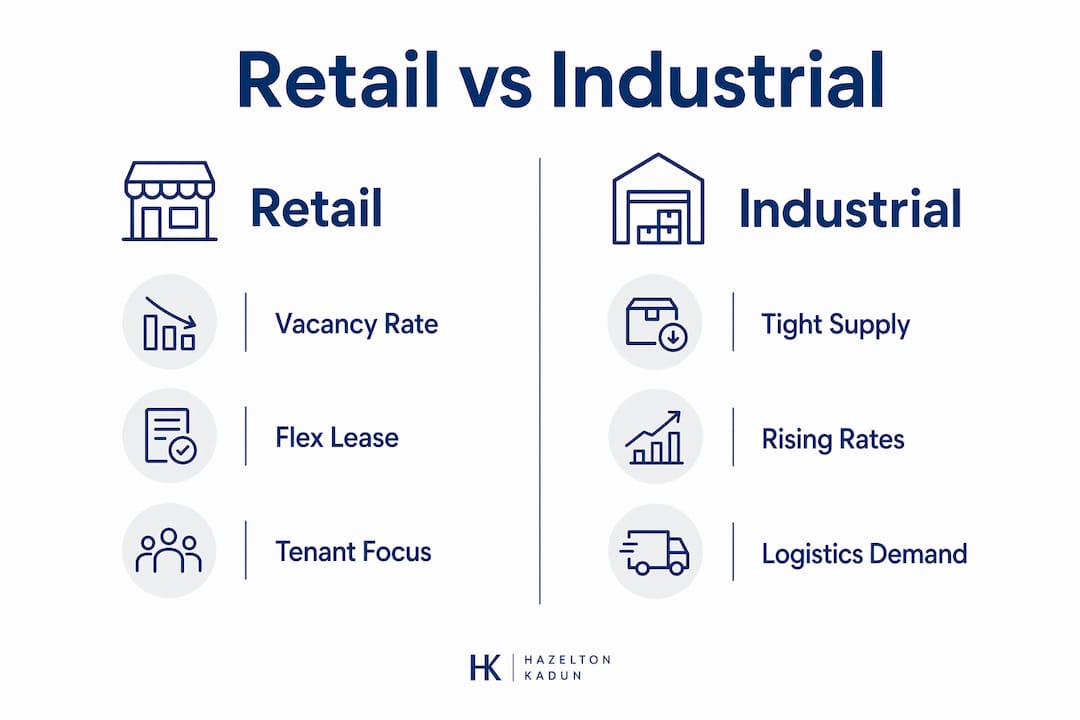
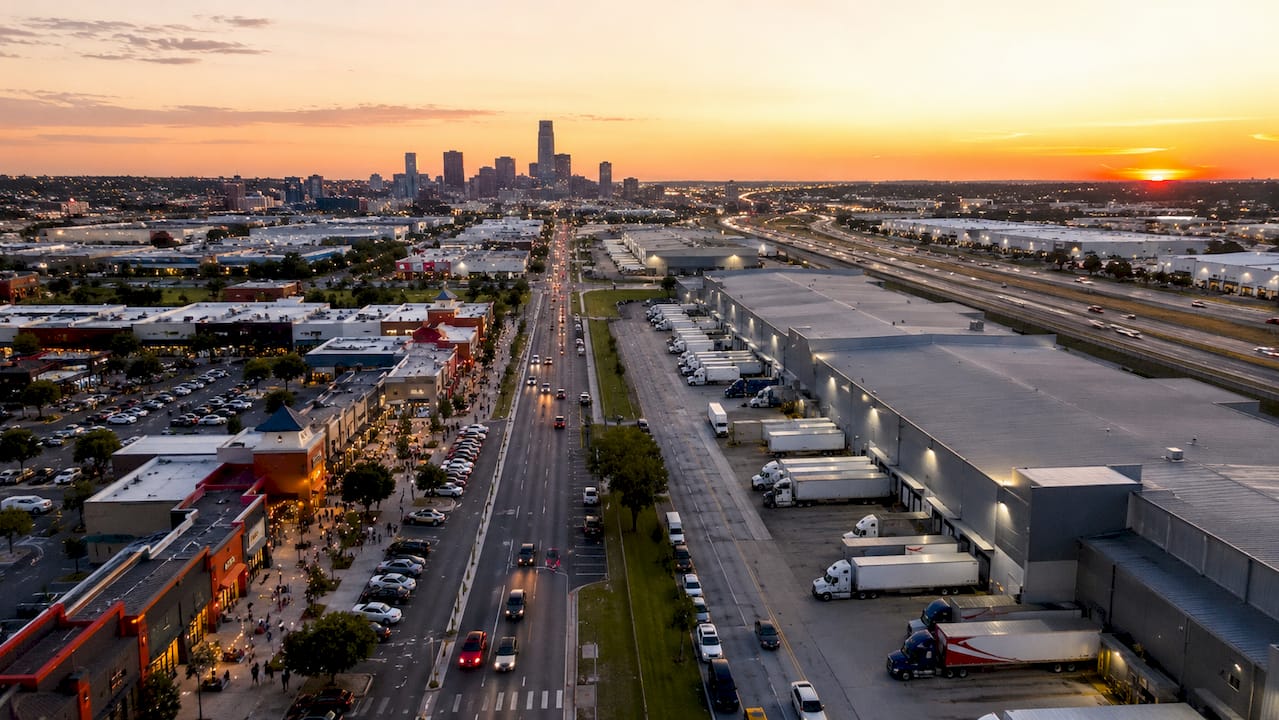
Oklahoma City’s retail and industrial commercial real estate sectors are moving in opposite directions, and understanding that divergence is the key to making sound investment decisions.
Retail: a market of two speeds
Oklahoma City’s retail vacancy sat at approximately 9.29% in 2025, and the headline number obscures a more complex picture. High-quality, experience-driven centres are performing well. Older, single-anchor strip centres are struggling. The market is not weak. It is polarised.
The retail properties that are outperforming share several characteristics:
- Strong walkability and access to residential density
- A tenant mix that combines service-oriented businesses (medical, fitness, food) with convenience retail
- Active property management that curates the tenant mix rather than simply filling vacancies
- Proximity to MAPS 4 infrastructure improvements that are increasing foot traffic in targeted corridors
Flexibility in lease terms is increasingly what attracts quality tenants to retail centres. Landlords who offer shorter initial terms, co-tenancy protections, and realistic fit-out support are filling space faster than those who hold to legacy lease structures.
Industrial: tight supply, rising rates
The industrial sector tells a different story. Logistics operators and distribution businesses are driving demand near major highway corridors, and the supply of quality industrial space has not kept pace. Industrial leases near major Oklahoma City highways are commanding rates around $6.75 per square foot, with vacancy below 8%. Those figures reflect a market where tenants have limited negotiating leverage on price but can still negotiate on terms, fit-out, and flexibility.
The industrial opportunity in Oklahoma City is strongest for investors who can acquire or develop near established logistics corridors before the next wave of demand absorbs remaining supply. For tenants, the priority is securing space now rather than waiting for rates to soften. The industrial real estate trends shaping markets like the GTA are visible in Oklahoma City as well: tight vacancy, rising rents, and a shrinking window for tenants to negotiate from a position of strength.
Small businesses face a real affordability barrier in the industrial sector. Rates that work for a logistics operator running 50,000 square feet become prohibitive for a small manufacturer needing 5,000 square feet. Incubator-style industrial facilities and multi-tenant flex buildings are filling part of this gap, but supply remains limited.
How should investors and business owners approach market entry?
Successful entry into the Oklahoma City commercial property market requires a different approach than most investors and tenants expect. The standard playbook of issuing a public tender, reviewing bids, and selecting the lowest price does not work in a market where contractor capacity is already committed to large public programmes.
The most effective strategies for market entry right now are:
- Engage contractors before you have a signed lease or purchase agreement. Relationship-based contracting is the norm in constrained markets. Contractors who know you and trust your ability to execute will prioritise your project over an unknown bidder.
- Use negotiated delivery models rather than competitive public tenders. Early engagement and negotiated delivery are essential when the competitive bidding field is thin. Negotiated contracts allow you to lock in capacity and price certainty before the market tightens further.
- Structure leases to control escalation. Annual rent escalation caps, operating cost audit rights, and clearly defined landlord maintenance obligations all protect your cost base over a multi-year lease term.
- Conduct thorough due diligence on property management. Management quality affects everything from day-to-day operations to your ability to sublease or assign the space if your business needs change.
- Right-size your space commitment. Tenants who overestimate space needs carry unnecessary cost from the first day of occupancy. Start with a realistic assessment of current needs, then negotiate expansion rights to accommodate growth.
The broker advantages in commercial leasing are particularly pronounced in a market like Oklahoma City right now. A tenant representative who understands the local contractor landscape, knows which landlords are genuinely flexible, and can identify off-market opportunities provides value that far exceeds their cost.
Pro Tip: Before committing to any commercial lease or purchase in Oklahoma City, request a full operating cost history for the property going back at least three years. Rising insurance and maintenance costs are the most common source of budget surprises in the first year of occupancy.
Key takeaways
Oklahoma City’s commercial real estate market is best approached through early contractor engagement, disciplined lease negotiation, and a clear-eyed view of sector-specific supply and demand conditions.
| Point | Details |
|---|---|
| Construction growth is above average | Non-residential construction is forecast to grow +22% in 2026, creating both opportunity and contractor scarcity. |
| Lease negotiation requires a multi-step approach | Tenants who secure expansion rights, realistic TI allowances, and cost controls outperform those who focus only on base rent. |
| Retail is polarised, not weak | High-quality, experience-driven centres are outperforming while older properties struggle, creating selective buying opportunities. |
| Industrial vacancy is tight | Rates near major highways sit around $6.75 per square foot with vacancy below 8%, favouring early action by tenants and investors. |
| Contractor relationships are a competitive advantage | Negotiated delivery models outperform public tenders in a market where capacity is absorbed by large public programmes. |
What I have learned watching markets like Oklahoma City from the outside
Markets that attract this level of public capital investment follow a predictable pattern, and I have watched it play out in the GTA more than once. The first phase looks like pure opportunity. Vacancy is manageable, rents are rising but not yet punishing, and contractors are still accessible. The second phase is where most investors and tenants get caught. Contractor capacity disappears, build-out costs spike, and the tenants who locked in good leases early are sitting on significant competitive advantages over those who waited.
Oklahoma City is clearly in the first phase right now. The MAPS 4 programme, the Thunder Arena project, and the tribal capital flowing into the region are all signals that this market is about to get much more competitive. The tenants and investors who move with discipline and preparation in the next 12 to 18 months will set themselves up well. Those who wait for the market to “settle” will find that it has settled at a higher price point than they expected.
The lease flexibility trend is the detail I find most interesting. Landlords accepting shorter terms and incubator models is not a sign of weakness. It is a sign of a market that is maturing and diversifying its tenant base. That is actually a positive indicator for long-term market health. A retail or industrial corridor with a diverse, flexible tenant mix is more resilient than one anchored by a single large occupier on a long-term lease.
The practical lesson I draw from markets like this is simple. Relationships and preparation matter more than timing. You do not need to catch the market at the perfect moment. You need to arrive with a clear brief, a realistic budget, and the right advisors around you.
— Michael Law
Working with Michael Law | Lennard Commercial on your commercial real estate goals
Michael Law | Lennard Commercial brings over a decade of experience in commercial and industrial real estate to clients navigating complex leasing and investment decisions. The firm’s expertise in tenant representation, lease negotiation, and site selection is directly applicable to business owners and investors evaluating opportunities in active commercial markets.
Whether you are assessing your first commercial lease or building an investment portfolio, the principles of disciplined negotiation and market intelligence apply regardless of geography. Explore Michael Law’s commercial real estate services or review the tenant representation approach that has delivered results for occupiers across Ontario’s tightest industrial markets. Contact Michael Law | Lennard Commercial directly to discuss how these strategies apply to your specific situation.
FAQ
What is driving commercial real estate growth in Oklahoma City in 2026?
The primary drivers are federal infrastructure funding, the MAPS 4 municipal programme, GO Bond initiatives, and significant tribal capital investment. These programmes are collectively funding a construction pipeline that is forecast to grow non-residential contract values by +22% in 2026.
What should tenants know about commercial leasing in Oklahoma City?
Oklahoma commercial leases are governed by Title 41 of Oklahoma statutes, which favours landlord flexibility and places no statutory caps on security deposits. Tenants should prioritise securing expansion rights, realistic tenant improvement allowances, and operating cost controls before signing.
Is Oklahoma City’s retail market a good investment opportunity?
The retail market is polarised. Vacancy sat at approximately 9.29% in 2025, but high-quality, experience-driven centres are outperforming significantly. Investors should focus on well-located neighbourhood centres with strong service-oriented tenant mixes rather than older single-anchor properties.
What are industrial lease rates near Oklahoma City’s major highways?
Industrial leases near major Oklahoma City highway corridors are commanding rates around $6.75 per square foot, with vacancy below 8%. These conditions favour tenants who act early rather than waiting for rates to soften.
Why is early contractor engagement important in Oklahoma City’s commercial market?
Large public projects including Thunder Arena, MAPS 4, and GO Bond initiatives are absorbing contractor capacity across the metro area. Developers and tenants who rely on competitive public tenders are finding fewer qualified bidders and longer lead times, making relationship-based contracting the more reliable delivery model.
Recommended

About Michael Law
Managing Partner and Industrial Real Estate Broker at Lennard Commercial Realty. Representing tenants and landlords across Toronto and the GTA for 15+ years. Michael specializes in GTA industrial real estate — connect with Toronto's leading industrial broker at mlawrealestate.com/industrial-broker-toronto.