
Avoid 30–45 Day Delays: Estoppel Certificates in GTA Industrial Deals
By Michael Law · Industrial Real Estate Broker, Lennard Commercial Realty
An estoppel certificate is a signed statement in which a tenant confirms the exact terms and status of its lease, giving purchasers and lenders independent proof of rent, term, and defaults before money changes hands. Landlords request it, tenants complete it, and buyers and lenders rely on it. Once signed, it can legally bind the tenant to what it says, under the doctrine of promissory estoppel, even if the underlying lease says something different.
TL;DR:
- Most estoppel certificates reflect existing lease terms but can legally bind tenants to statements made, affecting their ability to dispute defaults later.
- Buyers and lenders rely heavily on timely, accurate signatures from material tenants, with delays or disagreements potentially delaying closings or reducing offers.
- Canadian courts treat estoppel statements as evidentiary and potentially binding unless the signer can prove they were mistaken or the statement was unqualified or unclear.
- Parties should verify key figures like rent and defaults carefully and prioritize early collection from major tenants to avoid last-minute surprises.
- Red flags include vague qualifications, rent discrepancies, or silence from tenants, which may indicate unresolved disputes or side agreements.
Table of Contents
- What an estoppel certificate is and how it works
- When estoppels get used, and what happens when they don’t show up
- Legal effect and enforceability in Canada
- Practical checklist for buyers, lenders, landlords and tenants
- Negotiation tips and red flags in commercial estoppel certificates
- How estoppels play out for GTA industrial occupiers
- A GTA broker’s take on why estoppels get underestimated
- How Michael Law | Lennard Commercial supports your closing
- Sources
- FAQ
What an estoppel certificate is and how it works
A tenant estoppel certificate is not a new agreement. It is a status snapshot, a sworn confirmation of facts that already exist in the lease, signed at a specific moment for the benefit of someone who was not party to the original deal.
Most commercial estoppel forms in Ontario cover the same core items:
- Current base rent, additional rent, and any operating cost adjustments
- Lease commencement date, term, and remaining renewal options
- Security deposit or letter of credit amounts held
- Whether rent is paid up to date, and any arrears
- Whether either party is in default, and details of any dispute
- Confirmation of tenant improvement allowances already paid
- Existence of side letters, amendments, or verbal agreements
The landlord typically drafts the form, usually attached as a schedule to the lease itself, and finalizes the wording well before a sale or refinancing is even contemplated; commercial real estate professionals can find practical considerations for this process in Tenant Estoppel Certificates: What CRE Professionals Must Know. That is the single biggest difference between an estoppel and a lease amendment: an amendment changes the deal, while an estoppel simply attests to what the deal already is.
When estoppels get used, and what happens when they don’t show up
Buyers and lenders cannot rely on a lease alone. A lease tells you what was agreed; an estoppel tells you what is actually happening today; rent might be reduced informally, a tenant might be disputing a charge, or an option might have already lapsed. That gap between paper and practice is exactly what due diligence is supposed to close.
The mechanics follow a fairly predictable sequence:
- The landlord or its counsel circulates estoppel forms to tenants once a purchase agreement or loan commitment is signed.
- Tenants review, negotiate wording if needed, and return signed copies.
- Certificates are typically dated within 30 days of the closing date, a window lenders and buyers treat as a hard requirement, not a suggestion.
- Signed estoppels become closing deliverables, often listed as conditions precedent in the purchase agreement.
Buyers generally push the hardest on the property’s largest or “material” tenants, since one missing estoppel from a minor unit rarely stalls a deal, but a refusal from an anchor tenant can. Tenants are not legally obligated to sign unless their lease expressly requires it, and plenty of leases are silent on the point. That silence does not make refusal costless. A buyer or lender facing a blank estoppel from a major tenant will often walk, or at minimum, adjust price and terms.
Legal effect and enforceability in Canada
Estoppel certificates draw their teeth from promissory estoppel, a doctrine that can stop a party from later taking a position that contradicts a statement it made and that someone else relied on. Sign a certificate confirming no defaults exist, and you may lose the right to raise those defaults later, even if you had a legitimate claim before you signed.
Recent Canadian decisions have leaned toward treating estoppels as serious evidentiary weight, sometimes functioning as binding extra-judicial admissions unless the signing party can convincingly show the statement was mistaken, as illustrated in a recent Ontario appellate decision. Courts do not, however, treat every estoppel as automatically conclusive. Judges tend to weigh several factors before deciding how much reliance a certificate deserves:
- Whether the signatory was a sophisticated party with legal advice available
- How clearly the certificate’s language was drafted
- Whether the buyer or lender could have discovered the true facts independently
- The gap between the certificate’s date and the closing date
- Whether the tenant qualified its answers rather than giving unconditional confirmations
Norton Rose Fulbright’s analysis of Canadian case law makes the point directly: the degree of reliance a court will give an estoppel depends heavily on context, not on the document’s existence alone. That nuance matters for anyone assuming a signed form is bulletproof in either direction.
Practical checklist for buyers, lenders, landlords and tenants
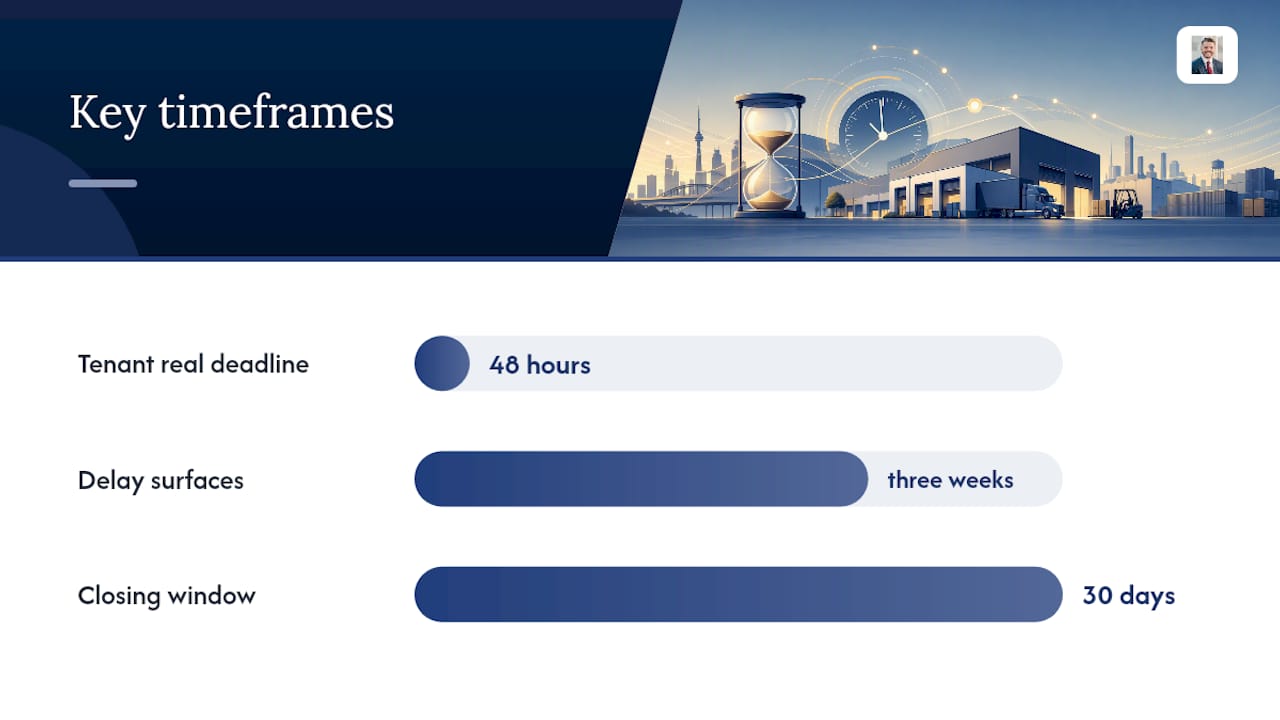
Every party at the table has a different job when estoppels start circulating, and skipping a step tends to surface as a closing delay three weeks later.
Buyers and lenders should verify:
- Lease term, renewal options, and current rent match the rent roll exactly
- Security deposit or letter of credit amount matches lease records
- No undisclosed arrears, defaults, or landlord obligations outstanding
- Existence and status of any subordination, non-disturbance and attornment agreement (SNDA)
- Any side letters or verbal arrangements the estoppel might not capture
Landlords should:
- Finalize the estoppel form’s wording early, ideally before marketing the property
- Identify which tenants qualify as material to the transaction and prioritize those requests
- Set a firm internal deadline for collecting signed certificates, with buffer before the 30-day closing window
Tenants should:
- Cross-check every figure against their own lease file before signing anything
- Push for “to the best of our knowledge” qualifiers rather than unconditional statements
- Flag anything that looks off to counsel before signing, not after
Pro Tip: If you’re a tenant reviewing an estoppel request, treat the 48 hours after you receive it as your real deadline, not the date on the cover letter. Landlords often build in slack for negotiation, but they rarely tell you that upfront.
Negotiation tips and red flags in commercial estoppel certificates
Tenants with experienced counsel rarely sign a certificate as drafted. A common and reasonable request is adding “to the tenant’s knowledge” ahead of factual assertions, plus a carve-out preserving rights under any side agreements not listed on the form. That single qualifier protects a tenant from being bound to something it genuinely didn’t know about.
Watch for these red flags before a deal goes further:
- A landlord who cannot produce a clean estoppel form early in the process
- Large or vague qualifications from a material tenant that hint at an unresolved dispute
- Rent or term figures on the estoppel that don’t match the lease or rent roll
- No SNDA in place when the lender requires one as a closing condition
- A tenant who goes silent rather than responding at all
Pro Tip: A flat refusal or heavily hedged response is rarely random. It usually signals a side agreement, a rent dispute, or a landlord default the tenant doesn’t want to put in writing. In the GTA’s fast-moving industrial market, that discovery two weeks before closing is far more costly than catching it during initial diligence, and it’s worth involving a lease negotiation specialist before signatures go out.
How estoppels play out for GTA industrial occupiers
Industrial deals in Toronto and the surrounding GTA close fast, often on 30 to 45 day timelines, which leaves little room for estoppel delays. We typically recommend landlords identify material tenants and issue requests the moment a deal is conditionally firm, not after. Brokers and lease counsel usually work in parallel: counsel drafts the form, the broker chases signatures and flags anything unusual in tenant responses.
When a tenant estoppel comes back heavily qualified on a large distribution or manufacturing space, that’s the point to bring in an industrial tenant representation specialist or transaction counsel before the closing clock runs out.
A GTA broker’s take on why estoppels get underestimated
Most guidance on estoppel certificates treats them as a paperwork formality, something to check off a closing list. That framing undersells what’s actually happening: a tenant is making a legally binding statement that can outlast the deal itself, and a landlord is often relying on a form drafted years earlier without revisiting whether it still fits the lease’s current terms.
The conventional advice, get the estoppel signed, misses the harder question of whether the form still reflects reality. In the GTA industrial market, where amendments, side letters, and informal rent concessions are common after a tenant has occupied space for several years, that gap between the lease file and daily reality is where deals get delayed or repriced. Buyers and lenders should treat a qualified or delayed estoppel as information, not an obstacle. It usually tells you something the lease file won’t. Landlords who start the estoppel process the day a deal goes conditional, rather than the week before closing, consistently avoid the worst version of this problem.
— Michael Law
How Michael Law | Lennard Commercial supports your closing
Getting a clean estoppel certificate on a tight GTA industrial timeline usually comes down to who’s chasing it and how early they started. Michael Law | Lennard Commercial works directly with landlords, tenants, buyers, and lenders across Toronto, Mississauga, Brampton, Vaughan, Markham, and the broader GTA to coordinate estoppel requests, flag qualified responses before they become closing-day surprises, and keep lease due diligence moving on realistic timelines.

If you’re heading into a purchase, sale, or lease renewal and need someone who understands both the paperwork and the tenant relationships behind it, Lennard Commercial’s tenant representation team can review your estoppel process before it becomes a bottleneck. You can also reach Michael Law directly to discuss a specific transaction or check service coverage across the GTA before your next closing date locks in.
Sources
- Tenant Estoppel Certificate - Practical Law Canada
- Tenant estoppel certificates: understanding their role in real estate transactions
- Estoppel certificates in Ontario commercial real estate
- Estoppel certificates: to sign or not to sign, that is the question
- CanLII decision (2026) example
FAQ
What is an estoppel certificate in Canada?
It’s a signed statement, usually from a commercial tenant, confirming lease terms like rent, term length, and default status so a purchaser or lender can verify the lease independently before closing.
Who pays for an estoppel certificate?
There’s no standard fee arrangement in Canadian practice; most leases don’t charge tenants directly, though some landlords include a clause allowing them to recover legal costs if a tenant requires extensive negotiation over the form’s wording.
Can a commercial landlord terminate a lease?
Only under grounds the lease itself sets out, such as unremedied default or non-payment of rent, following the notice and cure periods specified in the lease; a landlord cannot terminate simply because a sale or refinancing is underway.
What are the exceptions to issue estoppel?
Courts generally won’t hold a party to an estoppel statement if it was based on a genuine mistake, if the other party knew the statement was inaccurate, or if the signatory lacked the sophistication or information to understand what they were confirming.
Recommended

About Michael Law
Managing Partner and Industrial Real Estate Broker at Lennard Commercial Realty. Representing tenants and landlords across Toronto and the GTA for 15+ years. Michael specializes in GTA industrial real estate — connect with Toronto's leading industrial broker at mlawrealestate.com/industrial-broker-toronto.