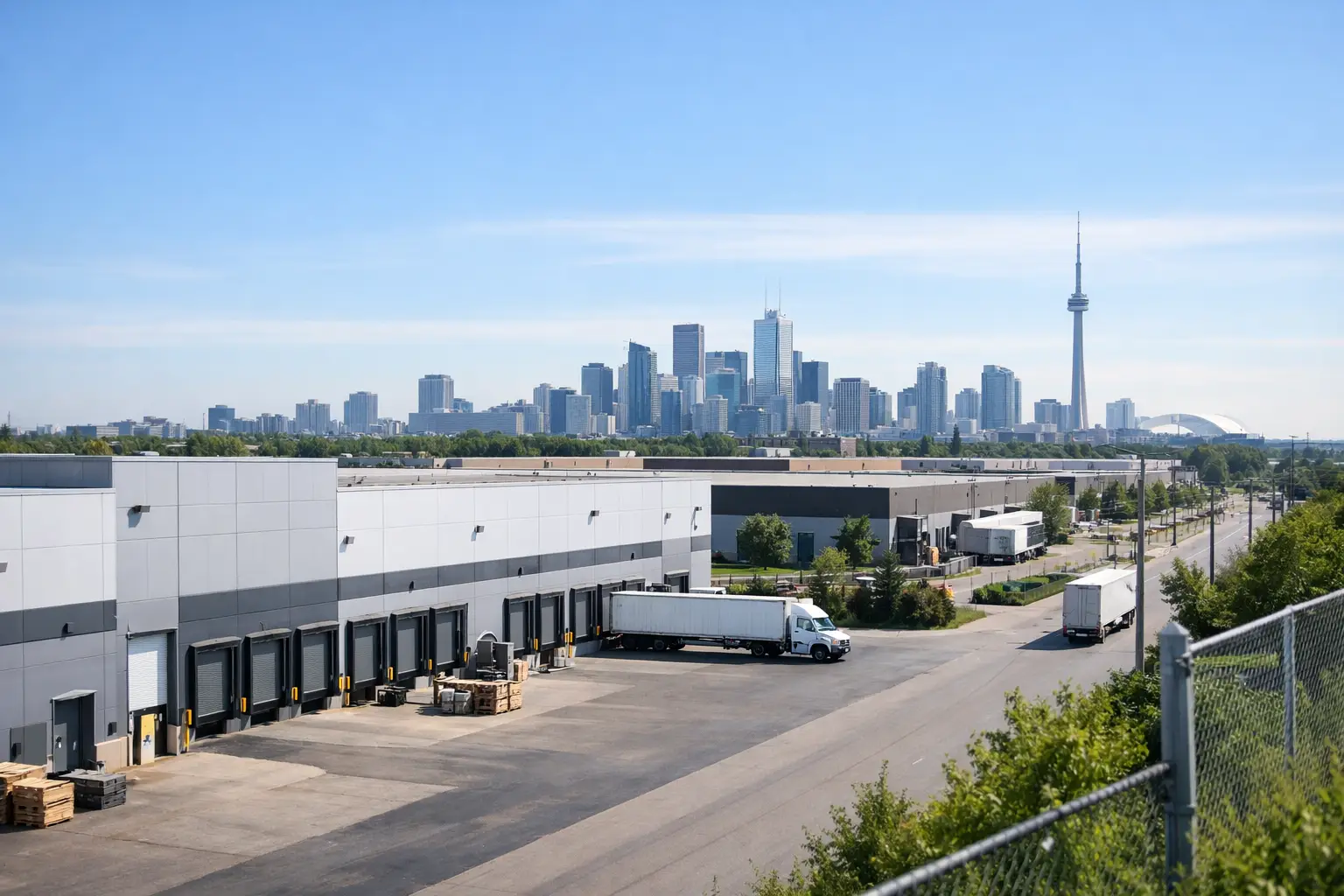
Industrial Properties for Sale in Toronto
By Michael Law · Industrial Real Estate Broker, Lennard Commercial Realty
A vacant industrial building in the right GTA submarket can attract multiple buyers before it is broadly marketed. That makes evaluating industrial properties for sale in Toronto less about reacting quickly to a listing and more about knowing exactly what the business, tenant, or investment strategy requires before an opportunity appears.
For an owner-occupier, a property that is operationally efficient can protect productivity for years. For an investor, the same building must also support durable tenant demand, appropriate lease terms, and a credible exit. The best acquisition is rarely the building with the lowest asking price. It is the one that remains useful when operating needs, financing conditions, and the local market change.
Start with the operating requirement
Industrial real estate is not a single asset class. A warehouse, manufacturing facility, logistics terminal, showroom-warehouse, and industrial condominium may all be marketed as industrial, but their utility and buyer pool can be very different.
Begin with the non-negotiables. For a business user, that typically means required square footage, clear height, shipping configuration, power capacity, office percentage, trailer parking, employee parking, and access to major routes. A distributor may value dock doors and highway access above all else. A light manufacturer may need heavy power, specific ventilation, floor loads, or room for outdoor storage. A contractor may prioritize a secure yard and straightforward access for crews and equipment.
These requirements should be defined before touring properties. A building with attractive finishes may still be a poor fit if trucks cannot circulate efficiently, a driveway is constrained, or the electrical service cannot support the intended operation. Correcting those issues after closing can be expensive, slow, or impossible.
Investors should use the same discipline, but from the perspective of the future tenant. A flexible building with functional loading, usable clear height, a practical office buildout, and strong transportation access generally serves a deeper pool of occupiers than a highly specialized facility. Specialized features can add value when they match a clear market need, but they can narrow the exit strategy.
Where to look for industrial properties for sale in Toronto
Toronto proper has a limited supply of industrial land and a dense, established built environment. That scarcity can support values, particularly for well-located properties serving the core city. It can also mean older buildings, tighter sites, limited parking, and fewer opportunities to expand.
The broader GTA offers different trade-offs. Mississauga and Brampton remain important logistics and distribution locations because of highway connections, labor access, and proximity to the airport. Vaughan, Markham, and North York can appeal to businesses that need access to major population centers and established commercial districts. Burlington, Oakville, Hamilton, Ajax, Whitby, and Oshawa may offer different combinations of pricing, land availability, labor access, and regional transportation links.
There is no universally best submarket. A last-mile operator may accept a tighter site to be closer to customers. A regional distributor may place greater weight on highway access and trailer storage. A buyer seeking a long-term land play may look beyond the central market, where site size and redevelopment potential can be more meaningful than immediate proximity.
Location analysis should extend beyond the pin on a map. Review travel times at the hours your operation actually runs, truck routing, nearby rail infrastructure where relevant, municipal restrictions, and the condition of local roads. A few minutes on a map can become a recurring operating cost when vehicles queue at difficult intersections or drivers must take indirect routes.
Verify zoning before assigning value
Zoning is often treated as a line item in due diligence. It should be a central part of the initial underwriting. The permitted use must match the intended business, including any accessory retail, outside storage, repair work, food processing, assembly, or distribution activity.
Do not rely solely on a listing description such as “industrial zoning” or “outside storage permitted.” Municipal zoning bylaws are specific, and permitted uses may depend on the property’s exact zone, site conditions, setbacks, parking standards, and prior approvals. A use that appears common in an industrial area may still require confirmation, site plan approval, or a variance.
This matters even more when the purchase is based on future flexibility. Investors often pay a premium for buildings that can accommodate multiple tenant types. That flexibility is real only when the physical property and zoning both support it. If a buyer plans to add loading doors, expand the building, create additional parking, or improve the yard, those plans should be tested against zoning and site constraints before the offer becomes firm.
Look past the building size
Two 25,000-square-foot buildings can perform very differently. Building size is a starting point, not a conclusion. The details that shape usability also shape value.
Clear height affects racking capacity and storage efficiency. Loading matters because a building with the right number of dock-level and drive-in doors can move goods far more efficiently than one with limited shipping access. Bay spacing, column placement, sprinkler capacity, ceiling condition, heating, electrical service, and floor condition can all influence the cost and speed of occupancy.
The site deserves equal attention. Confirm the depth of the truck court, ability to maneuver trailers, condition of paving, drainage, fencing, gate access, and legal access points. Outdoor storage and parking may be particularly valuable, but they should be documented and permitted rather than assumed from current use.
Older industrial facilities can be strong acquisitions when the location and structure are sound. They may offer lower acquisition costs or a scarce infill position. The trade-off is usually capital planning. Roof replacement, environmental remediation, electrical upgrades, fire code work, and mechanical systems can alter the real price substantially.
Underwrite the full cost of ownership
Asking price is only one part of the decision. Owner-occupiers should estimate acquisition costs, financing, property taxes, insurance, utilities, repairs, fit-out, relocation, and a realistic reserve for capital work. A property that looks affordable at closing can strain cash flow if it needs immediate improvements.
For investment properties, evaluate in-place income and the quality of that income. Review the tenant’s financial strength, lease term remaining, rent escalations, renewal options, operating expense recoveries, security deposits, and obligations for repairs or capital items. A higher cap rate may reflect a shorter lease term, below-market functionality, tenant credit concerns, or anticipated costs rather than a bargain.
It also helps to separate value-add potential from assumed value-add potential. Raising rent after a lease expiry may be achievable in a strong market, but it depends on the building’s condition, competing supply, tenant demand, and the cost of bringing the space to market. A vacancy period, leasing commissions, tenant improvements, and carrying costs should be part of the model.
Make due diligence match the risk
A careful offer structure gives the buyer time to investigate material risks without losing focus on the transaction. The scope will vary by asset, but a meaningful review commonly includes:
- zoning and permitted-use confirmation;
- title, easements, access rights, and survey review;
- environmental assessments appropriate to the property history;
- building inspections covering roof, structure, mechanical systems, electrical service, and fire protection;
- lease, financial, tax, and operating-cost review for income-producing assets; and
- financing terms, appraisal requirements, and lender conditions.
Environmental review deserves particular attention with industrial assets. Historic manufacturing, automotive uses, fuel storage, chemical handling, or waste operations can create liabilities that are not visible during a walkthrough. A Phase I assessment may identify the need for further investigation. Buyers should understand the findings, estimated remediation exposure, and how the issue affects lender appetite and future resale before removing conditions.
Negotiate for certainty, not just price
The strongest offer is not always the highest offer. Sellers weigh closing certainty, deposit strength, due diligence timing, financing conditions, possession date, and the buyer’s ability to execute. A buyer who understands these priorities can structure a more compelling proposal without simply increasing the purchase price.
For a vacant building, possession timing and the condition of systems may be central. For a tenanted asset, lease estoppels, tenant communications, rent adjustments, and assignment of service contracts can matter more. Where a property has development or expansion potential, approvals, reports, and site documentation should be clearly addressed in the agreement.
Experienced representation adds value here because industrial transactions are operational transactions as much as real estate transactions. Michael Law Commercial Real Estate approaches the process with attention to property utility, local market positioning, and the practical details that can affect a buyer after closing.
A sound purchase decision should leave room for what is not yet known. The right industrial asset is one you can operate, finance, maintain, and eventually sell or lease with confidence - not simply one that was available when the search began.

About Michael Law
Managing Partner and Industrial Real Estate Broker at Lennard Commercial Realty. Representing tenants and landlords across Toronto and the GTA for 15+ years. Michael specializes in GTA industrial real estate — connect with Toronto's leading industrial broker at mlawrealestate.com/industrial-broker-toronto.