Phase 1 ESA Ontario: what buyers and lenders must know
By Michael Law · Industrial Real Estate Broker, Lennard Commercial Realty
A Phase 1 Environmental Site Assessment is a non‑intrusive review that determines whether a property is likely contaminated, based on historical records, a site walk, and interviews, not soil samples or lab testing. In Ontario, O. Reg. 153/04 requires this work when a Record of Site Condition (RSC) must be filed, and it must be done or directly supervised by a Qualified Person (QP). If your deal touches any of these, you need one:
- A change in land use, such as industrial land being redeveloped for residential or institutional use
- Certain property transfers where a lender or municipality requires an RSC
- Buyer or lender due diligence, even where no RSC is legally mandatory
If you’re unsure whether your transaction triggers the regulation, the safest first move is calling a QP before you firm up an offer, not after.
Key Takeaways
A compliant Phase 1 ESA in Ontario requires a Qualified Person, follows Schedule D’s records-review-to-reporting sequence, and typically costs $3,000 to $5,000 for straightforward industrial sites.
| Point | Details |
|---|---|
| QP requirement is non‑negotiable | Only a Qualified Person meeting O. Reg. 153/04 credentials can complete or supervise an RSC‑grade Phase 1. |
| CSA and RSC standards differ | A voluntary CSA‑style ESA won’t support a later RSC filing if the property’s use changes. |
| Study area can exceed 250 metres | QPs must extend the study area when off‑site sources could affect the property, common on urban infill sites. |
| Budget realistically | Expect $3,000 to $5,000 and two to six weeks for a simple commercial or industrial Phase 1. |
| Coordinate the whole transaction | Michael Law |
Table of Contents
- What triggers a phase 1 esa in Ontario, and how it differs from a voluntary CSA assessment
- Who can perform a phase 1 ESA and what a QP must verify
- What does a phase 1 ESA process actually cover in Ontario?
- How much does a phase 1 ESA cost and how long does it take in Ontario?
- What happens if the phase 1 ESA finds a problem?
- How should GTA buyers brief consultants and screen bids?
- Get help managing ESA risk on your next GTA industrial deal
- Sources
- FAQ
What triggers a phase 1 esa in Ontario, and how it differs from a voluntary CSA assessment
Not every environmental review in Ontario needs to meet the same bar. A Phase 1 environmental assessment tied to an RSC filing follows a strict regulatory template. A voluntary assessment, often built around the CSA Z768 standard, gives a lender or buyer comfort without triggering the formalities of O. Reg. 153/04.
Regulatory triggers that generally require an RSC-grade Phase 1 include:
- Change of use from industrial or commercial to a more sensitive use, like residential
- Excess soil movement or large-scale redevelopment on a former industrial site
- Municipal or Ministry of the Environment, Conservation and Parks conditions tied to a site plan approval
- Lender requirements where financing is conditional on a filed RSC
Mixing these two standards up costs money. A voluntary CSA-style ESA commissioned for a straightforward warehouse purchase might satisfy a lender’s comfort letter, but it won’t support an RSC filing if the zoning changes later. Developers who assume a cheaper voluntary report will “convert” into a regulatory one often discover it can’t, and end up paying twice.
Who can perform a phase 1 ESA and what a QP must verify
Only a Qualified Person, typically a licensed professional engineer or geoscientist meeting the experience thresholds in Schedule D of O. Reg. 153/04, can complete or supervise a Phase 1 tied to an RSC. The QP carries legal responsibility for the report’s conclusions.
Before signing a contract, confirm:
- The QP’s licence status and specific RSC filing experience, not just general environmental consulting work.
- Whether the study area extends beyond the standard 250 metres around the property, which the regulation requires when off-site sources could contribute to contamination.
- Sample reports from prior GTA industrial assignments, including how they documented appendices and photographs.
- Professional liability insurance coverage appropriate to the transaction value.
Pro Tip: Ask every bidder directly whether they’ve had to extend the study area past 250 metres on a past assignment. A QP who says “never” on urban infill sites either hasn’t done many, or is cutting corners.
What does a phase 1 ESA process actually cover in Ontario?
Every Phase 1 built to Schedule D standards follows a consistent sequence, though the depth varies with site history.
- Records review. The QP pulls historical fire insurance plans, aerial photographs, and prior land use records to establish the property’s first developed use and every use since, plus regulatory databases for spills or orders.
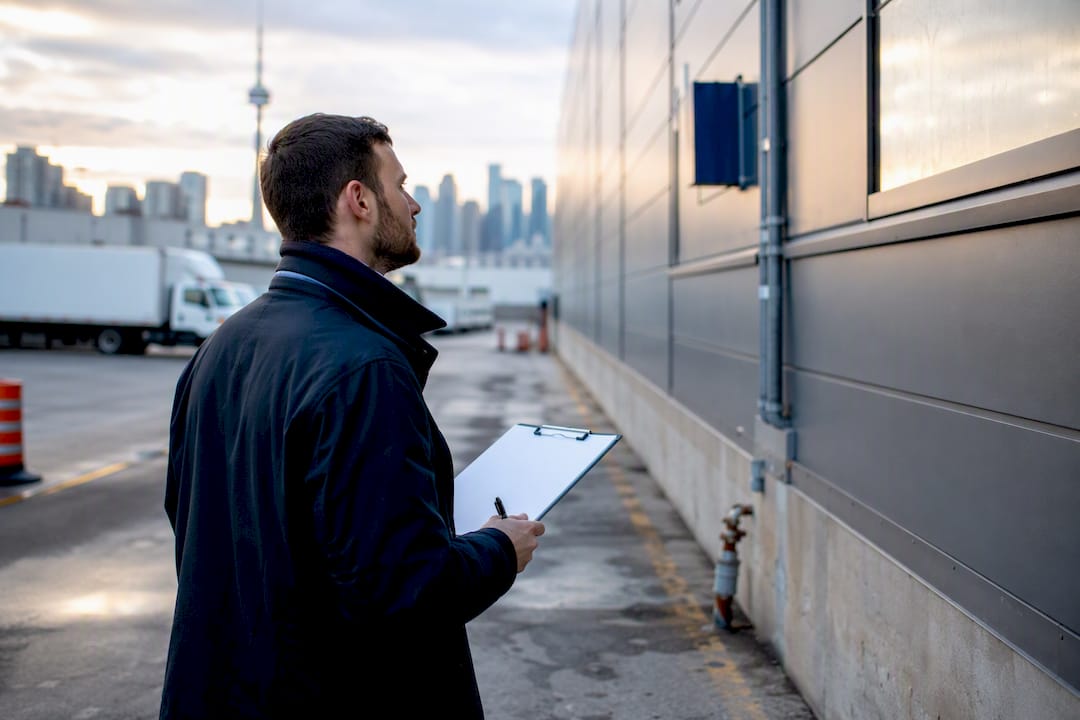
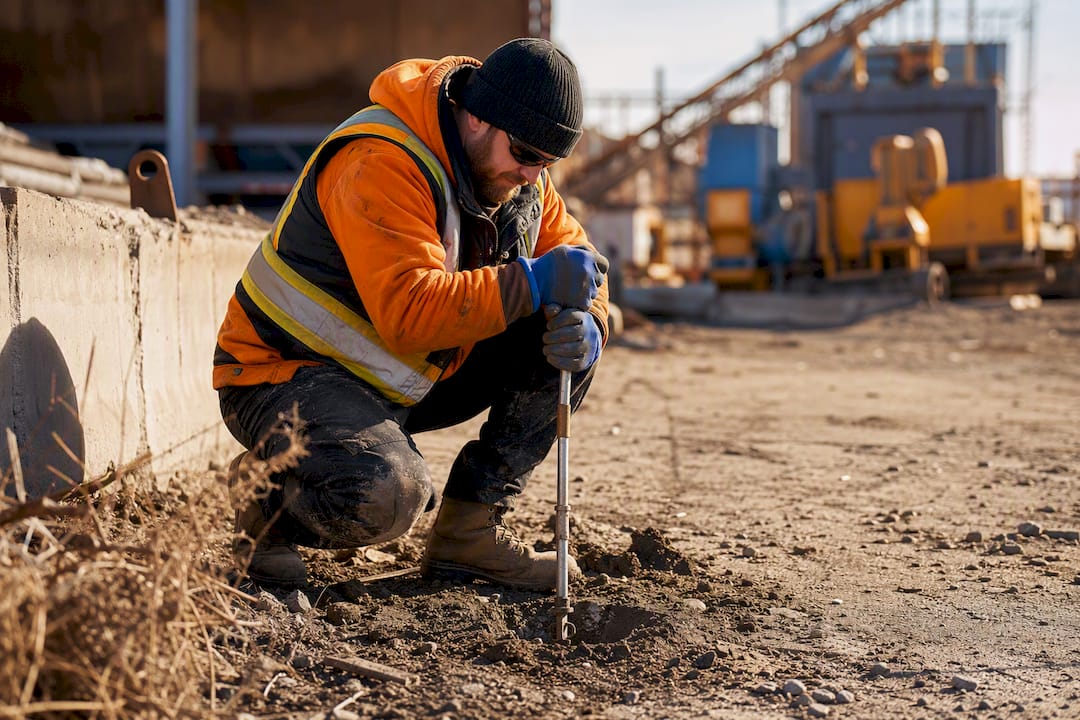
- Site reconnaissance. A physical walk-through looking for aboveground or underground storage tanks, staining, floor drains, chemical storage areas, and any visible evidence of a potentially contaminating activity (PCA).
- Interviews. The QP speaks with current owners, long-term employees, or municipal staff who can confirm or contradict what the records show. These conversations frequently surface an old dry cleaner or fuel operation that never made it into any public file.
- Evaluation and reporting. Findings get compiled into Areas of Potential Environmental Concern (APECs), each documented with its location, associated substances, and the reasoning behind including or excluding it.
According to the BDC, the historical records review is often the single most valuable component. It’s the piece most likely to reveal a past PCA that ultimately decides whether Phase 2 testing becomes mandatory.
How much does a phase 1 ESA cost and how long does it take in Ontario?
Budget realistically, and build in schedule buffer, especially on tight closing timelines.
- Simple commercial or light-industrial sites typically run $3,000 to $5,000 for a Phase 1 report.
- Turnaround commonly falls in the two-to-six-week range, with some mandatory government record searches adding roughly 30 days when a mailed request is the only option.
- Larger sites, longer or more complicated ownership histories, and any need to extend the study area push both cost and time upward.
The biggest hidden driver isn’t the site walk. It’s how many decades of records the QP has to chase down, and how many agencies have to respond before the report can close.
What happens if the phase 1 ESA finds a problem?
A clean Phase 1 lets most transactions proceed on schedule. A Phase 1 that identifies APECs, or one where the property sits close to a known contamination source, usually leads somewhere specific.
- The QP recommends a Phase 2, which involves actual soil, groundwater, or soil vapour sampling to confirm whether a PCA left contamination behind.
- Phase 2 work adds real time and cost. Simple confirmatory sampling might take weeks; a site needing multiple boreholes and lab turnaround can stretch a deal by months.
- If contamination is confirmed, a remediation and risk assessment plan typically has to be completed and accepted before an RSC can be filed with the province.
- Many purchase agreements make closing conditional on either a clean Phase 1 or an accepted remediation plan, so a Phase 2 finding can directly delay or restructure the deal.
None of this means walk away. It means the numbers, and sometimes the closing date, need to be renegotiated with real information in hand.
How should GTA buyers brief consultants and screen bids?
A cheap, fast quote on a Phase 1 is often the most expensive decision you’ll make on a deal, because a thin report can miss the one APEC that matters. When you request proposals, ask bidders to submit:
- QP credentials and specific RSC filing history, not just general Phase 1 experience.
- A sample report showing how they’ve documented photographs, site diagrams, and records-search appendices on a comparable industrial site.
- Their proposed study area and rationale, particularly on urban infill sites near former rail corridors or historical manufacturing.
- Any assumptions or exclusions built into their quote, in writing.
Watch for bids that skip site history discussion entirely, or promise a full Phase 1 in days without explaining how they’ll handle government record-search delays.
That’s usually where the difference lives.*
A GTA broker’s view on scoping
On one Brampton industrial file, a thinly scoped Phase 1 missed that a neighbouring property once operated a fuel depot, information a proper records search and a wider study area would have surfaced early. Catching gaps like that before firm-up protects your closing date and keeps lenders comfortable with financing conditions. Scoping the Phase 1 correctly the first time is cheaper than fixing it after you’re under contract.
— Michael Law
Get help managing ESA risk on your next GTA industrial deal
Buyers and developers rarely need just an environmental consultant. You need someone coordinating the QP, the lender’s conditions, and the closing timeline so a Phase 1 finding doesn’t blow up your deal at the eleventh hour. Michael Law | Lennard Commercial works this exact intersection daily across Toronto and the GTA industrial market, connecting occupiers and investors with qualified consultants while managing the transaction calendar around their findings.
Whether you’re evaluating a Brampton distribution facility or negotiating lease terms on a Mississauga flex-industrial building, having a broker who understands how a Phase 1 environmental assessment interacts with financing conditions and closing dates saves real money and real stress. If you’re weighing a GTA industrial acquisition or lease and want a coordinated approach to due diligence and vendor selection, reach out for tenant representation and transaction advisory before you firm up your next offer.
Sources
- Guide for completing phase one environmental site assessments under Ontario Regulation 153/04
- O. Reg. 153/04: Records of site condition - Part XV.1 of the Act (CanLII)
- Environmental site assessments – What you need to know | BDC
FAQ
How much does a Phase 1 environmental site assessment cost in Ontario?
Simple commercial or industrial sites in Ontario typically run $3,000 to $5,000 for a Phase 1 ESA, though larger sites or complex ownership histories push costs higher.
Who can perform a Phase 1 ESA in Ontario?
A Qualified Person, generally a licensed professional engineer or geoscientist meeting the experience requirements in Schedule D of O. Reg. 153/04, must complete or directly supervise any Phase 1 tied to an RSC filing.
What goes into a Phase 1 ESA report?
A Phase 1 report covers a historical records review, a site reconnaissance visit, interviews with knowledgeable people, and an evaluation identifying any Areas of Potential Environmental Concern, all documented in a written report.
What’s the difference between Phase 1 and Phase 2 ESAs?
Phase 1 is non‑intrusive desktop and site-visit work that identifies potential concerns; Phase 2 involves actual soil, groundwater, or vapour sampling to confirm whether contamination identified in Phase 1 is actually present.
Recommended

About Michael Law
Managing Partner and Industrial Real Estate Broker at Lennard Commercial Realty. Representing tenants and landlords across Toronto and the GTA for 15+ years. Michael specializes in GTA industrial real estate — connect with Toronto's leading industrial broker at mlawrealestate.com/industrial-broker-toronto.