The role of 410 corridor industrial leasing in the GTA
By Michael Law · Industrial Real Estate Broker, Lennard Commercial Realty
Highway 410 functions as the mid-GTA’s primary industrial spine, connecting Brampton and Mississauga employment pools to Pearson Airport, the CN Brampton intermodal yard, and the 401/407/427 network within a short drive. For tenants, that geography translates directly into distribution reach, labour access, and freight flexibility that few other GTA corridors match. As of mid-2026, the GTA industrial market is normalising after the sub-1% vacancy extremes of 2022, giving occupiers measurably more negotiating leverage than they had two years ago.
Key locational advantages to prioritise in any 410 corridor site search:
- Highway interchanges: direct access to 401, 407, and 427 within a single interchange sequence
- Pearson proximity: under 30 minutes to the airport for air-freight and time-sensitive distribution
- Intermodal access: CN Brampton and CPKC Vaughan intermodal yards within 25–30 minutes
- Labour catchment: Brampton and Mississauga combined offer one of Ontario’s deepest industrial workforces
- Truck route network: Peel Region goods-movement corridors prioritise capacity around key 410 interchanges
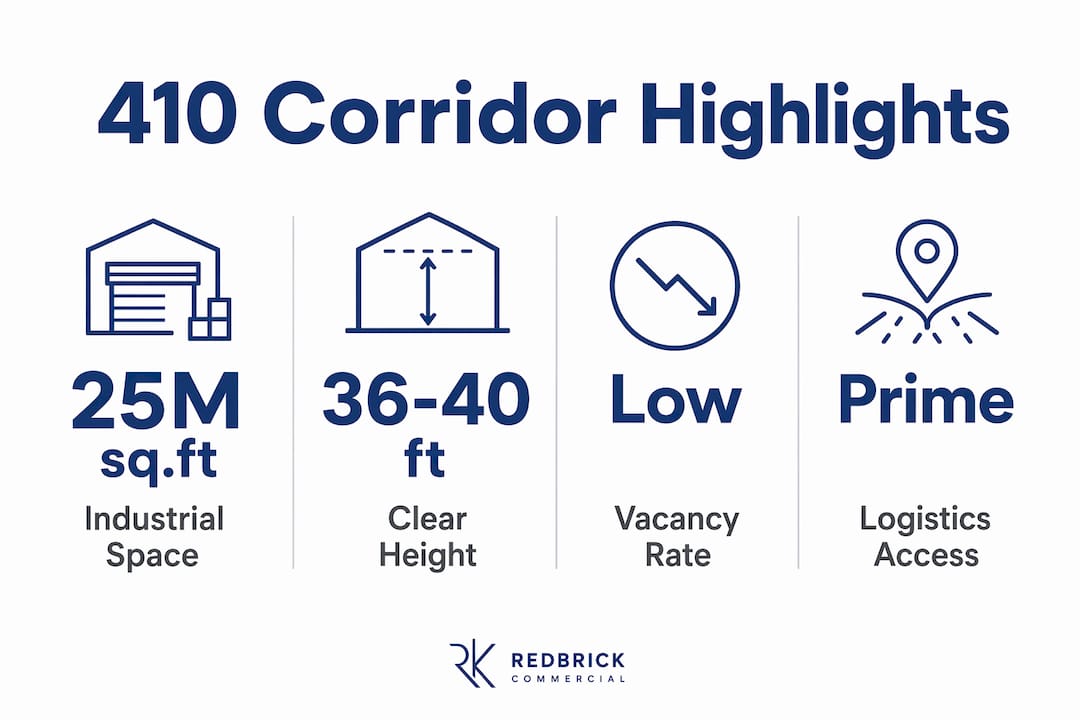
For technical specifications, require a minimum 36’ clear height (40’ for Class A bulk), ESFR sprinkler systems, adequate dock count and yard depth for your trailer fleet, and confirmed zoning and environmental status before issuing an LOI. Property types along the corridor range from large-bay Class A distribution to yard-heavy logistics sites, flex/light manufacturing, and cold storage. Each maps to a different tenant profile, so qualifying the right building type early saves weeks.
Pro Tip: Prepare your site-qualification checklist and have your LOI template ready before you start touring. In a market where well-located Class A space still moves quickly, being LOI-ready is a genuine competitive advantage.
Michael Law | Lennard Commercial’s tenant representation work across the GTA, including Brampton and Mississauga, is built around exactly this kind of upfront qualification discipline.
Table of Contents
- How e-commerce and supply chain shifts are driving 410 corridor demand
- How the 410 corridor compares to other GTA industrial submarkets
- Green building considerations that now affect your leasing decision
- Infrastructure projects shaping the 410 corridor’s future
- Risks and challenges you should plan for along Highway 410
- Work with Michael Law | Lennard Commercial on your 410 corridor search
- Key takeaways
- FAQ
How e-commerce and supply chain shifts are driving 410 corridor demand
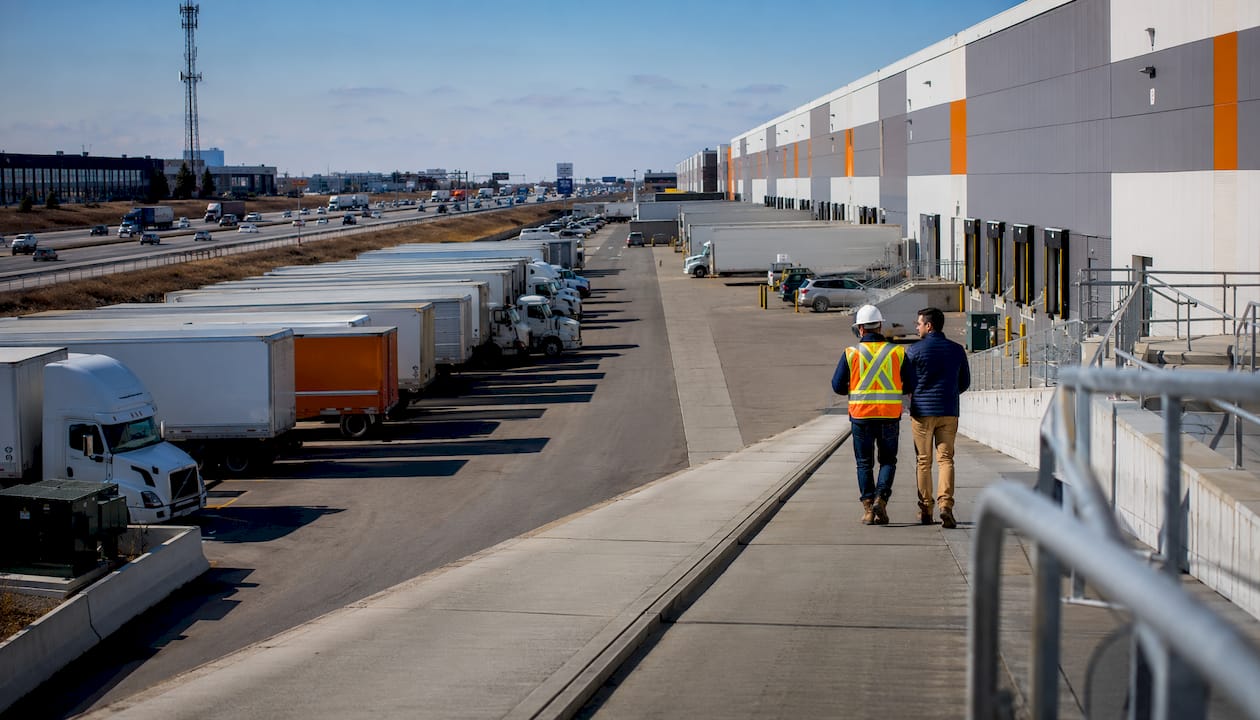
E-commerce growth has fundamentally changed what tenants need from an industrial site. Same-day and next-day delivery windows require facilities positioned close to dense population centres with multiple highway exits, not just one. The 410 corridor satisfies that requirement better than most GTA locations because it sits between Brampton’s industrial base and Mississauga’s airport-adjacent logistics cluster.
Proximity to Pearson and the CN intermodal yard gives 410-corridor sites an outsized advantage for omnichannel distribution strategies that depend on air and intermodal connections. Retailers and third-party logistics operators running hybrid fulfilment models increasingly treat Peel Region as their primary GTA node precisely because of this dual access. Supply chain resilience planning post-2020 has also pushed occupiers toward larger footprints and higher clear heights, which aligns with the Class A bulk product concentrated along the corridor.
How the 410 corridor compares to other GTA industrial submarkets
Brampton’s submarkets remain among the tightest in the GTA, supported by direct access to Highways 401, 407, and 410 and both CN and CP rail lines. Mississauga, particularly the airport cluster, shares that tightness. Both contrast sharply with Milton and the Highway 400/Highway 9 corridor, where new supply from 2024–2026 has softened rents and widened tenant options.
For occupiers who need Pearson access or intermodal proximity, the 410 corridor commands a premium that Milton cannot replicate regardless of rent. For tenants whose primary concern is cost and who can absorb longer drayage times, the outer corridors offer real savings. The decision comes down to your distribution model, not just the rent line. A comparative GTA submarket analysis is worth running before committing to a geography.
Green building considerations that now affect your leasing decision
Sustainability requirements have moved from a nice-to-have to a lease-negotiation factor. Tenants with ESG commitments or corporate carbon targets increasingly require LEED certification, LED lighting, ESFR systems, and EV charging infrastructure as lease conditions. Landlords developing new Class A product along the 410 corridor, including projects like Gateway 410 in Caledon, are building to 40’ clear with LED and ESFR as standard, partly because institutional investors now require it.
For tenants, the practical implication is due diligence: confirm energy performance, roof condition for solar readiness, and whether the building’s power supply supports your operational load. Older Class B/C product along the corridor may carry deferred maintenance that inflates your effective occupancy cost. Factor that into your rent benchmarking before signing.
Infrastructure projects shaping the 410 corridor’s future
The 410 corridor’s development pipeline extends north into Caledon, where large-format prestige industrial sites are being serviced and zoned for the first time. Gateway 410 at 12304 Heart Lake Road represents over 76 acres across three serviced blocks, with buildable concepts ranging from approximately 160,000 sq.ft. to nearly 968,000 sq.ft. and a delivery timeline of roughly 18–24 months. That scale of new supply will expand tenant options at the northern end of the corridor over the next two years.
Peel Region’s goods-movement planning continues to prioritise capacity preservation around key 410 interchanges, which supports long-term freight access but also signals that truck-routing constraints will tighten as the corridor densifies. Tenants signing long leases should factor in how planned interchange improvements and road network changes affect their specific site’s access over a 5–10 year term.
Risks and challenges you should plan for along Highway 410
Congestion is the corridor’s most consistent operational risk. The intersection of the 401, 407, and 410 is among Peel Region’s highest truck-trip generators, and peak-hour delays on the 401 west of the 410 interchange are a daily reality for fleet operators. Site selection should account for truck-route compliance, particularly for sites north of Steeles where local routing restrictions apply.
Environmental constraints are the other major risk. Many older industrial parcels along the corridor carry historical contamination from prior manufacturing uses. A Phase I and Phase II environmental site assessment early in due diligence is not optional. These issues surface late when skipped and can materially affect your TI budget and occupancy timeline. Zoning changes tied to Caledon’s growth plans also introduce some regulatory uncertainty for sites at the northern end of the corridor.
Work with Michael Law | Lennard Commercial on your 410 corridor search
Securing the right industrial space along Highway 410 requires more than a property search. It requires knowing which buildings will actually work for your operation before you spend time touring them.

Michael Law | Lennard Commercial provides tenant representation across Brampton, Mississauga, Caledon, and the broader GTA, covering the full process from site qualification and market scan through LOI drafting, technical due diligence, TI negotiation, and occupancy. With over a decade of GTA industrial experience and the backing of Lennard Commercial, one of Canada’s leading independent brokerages, Michael brings both local submarket knowledge and transaction depth to every mandate. The 2026 market gives tenants real leverage. Using it well starts with a structured search and a broker who knows where the value is. Contact Michael Law to schedule a market scan or request an LOI review for your 410 corridor requirements.
Key takeaways
The 410 corridor’s combination of Pearson proximity, intermodal access, and deep labour pools makes it the GTA’s most strategically positioned industrial submarket for distribution-focused occupiers.
| Point | Details |
|---|---|
| Market leverage is improving | GTA vacancy has risen from 2022 lows, giving tenants more room to negotiate TIs and lease terms. |
| Corridor geography is the differentiator | Under-30-minute access to Pearson, CN Brampton intermodal, and the 401/407/427 network sets the 410 apart. |
| Qualify buildings technically first | Require 36–40’ clear height, ESFR, confirmed zoning, and environmental status before issuing an LOI. |
| Congestion and environmental risk are real | Peak-hour 401 delays and historical site contamination are the two most common surprises in 410 corridor due diligence. |
| Michael Law | Lennard Commercial |
FAQ
What makes the 410 corridor strategic for industrial tenants?
Highway 410 connects Brampton and Mississauga to Pearson Airport, the CN Brampton intermodal yard, and the 401/407/427 network, making it one of the GTA’s accessible freight corridors for distribution and logistics occupiers.
What clear height should I require in a 410 corridor lease?
Modern Class A product along the corridor runs 36–40’ clear with ESFR sprinklers; requiring a minimum of 36’ in your LOI filters out older product that limits racking configurations and future operational flexibility.
How does the 2026 market affect my negotiating position?
GTA industrial vacancy has risen from the sub-1% extremes of 2022, which means tenants can now negotiate better tenant improvement allowances and lease terms than were available two or three years ago.
What due diligence should I prioritise for a 410 corridor site?
Run a truck-route compliance check and a Phase I environmental site assessment early. Both issues frequently surface late in the process and can affect your TI budget and occupancy date if discovered after LOI execution.
How do I start a 410 corridor site search?
A structured market scan with a tenant representative like Michael Law | Lennard Commercial shortens search timelines and improves economic outcomes by qualifying sites against your technical and operational requirements before touring begins.
Recommended

About Michael Law
Managing Partner and Industrial Real Estate Broker at Lennard Commercial Realty. Representing tenants and landlords across Toronto and the GTA for 15+ years. Michael specializes in GTA industrial real estate — connect with Toronto's leading industrial broker at mlawrealestate.com/industrial-broker-toronto.