Site selection red flags for industrial occupiers in Ontario
By Michael Law · Industrial Real Estate Broker, Lennard Commercial Realty
TL;DR:
- Environmental contamination, utility capacity, and zoning restrictions are the main deal-killers for Ontario industrial site searches. Conduct early Phase I and II ESAs, confirm zoning and utility capacity with written documentation, and include conditional extension clauses in offers. Proper due diligence reduces costly surprises, ensures timely permits, and secures operational readiness.
The three deal-killers that end more Ontario industrial site searches than anything else are environmental contamination with no clear remediation path, utility capacity that cannot support the intended operation, and zoning that prohibits the use outright. If you are in a conditional period right now, add three clauses before anything else: an environmental contingency tied to a satisfactory Phase I ESA, a Zoning Compliance Letter condition, and a due-diligence extension clause that buys you time if a Phase II is triggered. Ontario’s D-6 Land Use Compatibility Guideline and the Site Readiness Program give you the provincial benchmarks to measure against. The Area Development checklist confirms these same categories top the list of deal-killers for corporate site selectors across North America.
The highest-priority site selection red flags to check immediately:
- Environmental contamination or historical industrial use on or adjacent to the site
- Insufficient utility capacity (power, gas, water, wastewater) for the intended operation
- Zoning incompatibility or D-6 influence area conflicts that prohibit or restrict the use
- Title encumbrances (easements, restrictive covenants, rights-of-way) that limit site development
- Permitting or approval timelines that exceed your occupancy target by more than six months
- Access and logistics constraints (inadequate turning radii, restricted truck routes, no rail)
- No services at lot line and no demonstrated serviceability within two years
- Indigenous consultation requirements or active land claims that could delay approvals
Pro Tip: Add a conditional extension clause to every offer on an industrial site. A Phase II ESA alone can add 4–6 weeks to your timeline, and you need that time in writing before you need it in practice.
Table of Contents
- What environmental findings are actual deal-killers?
- Does your site have enough utility capacity to operate?
- Is the zoning actually compatible with your intended use?
- What title issues can prevent you from using the site?
- How long do permits actually take, and what do they cost?
- What does due diligence actually cost and how long does it take?
- How do you decide go, negotiate, or walk away?
- Key takeaways
- The red flags most occupiers miss until it is too late
- Site selection and due diligence advisory across the GTA
- Useful sources
- FAQ
What environmental findings are actual deal-killers?
Historic industrial use is the single most common environmental red flag, and it is often invisible until a Phase I ESA surfaces it. A site that operated as a dry cleaner, auto body shop, fuel depot, or metal fabricator carries a presumption of soil and groundwater contamination until proven otherwise. Nearby contamination sources, such as a gas station or chemical storage facility on an adjacent parcel, can migrate onto your site and create liability even if your own operations are clean.
The findings that most often kill deals outright:
- Proximity to a known contaminated site — listed under Ontario’s Environmental Protection Act
A Phase I ESA typically takes 2–3 weeks and costs in the range of $2,000–$5,000 for a standard industrial parcel. If it identifies Areas of Potential Environmental Concern (APECs), a Phase II ESA with invasive soil and groundwater testing follows, adding another 4–6 weeks to your conditional period and potentially tens of thousands of dollars in sampling costs before you even know the remediation number.
Remediation under an Environmental Protection Act order can run from modest soil removal to multi-year pump-and-treat programmes costing hundreds of thousands of dollars. The practical question is not just “is there contamination?” but “who pays, and can the deal survive that number?” If the vendor cannot demonstrate a clear remediation path with cost certainty, walk away or negotiate a remediation escrow before closing.
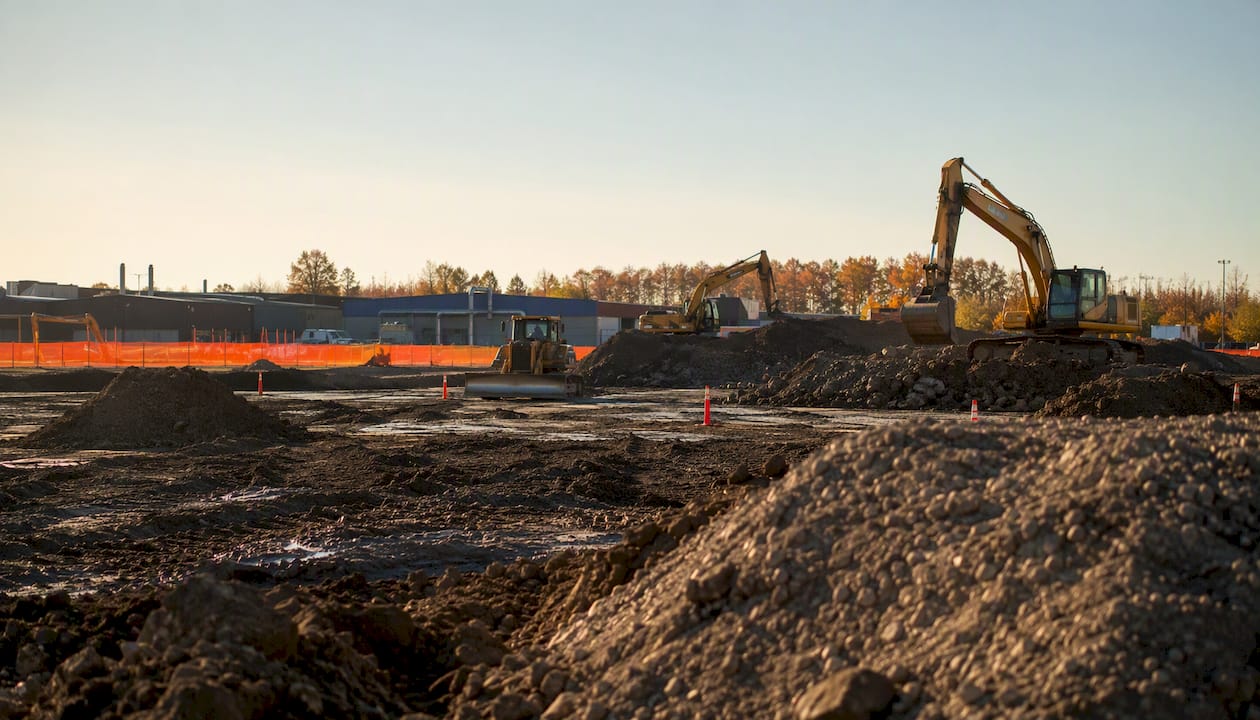
Confirm floodplain and wetland overlays early by checking Conservation Authority mapping and the municipal Official Plan. A site inside a regulated floodplain faces restrictions on grading, fill, and building footprint that can make industrial development economically unviable regardless of the purchase price.
Does your site have enough utility capacity to operate?
Insufficient utility capacity is a red flag that rarely shows up in a listing but consistently derails industrial occupiers after they have already committed. A single-feed electrical service with no redundancy is an operational risk for any manufacturing or cold storage use. A site where the local transformer is already at capacity means a 12–24 month wait for a new transformer from the utility, and that wait starts after you close.
Pro Tip: Request a utility confirmation letter from the local distribution company before you remove conditions. Ask specifically about available capacity at the lot line, not just whether service exists in the area.
Documents to request from the vendor and utility providers:
- Utility confirmation letters from the local electricity distribution company and gas utility
- As-built servicing maps showing service sizes and connection points at the lot line
- Recent consumption data from the incumbent tenant (if applicable)
- Municipal water and wastewater capacity confirmation from the public works department
- Fibre or high-speed internet availability confirmation from telecom providers
Real-world consequences of skipping this step are significant. Transformer lead times from Ontario utilities have stretched to 18 months or longer for large units. Natural gas service upgrades requiring new pressure regulation stations can take 12–18 months to engineer and construct. Wastewater capacity shortfalls in some GTA municipalities require a developer to fund a capacity allocation study before a building permit is issued.
Telecommunications infrastructure is increasingly a hard requirement for logistics and distribution operations. Confirm fibre availability and redundant carrier options before committing to a site, particularly in secondary markets outside the 400-series highway corridors. A site without reliable high-speed connectivity will cost you in operational workarounds and staff retention.
Build utility confirmation as a condition in your offer, not a post-closing assumption. The scalability and infrastructure capacity principles that inform best-practice site selection make clear that utility shortfalls are among the most expensive retrofits an occupier can face.
Is the zoning actually compatible with your intended use?
Not being permitted under the current zoning by-law is an immediate red flag, and it is more common than most occupiers expect. A building that looks like a warehouse and has been used as one for 20 years can still be legally non-conforming, meaning your intended use may not be permitted as of right. Never rely on historical tolerance.
A zoning checklist for every industrial site:
- Confirm the Official Plan designation supports employment or industrial uses
- Review the zoning by-law for the specific permitted uses, not just the zone label
- Check for holding symbols (H) that freeze development until specific conditions are met
- Identify any site-specific zoning exceptions that may restrict or expand permissions
- Request a Zoning Compliance Letter from the municipality to confirm the intended use is permitted
The D-6 Land Use Compatibility Guideline is the provincial standard for managing conflicts between industrial facilities and sensitive land uses. Under D-6, if your site falls within the influence area of a Class I, II, or III industrial operation, or if your operation would create an influence area that overlaps with sensitive receptors such as residential neighbourhoods, schools, or hospitals, an impact assessment is required before permitting proceeds. Separation distances and buffering are not negotiable under D-6; they are the standard.
For industrial zoning in the GTA, a rezoning or site-specific amendment typically takes 12–24 months through the municipal planning process, and there is no guarantee of approval. If a site requires rezoning to permit your use, factor that timeline and risk into your go/no-go decision. A site that is “probably going to get rezoned” is not a site that is ready for your operation.
What title issues can prevent you from using the site?
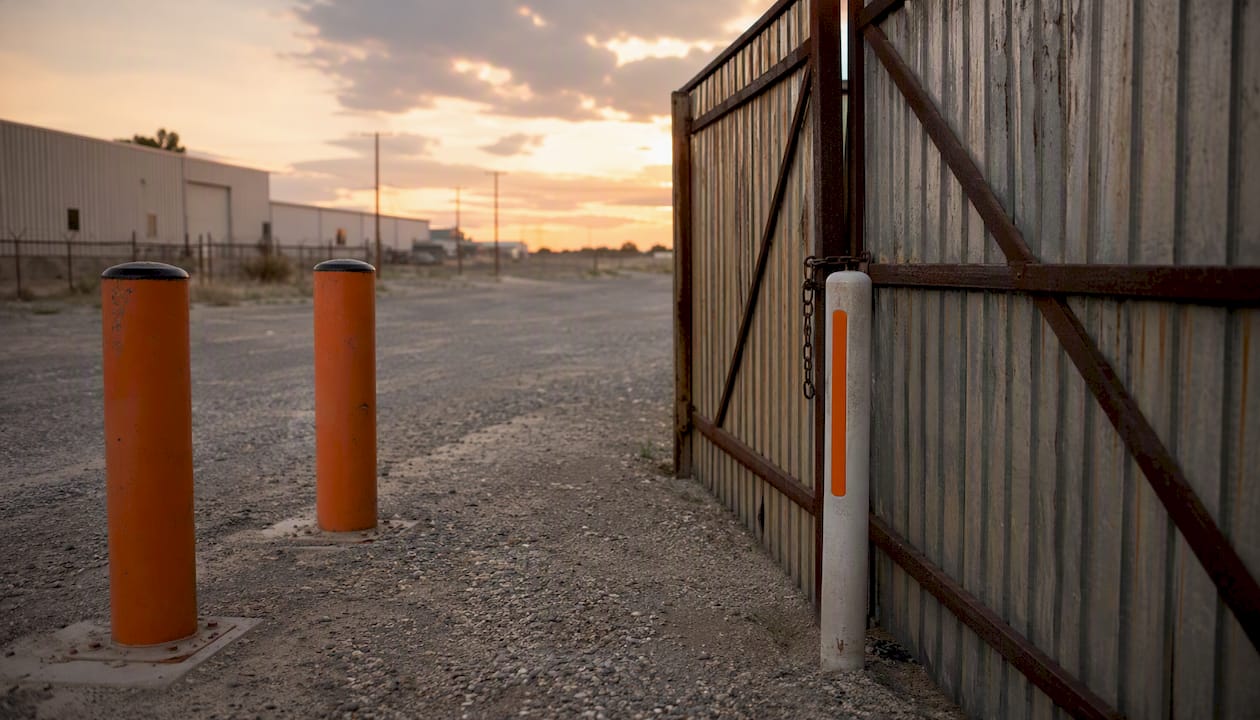
Undisclosed easements, restrictive covenants, or rights-of-way are deal-killers that do not show up in a site visit. A utility easement running through the middle of a proposed truck court, or a restrictive covenant prohibiting certain industrial uses, can make a site functionally unusable for your intended operation even after you own it.
Pro Tip: Commission a current survey early in due diligence, not after conditions are removed. A survey that reveals an encroachment or an easement in a critical location gives you negotiating leverage while you still have it.
Title documents to review before removing conditions:
- Current title search showing all registered instruments
- Registered easements and rights-of-way (utility, drainage, access)
- Restrictive covenants limiting use, building height, or site coverage
- Agreements with utilities or municipalities registered on title
- Active liens, mortgages, or development charges registered against the property
Cross-check the registered easements against an updated survey and against the site plan you intend to build. A utility easement that appears minor on a title search can bisect a proposed truck court or loading dock area when plotted on a current survey. The Zoning Compliance Letter from the municipality should also be cross-referenced with title to confirm there are no site-specific agreements that restrict use beyond the zoning by-law.
Negotiation tip: include a condition requiring the vendor to discharge any encumbrances that materially affect the intended use, and specify a deadline. If the vendor cannot discharge them, you need to know that before you close, not after.
How long do permits actually take, and what do they cost?
Incomplete permitting paths and optimistic municipal timelines are among the most common sources of cost and schedule overruns in industrial development. A site plan approval that a vendor describes as “straightforward” can take 12–18 months in a busy GTA municipality, and a building permit will not issue until site plan is approved.
Core municipal approvals to confirm early:
- Site plan approval — from the municipality (required before building permit in most Ontario municipalities)
The typical sequence in Ontario runs: site plan application, concurrent stormwater and servicing design, conservation authority review if applicable, site plan approval, then building permit application. Parallel work on building design during site plan review can shorten the overall timeline, but it requires investing in design before approval is confirmed.
Municipal peer reviews, development charges, and professional fees commonly surprise buyers. Development charges in the GTA can run into the hundreds of thousands of dollars for a large industrial building, and they are payable at building permit issuance. Bond requirements for site servicing and landscaping can also represent significant cash tied up during construction. Ask the municipality for a pre-consultation meeting and a written summary of anticipated approvals, timelines, and fees before you commit.
What does due diligence actually cost and how long does it take?
The essential studies for an industrial site in Ontario, in recommended sequence, are: Phase I ESA, geotechnical investigation, zoning confirmation (Zoning Compliance Letter), Phase II ESA if triggered, hydrogeological study if groundwater is a concern, traffic and servicing studies, and stormwater management report. Run the Phase I and geotechnical concurrently to save time.
Typical Ontario due-diligence study durations and ballpark costs
| Study | Typical duration | Ballpark cost (Ontario/GTA) |
|---|---|---|
| Phase I ESA | 2–3 weeks | $2,000–$5,000 |
| Phase II ESA (if triggered) | 4–6 weeks additional | — |
| Geotechnical investigation | 2–3 weeks | $5,000–$15,000 |
| Hydrogeological study | 3–5 weeks | — |
| Zoning Compliance Letter | 1–3 weeks | $500 (municipal fee) |
| Traffic study | 3–6 weeks | — |
| Stormwater management report | 4–6 weeks | — |
Conditional periods for industrial warehouse purchases in Ontario are commonly 30–60 days. A triggered Phase II ESA alone can add 4–6 weeks to your conditional period, so build an extension clause right into the initial offer to cover this possibility.
- Order Phase I ESA and geotechnical investigation on day one of the conditional period.
- Request the Zoning Compliance Letter from the municipality on the same day.
- Review Phase I results by week three and commission Phase II immediately if APECs are identified.
- Run traffic and stormwater studies in parallel with Phase II if the site plan process requires them.
- Negotiate a conditional extension before the original deadline expires, not after.
For a comprehensive local perspective on due diligence in the GTA, the cost of studies is almost always less than the cost of discovering a problem after closing. Seller-funded remediation escrow arrangements, where a portion of the purchase price is held in trust pending environmental sign-off, are a legitimate negotiating tool when Phase II results are pending at closing.
How do you decide go, negotiate, or walk away?
The decision framework is straightforward: accept with mitigation, accept with price adjustment, postpone pending resolution, or walk away. The primary factor that tips the decision is whether the risk has a known cost and a clear resolution path within your timeline.
Risk-allocation decision matrix
| Risk category | Low | Medium | High |
|---|---|---|---|
| Environmental contamination | Phase I clear, no APECs | Phase II triggered, cost estimate available | No remediation path or cost certainty |
| Utility capacity | Confirmed at lot line | Upgrade required, timeline known | 12+ month wait, no commitment from utility |
| Zoning compliance | Permitted as of right | Minor variance required | Rezoning required or D-6 conflict |
| Title encumbrances | No material encumbrances | Easement manageable by design | Easement blocks intended use |
| Geotechnical conditions | Standard soil, no issues | Moderate remediation, cost known | Peat, USTs, or major foundation risk |
| Permitting timeline | 6 months or less | 6–12 months | 12+ months or uncertain |
Mitigation options worth negotiating into the contract include: remediation escrow held by a third party until a Record of Site Condition is filed, seller-funded remediation before closing with a defined scope and deadline, phased occupation that allows partial use while remediation continues on a defined portion of the site, and design workarounds such as relocating truck courts to avoid easement areas.
A multi-criteria decision framework that combines environmental, social, and technical factors into a weighted scoring model gives you a defensible basis for the go/no-go decision and helps you communicate the rationale to stakeholders. For occupiers, a slightly higher capital cost to secure a site with immediate occupancy often beats a 12-month wait for rezoning or infrastructure upgrades. Time-to-occupancy is a real cost that rarely appears in the purchase price comparison.
For investment-focused acquisition strategy and common pitfalls, the industrial asset acquisition guide covers the financial modelling side of this decision in detail. For a finance-centred perspective on deal analysis red flags, the investor-focused checklist complements the technical due-diligence scope covered here.
Key takeaways
The most important principle in industrial site due diligence is this: the cost of a thorough conditional period is always less than the cost of discovering a deal-killer after you have closed.
| Point | Details |
|---|---|
| Environmental contamination | Order a Phase I ESA on day one; build a conditional extension clause for Phase II into every offer. |
| Utility and servicing capacity | Require written utility confirmation letters before removing conditions; never assume capacity from a listing. |
| Zoning and D-6 compliance | Request a Zoning Compliance Letter from the municipality; confirm D-6 influence areas for sensitive receptors. |
| Due-diligence timeline | Conditional periods of 30–60 days are standard in Ontario; a Phase II ESA alone can add 4–6 weeks to your conditional period and must be anticipated contractually. |
| Michael Law | Lennard Commercial |
The red flags most occupiers miss until it is too late
The checklist approach to site selection is well established, and most experienced occupiers know to ask about zoning and environmental history. What they underestimate is the compounding effect of multiple medium-risk items. A site with a manageable Phase II, a utility upgrade that takes eight months, and a minor variance application is not three separate problems. It is one site that will not be ready for 14 months, and that timeline risk rarely appears in the purchase price.
The other pattern worth naming: vendors and their agents are not always forthcoming about historical site operations. A building that changed hands three times in 15 years, with gaps in the occupancy record, warrants a deeper historical use review than a Phase I alone will provide. City directories, fire insurance maps, and aerial photography archives are legitimate research tools that a qualified environmental consultant will use, but only if you ask them to look.
D-6 is also consistently underweighted in early site screening. Occupiers focus on whether their own operation is permitted and overlook whether a nearby sensitive receptor creates a constraint on their operation. A school built adjacent to an existing industrial area after the industrial use was established does not eliminate the D-6 obligation; it creates one. That is a real risk in GTA municipalities where residential intensification is pushing sensitive uses closer to established employment areas.
The practical wisdom here is to front-load your due diligence. The studies that take the longest and cost the most, Phase II ESAs and geotechnical investigations, are also the ones that most often change the deal economics. Running them early, in parallel, and building contractual time for them is not caution. It is the only way to make a genuinely informed decision.
Site selection and due diligence advisory across the GTA
Industrial site selection in the GTA is one of the most technically demanding transactions an occupier will manage, and the conditional period is where deals are won or lost. Michael Law | Lennard Commercial works with industrial occupiers across Mississauga, Brampton, Vaughan, Markham, Ajax, Milton, Burlington, and Barrie to identify sites that match operational requirements, coordinate the technical studies that surface red flags early, and negotiate contract terms that protect the occupier when problems emerge.
The practical difference in working with a broker who knows the GTA industrial market is access to off-market sites, relationships with municipal planning and building departments, and the experience to read a Phase I summary and know whether the identified APECs are routine or a genuine deal-killer. Michael Law | Lennard Commercial coordinates directly with environmental consultants, geotechnical engineers, and municipal staff so that the due-diligence process runs in parallel rather than sequentially, which is the single most effective way to protect your conditional period timeline.
If you are evaluating an industrial site in the GTA or broader Ontario market, connect with Michael Law for a site-specific assessment. The conversation costs nothing; the alternative often costs considerably more.
Michael Law | Lennard Commercial represents occupiers and investors. This article is general information and does not constitute legal, environmental, or professional advice. Confirm current regulations and site-specific requirements with qualified professionals.
Useful sources
The sources below are the primary Canadian and Ontario references cited in this article. Each is worth reading directly for the regulatory detail and programme criteria that inform site due diligence.
-
Ontario D-6 Land Use Compatibility Guideline: — The provincial standard for managing conflicts between industrial facilities and sensitive land uses. Read this before any site adjacent to or within an influence area of a Class I, II, or III industrial operation. Supports the zoning and community risk sections.
-
Ontario Site Readiness Program: — Sets the minimum servicing criteria (two of five services at lot line, serviceability within two years) that reduce infrastructure uncertainty. Supports the site servicing and buildability section.
-
Multi-criteria industrial site location analysis, Edmonton Energy Technology Park (Canadian Consulting Engineer): — Canadian case study demonstrating multi-criteria spatial analysis (GoldSET) for defensible industrial siting decisions. Supports the mitigation and decision-framework section.
-
Avoid these red flags, deal killers, and blunders in site selection (Area Development): — Industry commentary validating the checklist approach and common deal-killer categories for corporate site selectors. Supports the opening BLUF and overall framing.
FAQ
What are the most important site selection criteria for industrial properties in Ontario?
The highest-priority criteria are environmental status (Phase I/II ESA), zoning compliance confirmed by a Zoning Compliance Letter, utility capacity at the lot line, and serviceability meeting Ontario Site Readiness Program standards. Access and logistics constraints, title encumbrances, and permitting timelines round out the core checklist.
What do you look for first when evaluating a potential industrial site?
Order a Phase I ESA and confirm zoning compliance on day one of the conditional period. These two steps surface the most common deal-killers, environmental contamination and prohibited use, before you invest in further studies or design work.
How long does industrial site due diligence typically take in Ontario?
Conditional periods are commonly 30–60 days for industrial purchases in Ontario. A Phase I ESA takes 2–3 weeks; if it triggers a Phase II ESA, add another 4–6 weeks to your conditional period. Build a conditional extension clause into every offer to protect your timeline if Phase II testing is required.
What is the D-6 guideline and why does it matter for site selection?
Ontario’s D-6 Land Use Compatibility Guideline governs the relationship between industrial facilities and sensitive land uses such as residential areas, schools, and hospitals. If your site falls within a D-6 influence area, or if your operation would create one that overlaps with sensitive receptors, an impact assessment is required before permitting proceeds.
How can Michael Law | Lennard Commercial help with site due diligence in the GTA?
Michael Law | Lennard Commercial coordinates the full due-diligence process for industrial occupiers across the GTA, including environmental consultant and geotechnical engineer referrals, municipal zoning confirmation, and negotiation of remediation clauses and conditional extensions. Reach out through mlawrealestate.com to discuss a specific site or search.
Recommended

About Michael Law
Managing Partner and Industrial Real Estate Broker at Lennard Commercial Realty. Representing tenants and landlords across Toronto and the GTA for 15+ years. Michael specializes in GTA industrial real estate — connect with Toronto's leading industrial broker at mlawrealestate.com/industrial-broker-toronto.