How to Find the Best Commercial Property for Sale
By Michael Law · Industrial Real Estate Broker, Lennard Commercial Realty
A listing can look like the best commercial property for sale because it has a clean facade, a desirable address, or an asking price below recent comparables. None of those facts, by themselves, make it the right acquisition. For an owner-user, the best property supports operations without creating costly limitations. For an investor, it produces dependable income with a credible path to value growth. The distinction matters before an offer is written.
Industrial buyers in Toronto and the GTA are often dealing with limited supply, strong competition, and properties that serve very different purposes despite appearing similar on paper. A building’s clear height, loading configuration, power capacity, zoning, lease structure, and site circulation can change its value materially. The right decision begins with a clear definition of what the property must accomplish.
Define What “Best” Means Before You Search
The best property is not necessarily the newest building or the one with the lowest price per square foot. It is the asset that fits a specific business plan, budget, and holding period.
An owner-user should start with operational requirements. How much warehouse, production, office, or showroom space is actually needed? Is one truck-level door sufficient, or does the business depend on multiple shipping bays? Will employees, customers, trailers, and delivery vehicles be able to move through the site without creating bottlenecks? A property that is slightly larger than current needs may be sensible if growth is realistic. Excess space that cannot be leased or used efficiently is simply an added carrying cost.
An investor has a different starting point. The key questions are whether the tenant is reliable, whether the rent is supportable in the market, and whether the lease protects the owner from avoidable expense exposure. A strong-looking cap rate can be misleading if it is based on short-term income, below-market operating cost estimates, or a tenant likely to leave at expiry.
Before reviewing listings, establish the following in writing: target size, preferred submarkets, maximum total acquisition cost, intended use, required occupancy date, and acceptable risk level. This keeps the search disciplined when a compelling listing creates pressure to move quickly.
Location Is More Than a Postal Address
For industrial and commercial assets, location is tied directly to business function. Proximity to highways, major freight routes, labor pools, suppliers, customers, and intermodal infrastructure can affect labor costs, shipping times, and tenant demand. In the GTA, access can vary significantly from one industrial node to the next, even within the same municipality.
A central location may command a premium because it improves customer access and shortens delivery routes. That premium is justified only when it supports the intended use or strengthens long-term leasing demand. A less central property may offer more land, better trailer parking, or a lower entry price. For a business with regional rather than urban delivery needs, that trade-off may be favorable.
Look beyond the immediate block. Review planned roadwork, nearby development applications, environmental uses, traffic patterns, and future land-use policies. A site surrounded by compatible industrial activity can be more durable than one facing gradual pressure from residential or mixed-use redevelopment.
Assess the Building’s Functional Value
Commercial real estate is valued by income, location, and replacement cost, but industrial buyers should also evaluate function. Functional weaknesses are often expensive to correct and can reduce the future buyer or tenant pool.
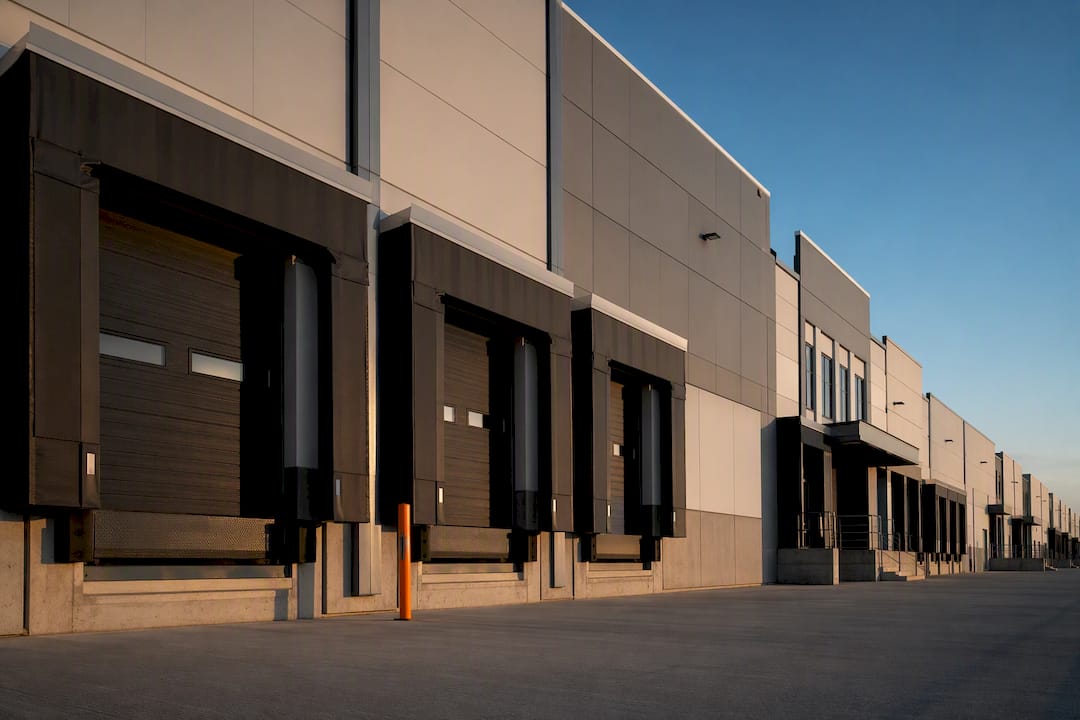
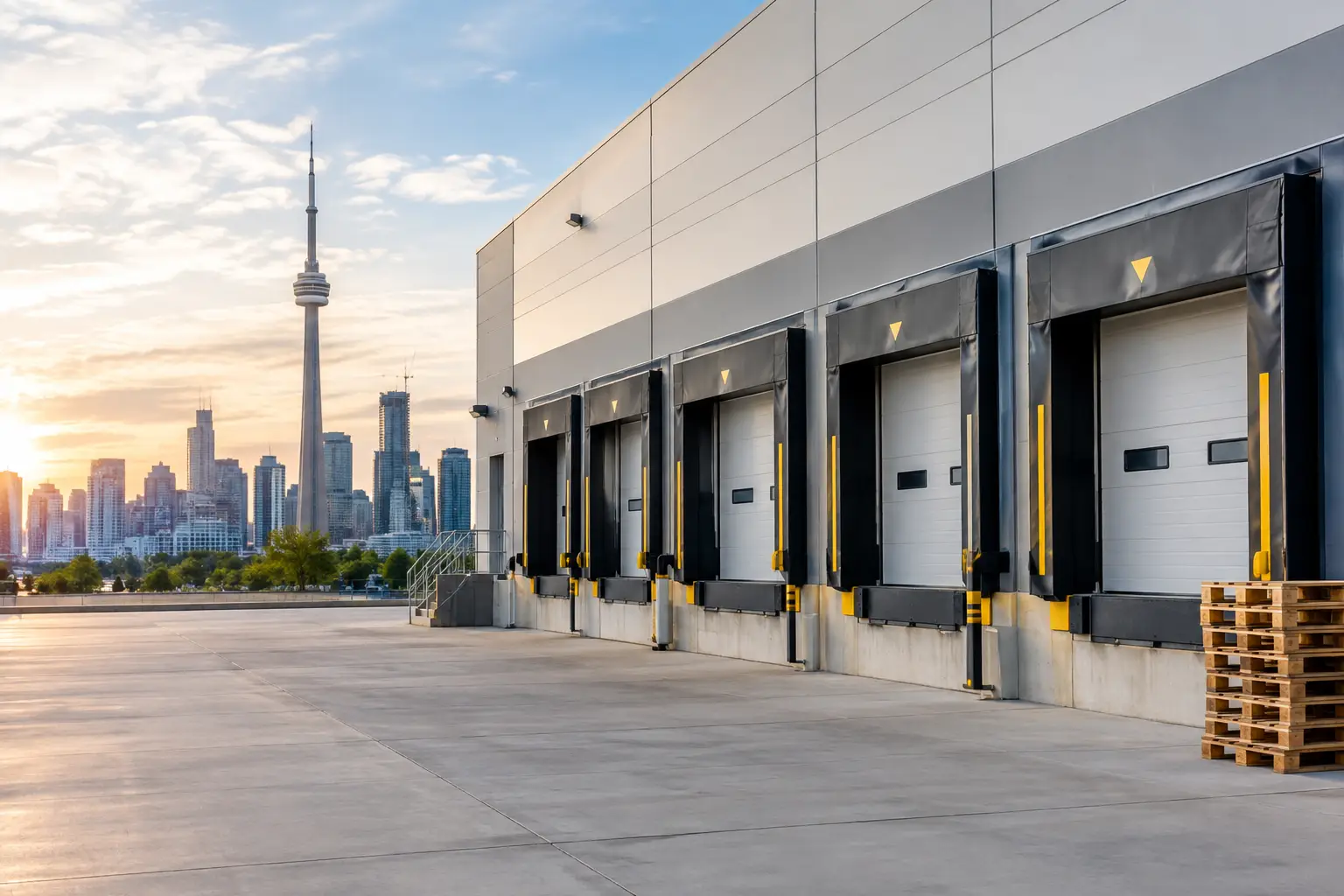
Clear height is a common example. A building with lower clear height may work well for light assembly, storage with modest racking, or a showroom-oriented user. It may be less competitive for a logistics operator that needs vertical storage capacity. Loading matters just as much. Drive-in doors, truck-level doors, dock positions, truck courts, and turning radii should be reviewed in the context of actual vehicle traffic, not simply counted from a brochure.
Power supply, sprinklers, HVAC, drainage, floor load capacity, roof condition, and office-to-warehouse ratio all deserve attention. Specialized improvements can add value for the right buyer but may narrow the resale market. A heavy-power manufacturing setup, for example, is useful when it matches the business plan. If it does not, it can represent capital tied up in improvements that do not produce a return.
Site utility should receive equal scrutiny. Parking shortages, limited outdoor storage rights, restricted access points, and inadequate trailer circulation can undermine an otherwise attractive building. Confirm what is permitted rather than relying on a current occupant’s informal practice.
Zoning and Due Diligence Protect the Business Plan
A commercial property should never be acquired based on an assumed use. Zoning must permit the intended operation, including any outdoor storage, retail component, food production, vehicle-related activity, or specialized manufacturing. Municipal regulations can also affect signage, parking, loading, hours of operation, and expansion potential.
Due diligence should be proportionate to the asset, but it should not be superficial. The purchase process typically requires a review of title, surveys, environmental conditions, building systems, permits, service contracts, and property tax information. If the property is tenanted, review every lease document, amendment, guarantee, estoppel, and record of tenant obligations.
Environmental review is particularly important for industrial property. Historical uses, neighboring operations, underground storage, and site conditions can create liability or financing obstacles. A Phase I environmental assessment may identify concerns requiring further investigation. The cost of proper diligence is small compared with the cost of inheriting a contamination issue or a use restriction after closing.
Evaluate Price Through Total Occupancy Cost
The asking price is only one part of the acquisition cost. Buyers should model the full financial picture: purchase price, financing costs, land transfer tax, legal and inspection fees, immediate repairs, property taxes, insurance, utilities, maintenance, and required improvements. For an owner-user, this is the true cost of occupying the building. For an investor, it is the basis for evaluating net income and return.
Comparable sales are valuable, but no two commercial properties are identical. Adjustments may be required for building age, lot coverage, loading, clear height, office finish, vacancy, lease quality, and environmental profile. A lower price per square foot can indicate opportunity, but it can also signal functional obsolescence or deferred capital expenditure.
For income properties, focus on net operating income that can be verified. Determine which expenses are recoverable from tenants, whether current rents are above or below market, when leases expire, and what renewal options exist. A tenant with a long lease and strong covenant may support a higher price than a vacant building, but the buyer must also consider the property’s reletting prospects if that tenant leaves.
Do Not Let Competition Remove Discipline
Competitive processes can cause buyers to shorten conditions, overlook deficiencies, or bid beyond the property’s strategic value. Speed is useful when it is paired with preparation. Have financing capacity understood early, identify technical advisors before an offer is needed, and know which conditions are essential.
A well-structured offer can be more attractive than the highest price alone. Clean terms, credible deposit arrangements, realistic due diligence timing, and clarity around closing can strengthen a buyer’s position. But removing a financing, inspection, or environmental condition without sufficient information is not a negotiating strategy. It is a risk decision.
The right approach depends on the asset and the buyer’s experience. A purchaser with strong liquidity and detailed market knowledge may accept more risk than a growing business making its first industrial acquisition. Neither approach is automatically correct. The issue is whether the risk is understood, priced, and acceptable.
Build a Team That Tests the Assumptions
Commercial transactions require more than a listing search. A commercial broker, lawyer, lender, inspector, environmental consultant, accountant, and contractor may each identify issues that affect value or closing certainty. Their roles overlap at times, but their perspectives are different.
For buyers in the GTA, local market knowledge can be especially valuable when comparing industrial nodes, interpreting sale comparables, and determining whether a property’s configuration will remain competitive. Michael Law Commercial Real Estate approaches this work with a focus on the property’s practical use, market position, and transaction details, not just the listing price.
The best commercial property for sale is usually the one that remains a sound decision after the excitement of the listing fades. Set the operating or investment objective first, test every material assumption, and make the offer only when the building supports the plan you intend to carry through closing and beyond.

About Michael Law
Managing Partner and Industrial Real Estate Broker at Lennard Commercial Realty. Representing tenants and landlords across Toronto and the GTA for 15+ years. Michael specializes in GTA industrial real estate — connect with Toronto's leading industrial broker at mlawrealestate.com/industrial-broker-toronto.