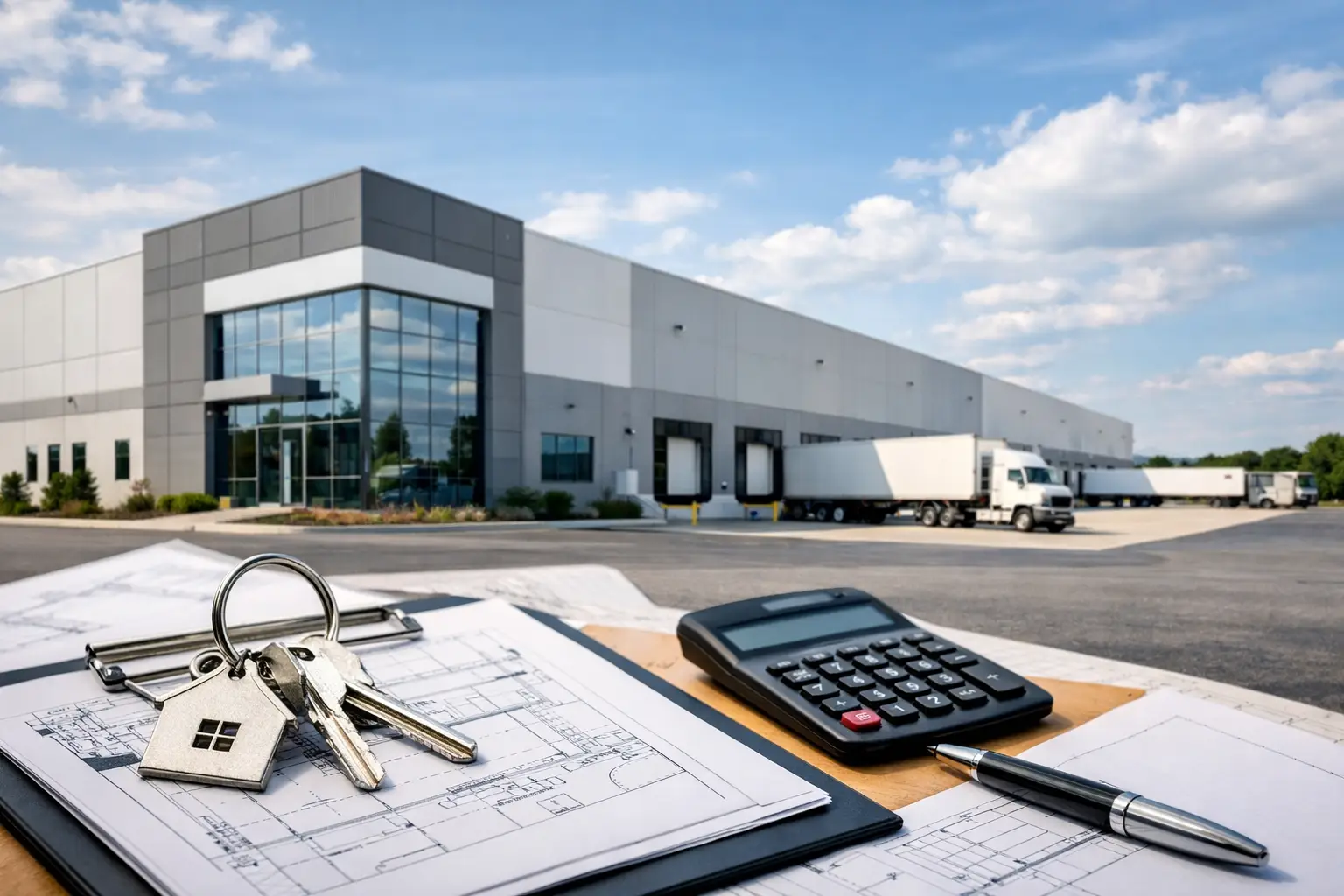
Brampton Industrial Building for Sale Tips
By Michael Law · Industrial Real Estate Broker, Lennard Commercial Realty
If you are looking at a Brampton industrial building for sale, the first question is not price. It is fit. A building can look competitive on a price-per-square-foot basis and still be the wrong asset for your operation, your tenant strategy, or your exit plan.
Brampton remains one of the most active industrial markets in the GTA because it serves several types of demand at once. Owner-users want functional space close to labor and highways. Investors want durable occupancy and rent growth. Developers watch land scarcity and replacement cost. That mix creates opportunity, but it also means weak assumptions get exposed quickly.
What makes a Brampton industrial building for sale attractive
The best industrial assets in Brampton usually solve a practical problem. They offer efficient shipping, clear access to major transportation routes, and building specs that still work five or ten years from now. In this market, utility often matters more than appearance.
Location inside Brampton matters more than many buyers expect. Access to Highway 410, 407, and 401 can change trucking efficiency, labor draw, and tenant appeal. A building that is technically in the right city but awkward for circulation or last-mile movement may underperform a slightly more expensive property in a stronger pocket.
Functionality is the next filter. Clear height, shipping ratio, bay size, power, and yard configuration all affect value. So does office buildout. Too much office can be a drawback for warehouse users, while too little finished space can limit appeal for certain light manufacturing or service industrial users.
Age is not the deciding factor by itself. Older buildings can be excellent acquisitions if they offer usable shipping, acceptable clear height, and solid physical condition. Newer buildings tend to command a premium, but that premium only makes sense if the operational or leasing advantage is real.
Buying for your business vs. buying as an investment
A buyer planning to occupy the building should evaluate the property differently than a pure investor. That sounds obvious, but it is where many deals go sideways.
For an owner-user, the right question is whether the building supports operations without expensive compromise. Can trucks move efficiently? Is there enough outside storage, if permitted? Will the power capacity support production? Can the space absorb future growth, or will you outgrow it shortly after closing? Paying more for a better fit can be smarter than buying a cheaper building that creates daily friction.
For an investor, lease quality and future marketability become central. The current rent matters, but so do term, escalation structure, tenant covenant, renewal language, and re-leasing risk. A fully leased building is not automatically safer if the rent is far below market and the lease gives the tenant unusual control. On the other hand, a vacant building is not automatically a problem if the area, specs, and pricing support a clear lease-up plan.
Some buyers sit between these two categories. They may occupy part of the space and lease the balance, or acquire with short-term operational use and long-term redevelopment in mind. Those strategies can work well in Brampton, but they require discipline. A flexible plan is useful. An unclear one usually gets expensive.
The metrics that actually matter
Price per square foot gets attention because it is simple. It is also incomplete. Two buildings with similar pricing can carry very different value depending on shipping, clear height, lot coverage, environmental condition, and office finish.
For investors, cap rate should be viewed carefully in industrial. In low-vacancy markets, cap rate compression can make an asset look expensive relative to in-place income. That does not always mean the deal is bad. If market rents are materially above contract rents, or if the asset has stronger long-term leasing durability than older stock nearby, a lower going-in cap rate may be justified. But that judgment should be based on evidence, not optimism.
Replacement cost is another useful lens. In a supply-constrained market, existing buildings with serviceable functionality can become more valuable simply because building new is expensive and slow. That said, replacement cost does not rescue a flawed asset. Functional obsolescence still matters.
Owner-users should also calculate occupancy cost beyond the mortgage. Property taxes, insurance, repairs, environmental obligations, and possible capital work can shift the economics significantly. A building that looks affordable on day one may require substantial investment before it performs the way your business needs.
Due diligence on a Brampton industrial building for sale
Industrial due diligence should be practical and unsentimental. Buyers sometimes focus heavily on financing and basic inspections while underestimating zoning, environmental exposure, and physical functionality.
Zoning should be confirmed early, especially if your use includes manufacturing, storage, fleet parking, or outside storage. A building can be industrial in a general sense but still create issues for your exact use. If your operation depends on a particular process, compliance should not be assumed.
Environmental review is rarely optional. Even if the site looks clean and the current use appears low-risk, historical industrial use can affect value, financing, and future saleability. The purpose of environmental diligence is not to kill a deal. It is to understand risk and allocate it properly.
The physical building should be reviewed with a commercial lens. Roof condition, slab quality, sprinkler system, HVAC in office areas, truck court depth, and door functionality all matter. So does deferred maintenance. Many industrial deals are won or lost on operational details that do not show up well in marketing materials.
For leased properties, document review is critical. Rent rolls only tell part of the story. Buyers need to understand lease clauses, operating expense treatment, landlord repair obligations, assignment rights, exclusives if applicable, and any side agreements. The difference between a clean industrial lease and a messy one can be substantial.
Why timing is only part of the decision
Buyers often ask whether now is the right time to buy in Brampton. The honest answer is that timing matters, but fit and underwriting matter more.
Trying to call the exact bottom or top of the market is usually less useful than buying the right asset with a realistic plan. If interest rates soften, competition may increase. If rates stay elevated, some buyers may find better negotiating conditions. Neither scenario fixes a poor acquisition.
What does change with timing is leverage. In some periods, sellers expect aggressive pricing based on older market conditions. In others, buyers overreact and assume every property should trade at a discount. Good transactions happen when both sides are anchored to current evidence, not stale expectations.
This is where experienced representation can materially affect outcome. In industrial real estate, value is shaped by more than headline numbers. Local leasing patterns, user demand by submarket, and buyer appetite for certain building sizes all influence what a property is really worth. Michael Law Commercial Real Estate approaches that process directly, with an emphasis on market reality and transaction execution rather than generic sales language.
Common mistakes buyers make
One frequent mistake is overvaluing cosmetic upgrades and undervaluing core functionality. Fresh office finishes do not compensate for poor shipping or weak clear height.
Another is treating every vacancy as upside. Some vacant buildings are true opportunities. Others are vacant because the configuration limits demand, the asking price is unrealistic, or required capital work has been ignored.
A third mistake is buying too tightly for today. If your business is growing, a building that only works at current volume can become a constraint faster than expected. On the investment side, a very specialized asset may lease well now but have a narrower buyer and tenant pool later.
Finally, many buyers underestimate execution risk. Financing, diligence, legal review, environmental work, and negotiation all move on different timelines. A disciplined process protects leverage and reduces surprises.
How to assess the right next move
If you are evaluating a Brampton industrial building for sale, start with a narrow set of criteria that reflect how the property needs to perform. Define your required clear height, shipping needs, yard needs, power, office ratio, and location priorities before looking at too many options. Then test each property against those standards, not against the excitement of finding a listing.
It also helps to think one step ahead. If you buy this building, what needs to be true for it to still look like a good decision in five years? For an owner-user, that may mean operational efficiency and room to grow. For an investor, it may mean lease rollover strength, releasability, and broad buyer appeal on exit.
The right industrial acquisition in Brampton can create real operational and financial advantage. The wrong one can tie up capital in a building that fights your strategy every step of the way. The market rewards buyers who stay clear-eyed, underwrite carefully, and focus on utility before narrative.
A good industrial property should make the next phase of your business or investment plan easier, not more complicated.

About Michael Law
Managing Partner and Industrial Real Estate Broker at Lennard Commercial Realty. Representing tenants and landlords across Toronto and the GTA for 15+ years. Michael specializes in GTA industrial real estate — connect with Toronto's leading industrial broker at mlawrealestate.com/industrial-broker-toronto.
Related Articles



More Brampton Industrial Real Estate Insights
Articles & Analysis
Common Questions
What is a letter of intent (LOI) in industrial real estate?
A letter of intent (LOI) in industrial real estate is a non-binding document that outlines the key business terms a tenant and landlord have agreed to in principle before a formal lease is drafted. It covers the essential deal points — rent, term, free rent, TI allowance, options — and signals mutual intent to proceed to a binding lease. While generally non-binding on the business terms, LOIs often include binding exclusivity or confidentiality provisions.
Read →What is CAM (common area maintenance) in industrial real estate?
CAM, or common area maintenance, refers to the costs a tenant pays — on top of base rent — for the upkeep and operation of shared areas in a multi-tenant industrial building. In a typical GTA industrial net lease, CAM is one component of the operating cost recovery alongside property taxes and building insurance, and is charged on a per-square-foot basis proportional to the tenant's share of the building.
Read →What is a build-to-suit industrial lease?
A build-to-suit industrial lease is a transaction where a developer or landlord constructs a new industrial building specifically to a tenant's requirements — custom specifications, layout, clear height, dock configuration, and site features — in exchange for a long-term lease commitment from the tenant, typically 10 to 15 years. The tenant gets a purpose-built facility without the capital cost of ownership; the developer recovers their construction investment through the lease.
Read →