
Commercial real estate developers: GTA industrial guide 2026
By Michael Law · Industrial Real Estate Broker, Lennard Commercial Realty
TL;DR:
- Commercial real estate developers manage all project stages, from land acquisition to delivery, amid rising market competition in GTA. They must incorporate disciplined lifecycle management, strategic site selection, and sustainability standards to meet institutional tenant and investor demands. Early municipal engagement and integrated development, leasing, and asset management are key to long-term success in GTA industrial markets.
Commercial real estate developers are professionals who manage the end-to-end process of acquiring land, securing approvals, financing construction, and delivering industrial properties aligned with market demand and investor return targets. In the Greater Toronto Area, the industrial sector has become one of the most competitive asset classes in Canada, with developers in Brampton, Mississauga, Vaughan, and the Durham Region facing tightening land supply, rising construction costs, and sophisticated tenant requirements. Professional real estate development in this market demands more than capital. It requires a disciplined process, hyper-local market intelligence, and the ability to read demand signals before breaking ground.
What do commercial real estate developers actually do?
Commercial real estate developers manage every stage of a project from raw land to a fully tenanted, income-producing asset. The industry term for this role is “developer at risk,” meaning the developer commits personal or institutional capital before any tenant or buyer is secured. This distinction separates developers from fee-based project managers and defines the financial discipline required throughout the process.
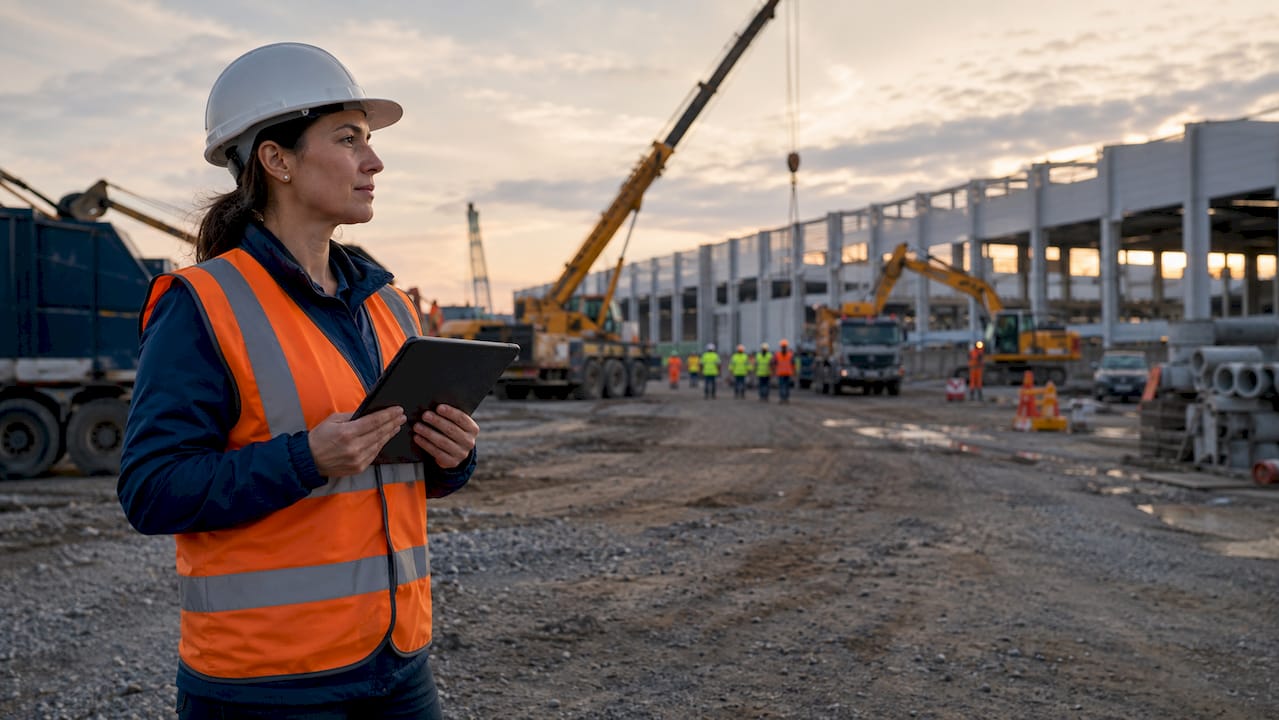
In the GTA industrial context, commercial property developers are typically working across three broad categories: speculative warehouse construction, build-to-suit projects for named tenants, and land assembly for future development. Each category carries a different risk profile and requires a different approach to financing, design, and leasing strategy. A developer building a 200,000 square foot speculative distribution centre in Milton faces fundamentally different decisions than one delivering a custom cold-storage facility for a grocery logistics operator in Brampton.
The most effective real estate development companies combine in-house expertise across site selection, design management, construction oversight, and leasing. This vertical integration gives developers a direct line of sight from land cost to net operating income, which is the number that ultimately determines whether a project succeeds.
What are the key stages of the commercial real estate development lifecycle?
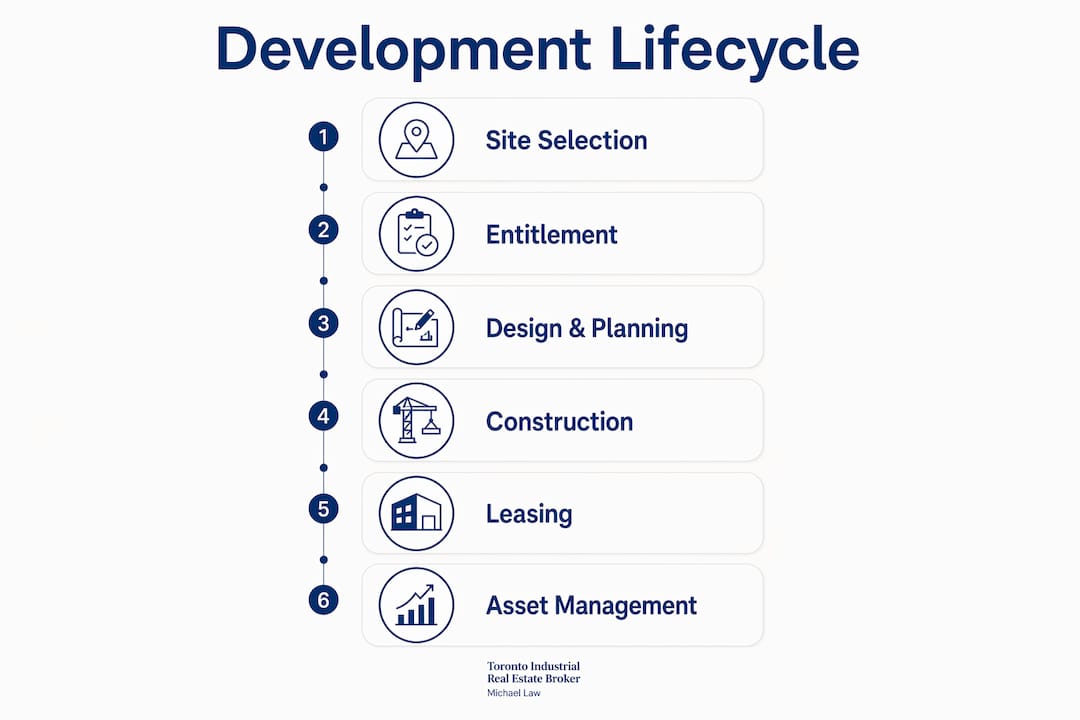
The development lifecycle spans five to seven structured stages, and hands-on management through every phase is what separates successful project delivery from costly overruns. Skipping or rushing any stage introduces compounding risk that is difficult to reverse once construction begins.
The stages, in order, are:
-
Site selection and feasibility. Identify candidate parcels, assess zoning, model preliminary financial returns, and confirm the site can physically support the intended use. In the GTA, this step increasingly involves reviewing employment land designations under the provincial Growth Plan.
-
Property acquisition. Negotiate purchase terms, complete environmental and geotechnical due diligence, and structure the acquisition to preserve flexibility if approvals are delayed. Many GTA developers use conditional purchase agreements tied to zoning confirmation.
-
Entitlement and municipal approvals. Submit rezoning, site plan, or minor variance applications and manage the approval process. Engaging municipal planners early can reduce entitlement timelines by identifying blockers before formal applications are filed, potentially saving months on a project schedule.
-
Design team coordination. Retain architects, structural engineers, and mechanical consultants. This stage includes value engineering, where material and structural choices are evaluated to maintain feasibility without compromising tenant requirements. Value engineering is frequently overlooked but is one of the most effective tools for protecting project margins in a high-cost construction environment.
-
Financing. Secure construction financing, typically requiring a combination of equity, senior debt, and sometimes mezzanine capital. Lenders in the GTA industrial market generally require pre-leasing commitments or demonstrated market absorption before advancing funds.
-
Construction execution. Manage the general contractor, monitor schedules, and control costs against the approved budget. At-risk developers must adhere strictly to projections and budgets to protect both capital and reputation.
-
Risk management throughout. Risk is not a single stage. It runs parallel to every phase, from environmental liability at acquisition to lease-up risk post-construction.
Pro Tip: In the GTA, the entitlement stage is consistently the longest and least predictable. Build a minimum 12-month approval buffer into your project pro forma for any site requiring rezoning or official plan amendment.
How do build-to-suit developments benefit tenants and developers in the GTA industrial market?
Build-to-suit commercial development allows tenants to customise design and location before construction begins, optimising operational efficiency while giving developers a clear funding roadmap through pre-negotiated leases. This model has grown significantly in the GTA as large logistics operators, e-commerce fulfilment companies, and advanced manufacturers seek facilities that standard speculative product cannot deliver.
The advantages for GTA industrial tenants include:
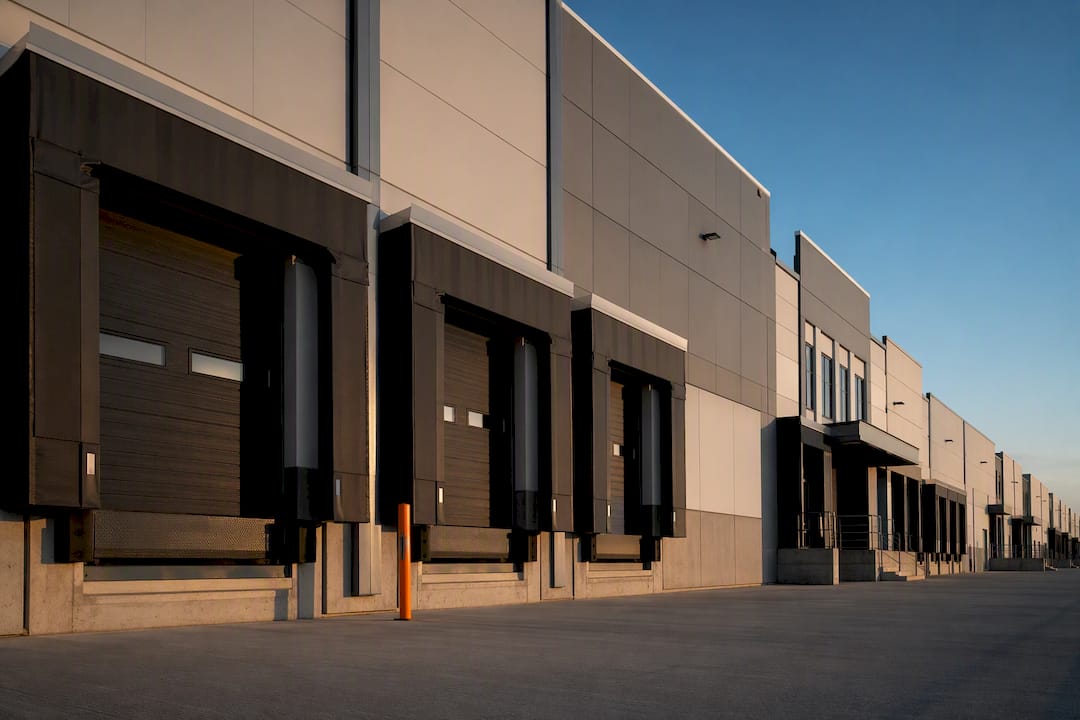
- Custom clear heights. Modern logistics operators in Mississauga and Brampton routinely require 40-foot clear heights, which speculative product rarely provides without premium pricing.
- Tailored dock and drive-in ratios. A last-mile delivery operator in Scarborough needs a very different dock configuration than a bulk distribution centre in Milton.
- Specific power and utility capacity. Manufacturing and cold-chain tenants often require electrical service levels that standard industrial buildings cannot accommodate without costly retrofits.
- Location certainty. Tenants can secure a site within a preferred submarket, such as the Highway 400 corridor in Vaughan or the 401/Brock Road node in Pickering, before competing users acquire available land.
For commercial real estate development companies, the build-to-suit model reduces lease-up risk to near zero. The tenant is committed before a shovel enters the ground, which simplifies construction financing and provides the income certainty that institutional lenders require. The trade-off is reduced flexibility. A building designed for one tenant’s specific operational requirements may be harder to re-lease if that tenant vacates at the end of the initial term.
For GTA industrial tenants, the key negotiating point in a build-to-suit lease is the initial term length. Developers typically require 10 to 15-year initial terms to justify the custom design investment. Tenants should negotiate renewal options and early termination rights carefully, as these provisions significantly affect occupancy cost over the full lease period.
Pro Tip: Before committing to a build-to-suit structure, model the total occupancy cost against available second-generation product in your target submarket. In some GTA nodes, quality existing space is priced competitively enough that a build-to-suit premium is difficult to justify.
What current market trends should GTA commercial developers consider for industrial properties?
The GTA industrial market in 2026 is defined by moderating vacancy rates following a period of elevated new supply, sustained demand from logistics and e-commerce occupiers, and a growing emphasis on sustainability credentials that directly affect asset value and tenant attraction.
“Occupiers with national ESG commitments are increasingly specifying sustainability ratings as a lease requirement, not a preference. Developers who deliver BREEAM or LEED-certified product are accessing a tenant pool that competitors without those credentials simply cannot reach.”
Sustainability has moved from a marketing feature to a financial underwriting variable. A 130,000 sq ft logistics headquarters achieved BREEAM “Very Good” in 2025 specifically to attract ESG-conscious occupiers and protect long-term asset value. In the GTA, where institutional investors and pension funds are active buyers of industrial assets, a sustainability rating can directly affect the capitalisation rate applied at disposition.
The table below summarises the key market variables GTA commercial developers should be tracking in 2026:
| Market variable | Current direction | Developer implication |
|---|---|---|
| Industrial vacancy rate | Moderating upward from historic lows | Underwrite lease-up timelines conservatively |
| Net asking rents | Stabilising after 2021 to 2024 peak growth | Model rent growth at 2 to 3% annually, not 8 to 10% |
| Sustainability requirements | Increasing among national occupiers | Target BREEAM “Very Good” or LEED Silver as minimum |
| Clear height demand | Rising, 40 ft becoming standard for logistics | Design to 40 ft clear for maximum tenant flexibility |
| Land supply | Constrained across all major GTA nodes | Prioritise land assembly and brownfield redevelopment |
The industrial logistics sector continues to show sustained growth signals driven by nearshoring trends, last-mile demand, and the ongoing shift of retail fulfilment to dedicated warehouse facilities. For GTA developers, this translates into durable occupier demand across Brampton, Mississauga, and the Highway 427 corridor, even as the speculative development pipeline from 2022 to 2024 continues to be absorbed.
The tenant profile is also shifting. Traditional big-box retailers and third-party logistics providers remain active, but advanced manufacturers, pharmaceutical distributors, and data centre operators are emerging as a significant demand source in nodes like Markham, Pickering, and Caledon. These users have specific infrastructure requirements that developers must anticipate at the design stage, not after a lease is signed.
What criteria are essential for effective industrial site selection in the GTA?
Effective industrial site selection extends well beyond land availability and purchase price. Site analysis must account for labour markets, infrastructure capacity, government incentives, and regional transportation accessibility to support long-term tenant retention and asset appreciation.
The following comparison illustrates how two common GTA site types perform across key selection criteria:
| Selection criterion | Greenfield site (e.g., Caledon, Milton) | Infill/brownfield site (e.g., Toronto, Mississauga) |
|---|---|---|
| Land cost | Lower per acre | Significantly higher per acre |
| Servicing and infrastructure | Often requires extension of municipal services | Existing services, but may need upgrades |
| Labour pool proximity | Dependent on regional transit access | Strong access to urban labour markets |
| Approvals timeline | Longer, often requires official plan amendment | Shorter, typically site plan approval only |
| Environmental risk | Generally lower | Higher, remediation costs possible |
| Transportation access | Highway proximity varies | Strong highway and port access in most nodes |
Beyond the table comparison, the following factors deserve detailed analysis on any GTA industrial site:
- Labour market depth. Warehousing and manufacturing operations require reliable access to workers at multiple skill levels. Sites in Brampton and Mississauga benefit from one of the largest industrial labour pools in Canada, while emerging nodes in Caledon and Barrie require careful analysis of commute patterns and transit infrastructure.
- Utility and power capacity. Advanced manufacturing and cold-chain logistics require electrical service that many older industrial areas cannot provide without significant capital investment. Confirm available capacity with the local utility, not just the municipality, before completing acquisition.
- Municipal incentives and community improvement plans. Several GTA municipalities offer development charge reductions, tax increment financing, or brownfield remediation grants. Hamilton, Oshawa, and certain areas of Toronto have active programmes that can materially improve project economics.
- Proximity to transportation networks. Access to Highway 400, 401, 407, and 427 corridors, the CN and CP rail networks, and Pearson International Airport directly affects tenant demand and achievable rents. A site with poor highway access will consistently underperform comparable product with strong connectivity.
Competitive site selection that prioritises labour markets, infrastructure capacity, and regional transportation accessibility is the single most reliable predictor of long-term asset viability. Developers who treat site selection as a financial modelling exercise without field-level analysis of these factors consistently underestimate occupancy costs and overestimate achievable rents.
Pro Tip: Request a pre-consultation meeting with the municipal planning department before submitting a formal application. Most GTA municipalities offer this service at no cost, and it provides direct insight into approval risks that no desktop review can replicate.
Key takeaways
Successful GTA industrial development requires disciplined lifecycle management, data-driven site selection, and sustainability credentials that meet the standards of today’s institutional tenants and investors.
| Point | Details |
|---|---|
| Lifecycle discipline | Manage all five to seven development stages actively, with a 12-month approval buffer built into every GTA pro forma. |
| Build-to-suit advantage | Pre-negotiated leases eliminate lease-up risk and simplify construction financing for commercial property developers. |
| Sustainability as underwriting | BREEAM or LEED certification directly affects tenant attraction and capitalisation rates at disposition. |
| Site selection depth | Labour markets, utility capacity, and municipal incentives are as important as land cost in GTA site analysis. |
| Market calibration | Model rent growth conservatively at 2 to 3% annually and underwrite lease-up timelines with current vacancy trends in mind. |
What I’ve learned about integrating development, leasing, and asset management
The developers I see succeeding consistently in the GTA industrial market are not the ones with the most capital. They are the ones who treat development, leasing, and asset management as a single integrated function rather than three separate disciplines handed off sequentially.
Vertically integrated developers who manage development, leasing, and asset management in-house gain an operational perspective that shapes better design decisions from day one. When the person negotiating the lease is also the person who approved the dock door count, you get buildings that actually work for tenants rather than buildings that look good on a rendering.
The GTA market in 2026 presents a specific opportunity that I think is being underestimated. The pipeline of speculative product that delivered between 2022 and 2024 has absorbed much of the headline demand, and some developers have pulled back. That creates a window for disciplined developers to acquire well-located land at more rational prices and deliver product in 2027 and 2028 when the absorption cycle has worked through current vacancy. The developers who are doing their site selection work now, building their municipal relationships, and locking in land at today’s prices will be the ones with the best-positioned assets when the next demand cycle peaks.
The risk I consistently see developers underestimate is the entitlement timeline. In the GTA, a rezoning that looks straightforward on paper can take 18 to 24 months when community consultation, conservation authority review, and provincial policy compliance are factored in. Build that reality into your financial model, not the optimistic scenario.
Working with clients across the GTA through Lennard Commercial Realty, I have seen projects succeed and fail on the quality of the site selection decision made before any other commitment was made. Get that decision right, and the rest of the process is manageable. Get it wrong, and no amount of construction efficiency or leasing skill will recover the project economics.
— Michael
How Mlawrealestate supports GTA industrial developers
Mlawrealestate provides industrial real estate advisory services across every major GTA submarket, from Caledon and Milton in the west to Pickering, Ajax, and Oshawa in the east.
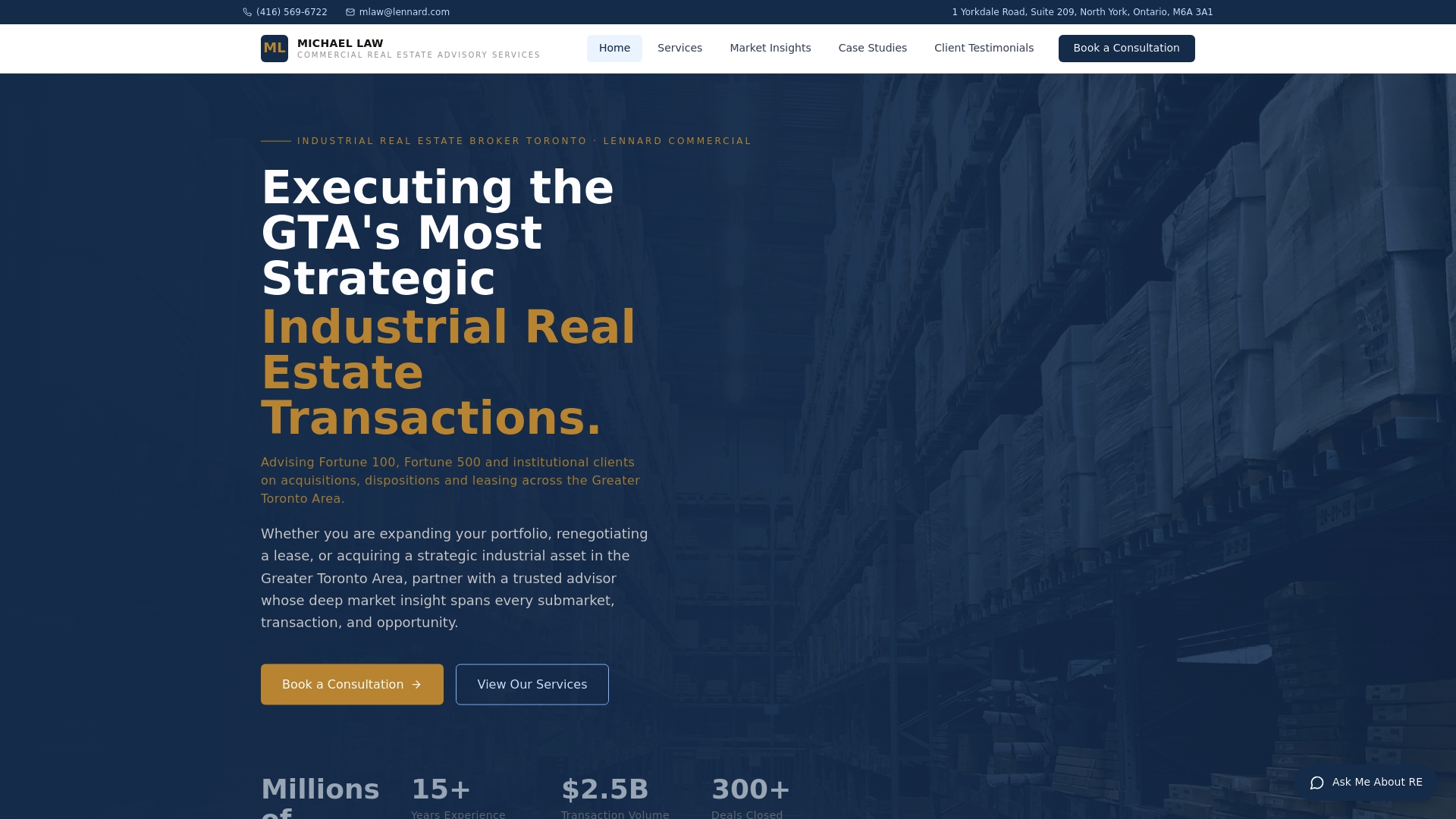
For commercial real estate developers working on industrial projects, Mlawrealestate delivers site selection analysis, investment acquisition advisory, and leasing strategy grounded in current GTA market data. Whether you are evaluating a greenfield parcel in Caledon, structuring a build-to-suit transaction in Brampton, or assessing the investment case for an existing industrial asset, the team at Mlawrealestate brings transaction experience and submarket intelligence that generic brokerage platforms cannot match. Explore current industrial opportunities in Caledon or contact Mlawrealestate directly to discuss your development objectives.
FAQ
What is the role of a commercial real estate developer?
A commercial real estate developer manages the full process of acquiring land, securing approvals, financing, and constructing income-producing properties. In the GTA industrial market, this role carries significant financial risk and requires expertise across site selection, design, and leasing.
How long does GTA industrial development approval take?
Approval timelines in the GTA vary by municipality and project complexity, but rezoning applications commonly take 12 to 24 months. Engaging municipal planners early before formal submission is the most reliable way to reduce delays.
What is build-to-suit development?
Build-to-suit development is a model where a tenant’s specific operational requirements are incorporated into the building design before construction begins, typically under a pre-negotiated long-term lease. It eliminates lease-up risk for the developer and delivers a purpose-built facility for the tenant.
What makes a strong industrial site in the GTA?
Strong GTA industrial sites combine highway access, adequate utility capacity, proximity to labour markets, and favourable municipal zoning. Sites along the Highway 401, 400, and 407 corridors in Brampton, Mississauga, and Vaughan consistently command the highest tenant demand and rents.
How do sustainability ratings affect industrial development value?
Sustainability certifications such as BREEAM and LEED directly affect tenant attraction and the capitalisation rate applied by institutional buyers at disposition. Developers targeting ESG-conscious occupiers or institutional exit strategies should design to a minimum of BREEAM “Very Good” or LEED Silver from the outset.
Recommended

About Michael Law
Managing Partner and Industrial Real Estate Broker at Lennard Commercial Realty. Representing tenants and landlords across Toronto and the GTA for 15+ years. Michael specializes in GTA industrial real estate — connect with Toronto's leading industrial broker at mlawrealestate.com/industrial-broker-toronto.
Related Articles

More Toronto Industrial Real Estate Insights
Common Questions
What is a sale-leaseback in industrial real estate?
A sale-leaseback is a transaction in which an industrial property owner sells their building to an investor and simultaneously signs a long-term lease to remain in the property as a tenant. The seller unlocks the capital tied up in their real estate while retaining full operational use of the facility. The buyer acquires a tenanted investment property with immediate cash flow from a known occupant.
Read →What is a dock-to-grade ratio in industrial real estate?
Dock-to-grade ratio in industrial real estate refers to the number of dock-level loading doors relative to the building's floor area, typically expressed as one dock door per X,000 square feet. It is a key specification for distribution and warehousing tenants because it determines how many trucks can load and unload simultaneously and therefore the building's throughput capacity.
Read →What is clear height in a warehouse or distribution centre?
Clear height in a warehouse or distribution centre refers to the usable vertical space from the finished floor to the lowest overhead obstruction — typically the bottom of the roof structure, sprinkler heads, or HVAC equipment. It is the single most important building specification for warehouse tenants because it determines how many racking levels can be installed and therefore how much product can be stored per square foot of floor space.
Read →