Industrial Condo Versus Freestanding Building
By Michael Law · Industrial Real Estate Broker, Lennard Commercial Realty
A buyer looking at industrial space usually gets to this question faster than expected: industrial condo versus freestanding building. On paper, both can solve the same problem - warehouse space, shipping capability, office area, and a place to run operations. In practice, they suit very different ownership goals, capital structures, and business plans.
For owner-users, investors, and developers, the right choice often comes down to control, cost, and future flexibility. The wrong choice usually shows up later, when expansion is needed, a tenant has a specific requirement, or an exit strategy becomes more complicated than expected.
Industrial condo versus freestanding building: the core difference
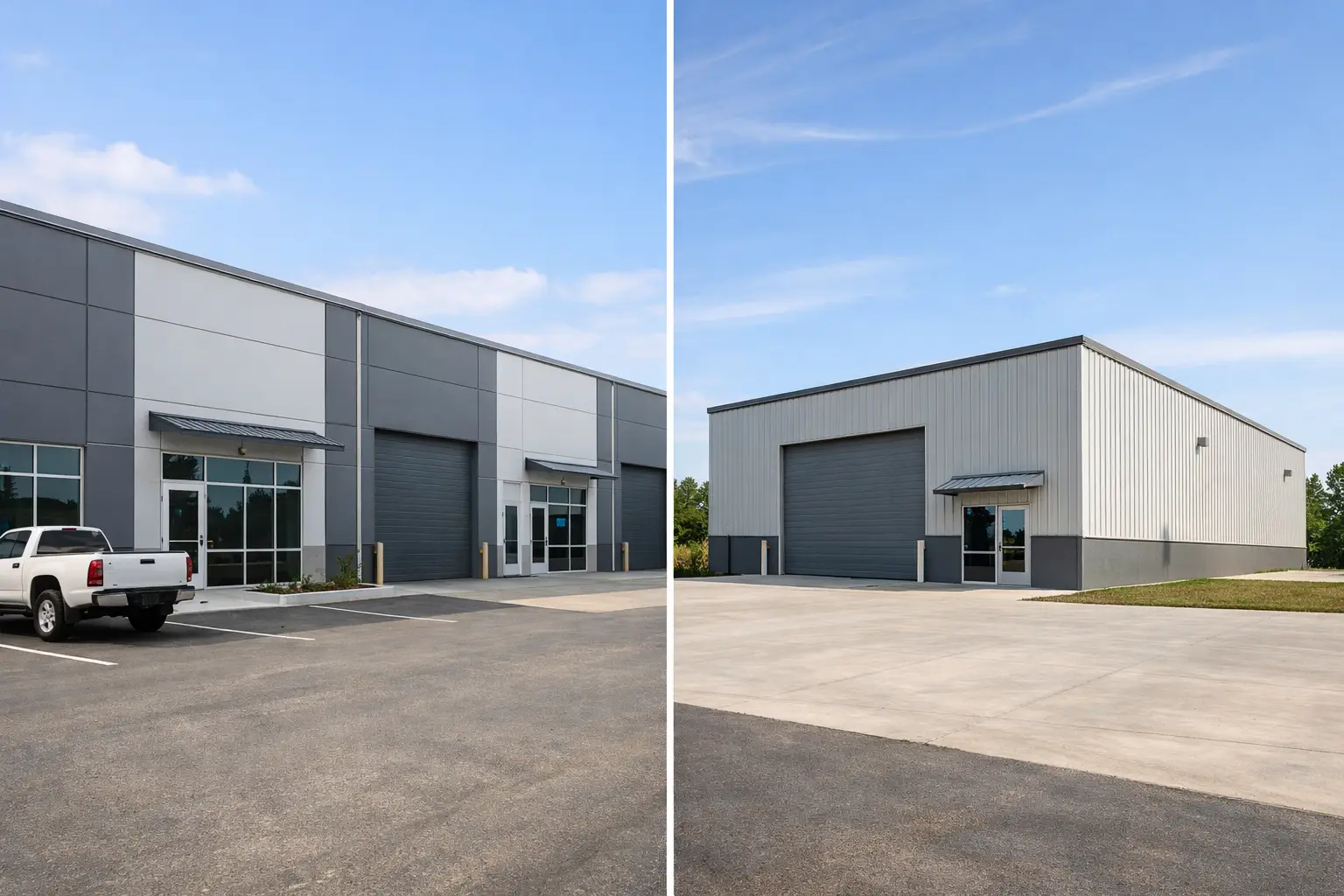
An industrial condo is typically one unit within a larger multi-unit industrial complex. You own your unit, usually along with a proportional interest in the common elements, and you operate within the rules set by a condominium structure. A freestanding building is a standalone asset on its own parcel, which generally gives the owner direct control over the site, building, and many operating decisions.
That distinction matters more than many buyers think. With an industrial condo, ownership is real, but it is shared within a governed framework. With a freestanding building, ownership tends to come with broader control over parking, shipping areas, exterior changes, signage, access, and long-term redevelopment potential.
Neither structure is automatically better. The better fit depends on what you need the property to do over the next five to ten years.
Why industrial condos appeal to many buyers
Industrial condos are often the more accessible entry point. For smaller businesses or first-time industrial buyers, they can offer a lower purchase price than a standalone building in the same market. That matters in supply-constrained areas where industrial values are high and available inventory is limited.
They can also be operationally efficient. If your business needs functional space but not full site control, a condo unit may meet the need without requiring the capital outlay of a freestanding property. In many projects, common area maintenance, exterior management, and certain shared services are handled through the condo structure. For some buyers, that simplifies ownership.
This format can also work well for investors targeting smaller-bay industrial product. In dense markets, demand for clean, well-located small units can be steady, especially from service trades, light industrial users, e-commerce support businesses, and local distributors.
Still, lower entry cost should not be confused with fewer constraints. Industrial condo ownership comes with rules, fees, and limitations that can affect operations and resale.
Where industrial condos can fall short
The main trade-off is control. You may own the unit, but your use is shaped by condominium documents, board oversight, and common element rules. If your business needs outdoor storage, specialized signage, after-hours trailer parking, unusual equipment, or major exterior modifications, those restrictions can become a real issue.
Loading can also be a friction point. Shared truck courts, limited maneuvering areas, and common parking arrangements may work fine for some users and create ongoing inefficiency for others. A company with frequent shipping activity or larger vehicle requirements should look closely at how the site actually functions, not just how the brochure describes it.
There is also the issue of monthly condo fees and reserve contributions. Those costs are not necessarily a problem, but they need to be underwritten properly. Buyers sometimes focus heavily on mortgage economics and overlook the practical effect of recurring fees, governance quality, and deferred maintenance risk within the complex.
Why freestanding buildings command attention
A freestanding industrial building generally offers what many businesses eventually want more of: control. You can usually manage access, parking, loading configuration, signage, yard usage, and capital improvements with far fewer third-party limitations. That freedom can be valuable both operationally and strategically.
For owner-users, this can mean better alignment with how the business actually runs. If operations depend on trailer storage, fleet parking, secure yard area, expanded power, or customized buildout, a standalone facility is often the cleaner solution. It can also support stronger branding and customer visibility if frontage and signage matter.
For investors, freestanding assets are often attractive because they can appeal to a broader range of tenants seeking autonomy. In many industrial markets, functional freestanding buildings remain highly competitive because they are harder to replace and often offer site characteristics that condo product cannot match.
There is also a land value component. A freestanding building on its own site may provide future repositioning or redevelopment options that simply do not exist in a condo structure. That upside is not universal, but in the right location it can materially influence long-term value.
The trade-offs with a freestanding building
Greater control usually means greater responsibility. Freestanding ownership often comes with higher acquisition costs, more direct maintenance obligations, and potentially larger capital expenditures over time. Roof, paving, drainage, landscaping, lighting, and building systems become your problem in a very direct way.
That can be manageable for a well-capitalized buyer with a clear plan. It can be a strain for a business that wants certainty in occupancy cost and minimal management burden. Some buyers like the idea of total control until they start pricing environmental work, deferred repairs, or site upgrades.
Availability is another issue. In many industrial markets, especially around Toronto and the GTA, well-located freestanding buildings can be scarce and highly competitive. Buyers may need to move quickly, accept more underwriting complexity, or compromise on size, clear height, or office finish to secure the right standalone asset.
Industrial condo versus freestanding building for owner-users
For owner-users, the right answer starts with operations, not just price. If your business needs basic warehouse or light manufacturing space with predictable usage and no unusual site demands, an industrial condo can be a practical ownership vehicle. It may let you stop leasing, build equity, and stabilize occupancy costs without stretching capital too far.
But if your operation depends on flexibility, expansion potential, outdoor storage, heavy shipping, or a specialized layout, a freestanding building is often worth the premium. The value is not only in what the property does today. It is also in what it allows you to do later.
A common mistake is buying based on current headcount and current inventory volume. Industrial real estate decisions should account for growth, workflow changes, and logistics demands that may not be visible in the first year. A space that feels efficient today can become restrictive quickly.
What investors should weigh
Investors should evaluate these assets through both income and liquidity. Industrial condos can attract a broad pool of smaller users and buyers, which can support resale demand in certain segments. They may also allow portfolio diversification at a lower capital threshold.
Freestanding buildings, however, often benefit from deeper tenant demand where site functionality matters. A well-located standalone asset can command attention from users willing to pay for autonomy, yard capability, or building identity. That can strengthen leasing prospects and create a more defensible position over time.
The key is market fit. Not every tenant needs a standalone property, and not every condo complex is easy to lease or resell. Unit size, loading ratio, clear height, parking, management quality, and location within the industrial node all matter more than labels alone.
Due diligence matters more than the format
A good acquisition can be found in either category if the diligence is thorough. With industrial condos, buyers should review condominium documents carefully, including rules, budgets, reserve studies, and any restrictions that affect use. Shared element disputes and governance issues are not minor details when they directly affect operations.
With freestanding buildings, site and building diligence often become more intensive. Environmental history, zoning compliance, truck circulation, excess land utility, and capital repair exposure deserve close review. A building that looks flexible at first glance may come with hidden limitations tied to power, drainage, or legal non-conformity.
This is where a local industrial advisor adds practical value. In markets such as Mississauga, Brampton, Vaughan, and North York, the spread between condo and freestanding product is not just a pricing issue. It is a functional issue shaped by inventory scarcity, user demand, and how specific submarkets handle industrial access and land constraints.
So which one is better?
If the goal is lower entry cost, simpler access to ownership, and functional space for a relatively straightforward operation, an industrial condo may be the better fit. If the goal is maximum control, stronger operational flexibility, and long-term site optionality, a freestanding building usually has the edge.
That said, better on paper is not always better for the buyer. A smaller company can overreach on a standalone building and create cash flow pressure. A growing operator can underbuy in a condo project and end up constrained just when the business needs room to move.
The smartest decision usually comes from matching the property type to the business plan, not from chasing a general preference. Industrial real estate works best when the building supports the operation, the capital structure, and the exit strategy at the same time. That is the standard worth using before you commit to either path.

About Michael Law
Managing Partner and Industrial Real Estate Broker at Lennard Commercial Realty. Representing tenants and landlords across Toronto and the GTA for 15+ years. Michael specializes in GTA industrial real estate — connect with Toronto's leading industrial broker at mlawrealestate.com/industrial-broker-toronto.