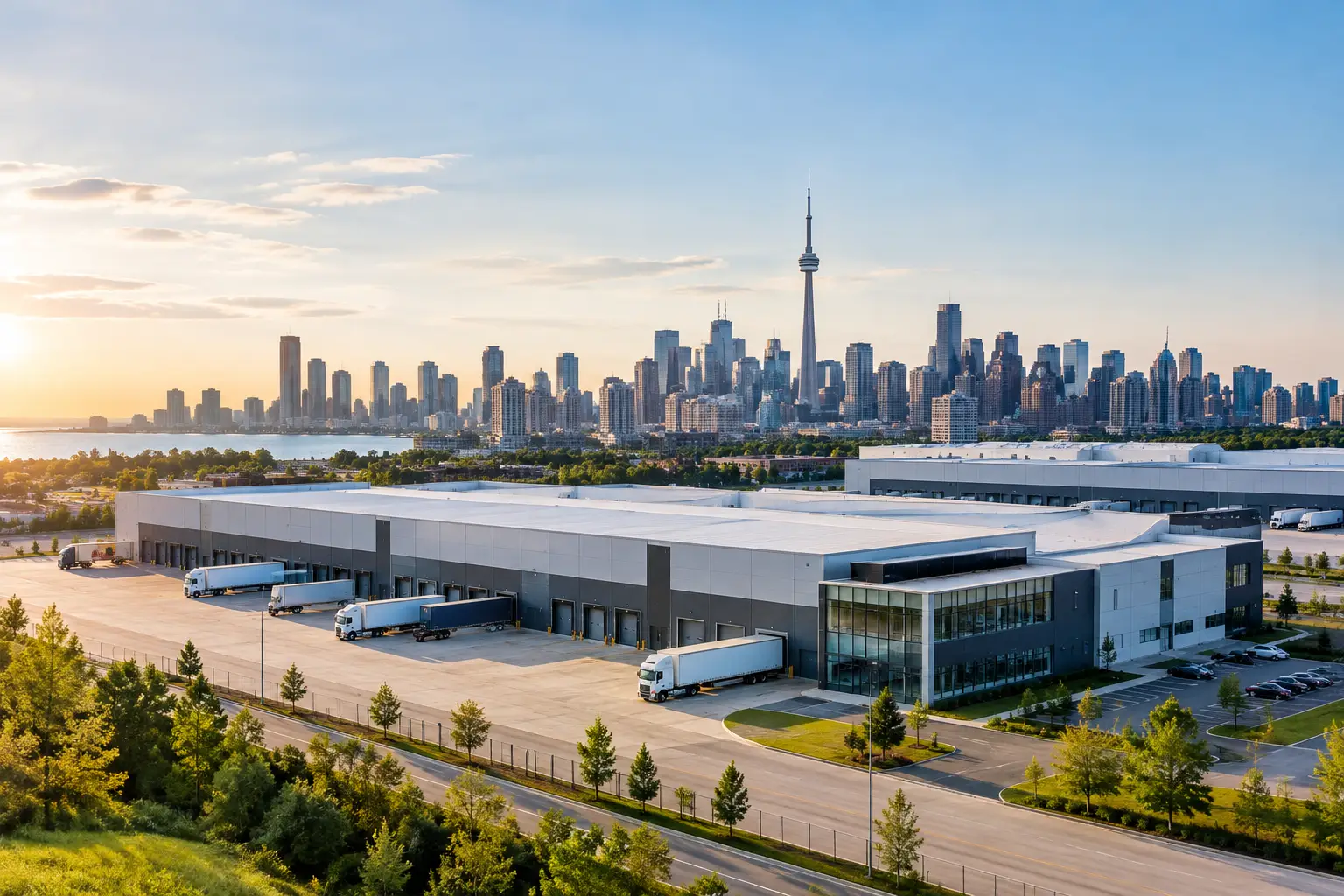
What Drives Value in Warehouse Investment
By Michael Law · Industrial Real Estate Broker, Lennard Commercial Realty
A warehouse investment can look straightforward on paper: a leased building, contractual rent, and a tenant responsible for much of the operating cost. In practice, its value depends on whether the property will remain useful to the next tenant, buyer, or investor when the current lease ends. That distinction matters in the Greater Toronto Area, where well-located industrial space is valuable but not interchangeable.
For private investors, owners, and business operators, the strongest warehouse acquisitions are usually supported by three things: functional real estate, durable tenant demand, and a realistic plan for the asset at renewal or resale. A favorable going-in yield is useful, but it does not compensate for a building with limited loading, poor access, excessive office space, or a lease that shifts more risk to the landlord than expected.
Warehouse Investment Starts With the Building
A warehouse is not a single property type. It may serve distribution, light manufacturing, contractor storage, food-related operations, e-commerce fulfillment, or a specialized industrial use. Each use has different requirements, and the building should be assessed against the widest credible pool of future users, not only the existing tenant.
Clear height, shipping configuration, power capacity, bay depth, truck circulation, parking, zoning, and site coverage all affect liquidity. A 24-foot clear building may work well for a local distributor, for example, while a larger logistics operator may require substantially more height, better trailer storage, or modern dock loading. A property can be fully leased today and still face a smaller buyer or tenant pool tomorrow.
Loading and Site Function Often Decide the Outcome
Investors sometimes focus heavily on rentable area and overlook how goods actually move through the site. The number and type of loading doors, the ability for trucks to maneuver, access from major roads, and separation between employee parking and shipping areas can materially affect rent, tenant retention, and marketability.
This is especially relevant in established Toronto and GTA industrial nodes, where infill locations can offer exceptional access but may have constrained sites. A smaller building with workable circulation and convenient highway access can be more valuable than a larger facility that creates operational friction. The right answer depends on the tenant profile the building is designed to serve.
Older buildings also require a practical review of deferred capital needs. Roof condition, electrical service, sprinkler capacity, environmental history, heating systems, and asphalt are not minor due diligence items. They can shape the true basis of the investment and determine whether a future lease negotiation becomes an expensive landlord obligation.
Location Is More Than a Postal Code
Industrial location is best evaluated through labor access, transportation routes, customer proximity, municipal restrictions, and the supply of competing buildings. Proximity to Highway 401, 407, 400, 410, or the QEW may support tenant demand, but the relevant question is how efficiently a particular operation can reach its suppliers, workforce, and customers.
A warehouse near a major highway can still be compromised by difficult last-mile access, restrictive truck routes, or congestion that makes daily shipping unreliable. Conversely, a location outside the core may appeal to users needing more land, lower occupancy costs, or better truck access. Investors should avoid treating one submarket as universally superior without matching it to the likely user.
Municipal policy also deserves attention. Zoning permissions, outdoor storage rules, permitted uses, development charges, and local planning changes can influence both operating flexibility and redevelopment potential. Where land values are rising, the property may have long-term optionality beyond its existing warehouse use. That optionality should be recognized, but not used to justify an acquisition price that the current income cannot support.
Underwriting the Lease, Not Just the Rent
A stated rental rate does not show the quality of the income stream. The lease must be read as a financial document and an operating document. Remaining term, annual escalations, renewal options, repair obligations, assignment rights, termination provisions, and landlord work requirements all affect value.
Net leases can provide predictable income, but the word “net” does not eliminate ambiguity. Investors should confirm which costs are recoverable, whether there are caps on operating expense increases, how capital items are treated, and whether management fees are permitted. A roof replacement or HVAC failure may fall outside normal recoveries even where a tenant is responsible for day-to-day maintenance.
Tenant credit deserves the same level of scrutiny. A well-known company name is not always the legal tenant, and a personal or corporate guarantee may have limited practical value. Review the covenant, the business’s reliance on that location, the cost of relocating, and the tenant’s performance history. A tenant occupying a highly specialized facility may be more committed to the site, but the building may also be harder to re-lease if that tenant leaves.
Lease Expiry Is a Business Plan
Every industrial lease expiry creates a decision point. The tenant may renew, seek concessions, downsize, expand, assign the lease, or leave. The investor should underwrite each scenario before closing, including downtime, leasing commissions, tenant improvements, and the likely market rent at expiry.
A short-term lease is not automatically a negative. It can offer a path to marking rent to market or repositioning the property. But that upside should be balanced against vacancy risk and the capital required to secure the next occupant. The closer the building is to broadly accepted industrial specifications, the more manageable that risk tends to be.
Price Discipline Protects the Investment
Warehouse investment returns are shaped by purchase price, financing terms, rent growth, capital expenditures, and the eventual exit value. A lower cap rate may be reasonable for a well-located building with strong functional attributes and a reliable tenant. It is less defensible when the property has weak site characteristics or a near-term lease rollover that has not been properly priced.
Investors should build a downside case rather than relying on a single optimistic forecast. Test a longer vacancy period, higher leasing costs, slower rent growth, a refinancing at a higher interest rate, and a more conservative exit cap rate. If the investment only works under favorable assumptions, the margin for error is too thin.
Financing structure matters as much as the interest rate. Match debt maturity to the lease term and expected holding period where possible. A loan maturing shortly before a major lease expiry can create unnecessary pressure, particularly if market conditions change or the tenant is negotiating from a position of leverage.
Due Diligence Should Follow the Risk
Commercial due diligence is most effective when it focuses on what can materially change the investment outcome. Review title, surveys, zoning, environmental reports, building systems, financial statements, service contracts, property tax assessments, insurance history, and lease documents. Then connect those findings to the underwriting.
For example, an environmental issue is not simply a report item. It may affect financing, resale, redevelopment, and lender requirements. A survey encroachment may be manageable, or it may limit truck circulation or future expansion. The value of diligence comes from understanding the commercial consequence, not just collecting documents.
A broker with industrial market knowledge can also help test assumptions against active tenant requirements, competing inventory, recent transactions, and likely buyer demand. That perspective is particularly valuable when a property has unusual features that do not fit a standard valuation model.
The most durable warehouse investments are rarely the ones with the most attractive first-year return. They are the properties where the building, lease, and location continue to make sense after the first tenant, the first loan term, and the first market cycle have passed.

About Michael Law
Managing Partner and Industrial Real Estate Broker at Lennard Commercial Realty. Representing tenants and landlords across Toronto and the GTA for 15+ years. Michael specializes in GTA industrial real estate — connect with Toronto's leading industrial broker at mlawrealestate.com/industrial-broker-toronto.